Bioelectronic Systems as Neural Interfaces
5th February 2026
Timing : 1 pm ET
Please use this zoom link for joining the webinar
For a list of all talks at the NanoBio seminar series Spring'26, see here
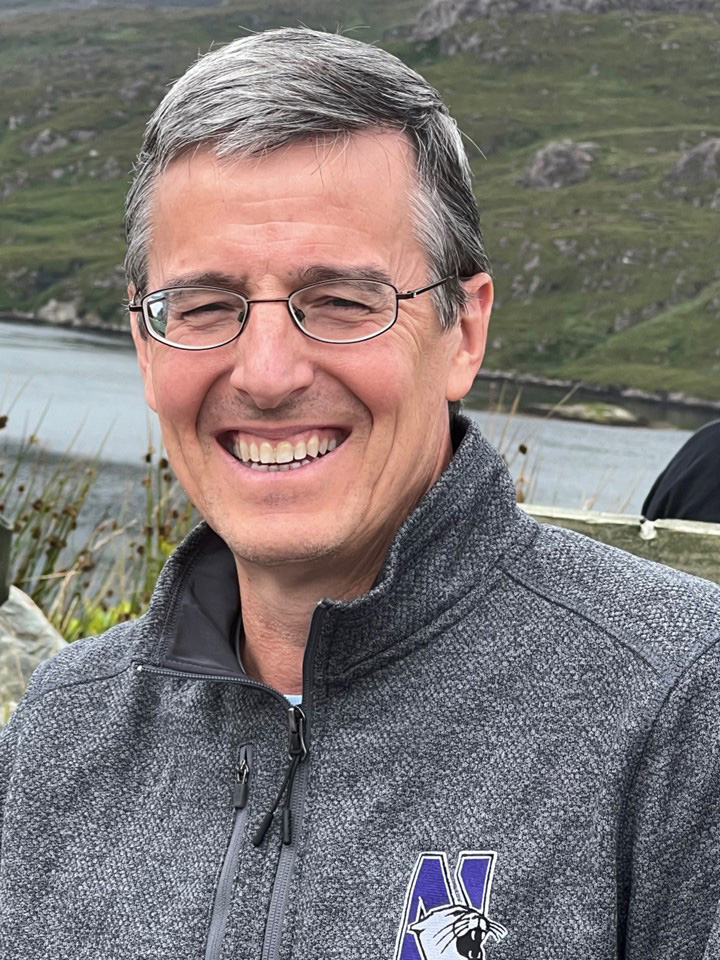
Dr. John A. Rogers
Professor John A. Rogers obtained BA and BS degrees in chemistry and in physics from the University of Texas, Austin, in 1989. From MIT, he received SM degrees in physics and in chemistry in 1992 and a PhD degree in physical chemistry in 1995. From 1995 to 1997, Rogers was a Junior Fellow in the Harvard University Society of Fellows. He joined Bell Laboratories as a Member of Technical Staff in 1997 and served as Director of the Condensed Matter Physics Research Department from 2000 to 2002. He then spent thirteen years on the faculty at the University of Illinois at Urbana/Champaign, finally as the Swanlund Chair Professor and Director of the Seitz Materials Research Laboratory. In the Fall of 2016, he joined the faculty at Northwestern University where he is Director of the Querrey-Simpson Institute for Bioelectronics. He has published ~1000 papers and he is co-inventor on ~100 patents, >70 of which are licensed and in active use. More than 160 former members of his group are now in faculty positions at universities around the world. His research has been recognized by many awards, including a MacArthur Fellowship (2009), the Lemelson-MIT Prize (2011), the Smithsonian Award (2013), the Benjamin Franklin Medal (2019), a Guggenheim Fellowship (2021), the James Prize (2022), the IEEE Biomedical Engineering Award (2024) and the Bakerian Medal and Lecture of the Royal Society (2025). He is a member of the US National Academy of Engineering, of Sciences, of Medicine and of Inventors, the American Academy of Arts and Sciences and the Royal Society.
Professor John A. Rogers obtained BA and BS degrees in chemistry and in physics from the University of Texas, Austin, in 1989. From MIT, he received SM degrees in physics and in chemistry in 1992 and a PhD degree in physical chemistry in 1995. From 1995 to 1997, Rogers was a Junior Fellow in the Harvard University Society of Fellows. He joined Bell Laboratories as a Member of Technical Staff in 1997 and served as Director of the Condensed Matter Physics Research Department from 2000 to 2002. He then spent thirteen years on the faculty at the University of Illinois at Urbana/Champaign, finally as the Swanlund Chair Professor and Director of the Seitz Materials Research Laboratory. In the Fall of 2016, he joined the faculty at Northwestern University where he is Director of the Querrey-Simpson Institute for Bioelectronics. He has published ~1000 papers and he is co-inventor on ~100 patents, >70 of which are licensed and in active use. More than 160 former members of his group are now in faculty positions at universities around the world. His research has been recognized by many awards, including a MacArthur Fellowship (2009), the Lemelson-MIT Prize (2011), the Smithsonian Award (2013), the Benjamin Franklin Medal (2019), a Guggenheim Fellowship (2021), the James Prize (2022), the IEEE Biomedical Engineering Award (2024) and the Bakerian Medal and Lecture of the Royal Society (2025). He is a member of the US National Academy of Engineering, of Sciences, of Medicine and of Inventors, the American Academy of Arts and Sciences and the Royal Society.