|
|
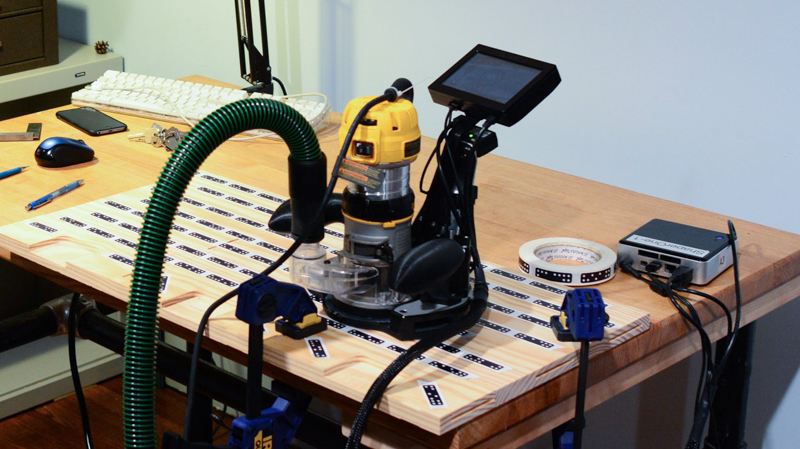
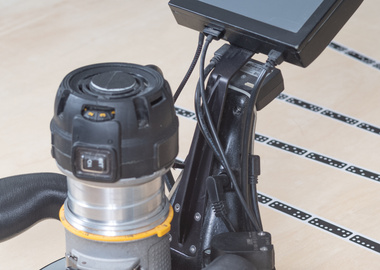
| A key learning from V1.5 was to mechanically decouple the camera from the heavy display to prevent control loop resonances. This was accomplished with two independent stalks. The sturdy camera stalk also housed the electronics. |
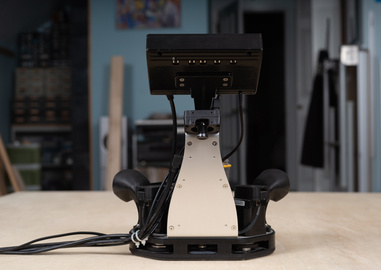
In this rear view you can see the camera mounted to its stalk, as well as our continued "let it breath" approach to dust mitigation (note the open vents in the base). We used sealed bearings to maintain local dust immunity where it mattered most. |
|
|
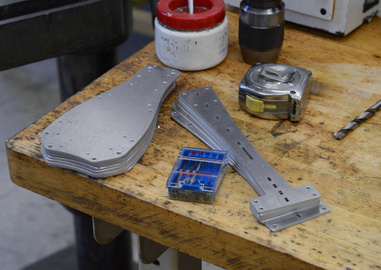
| The camera and display stalks were cut from sheet aluminum using the MIT Hobby Shop waterjet. |
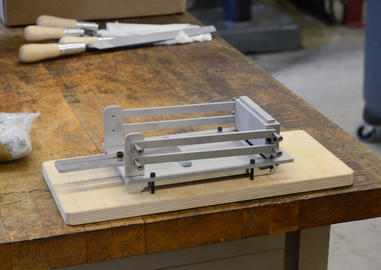
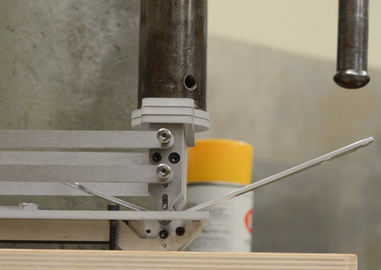
A custom press brake was designed and fabricated in order to bend the stalk components with the correct radius. |
|
|
| The stalks being bent using the custom brake in tandem with an arbor press. |
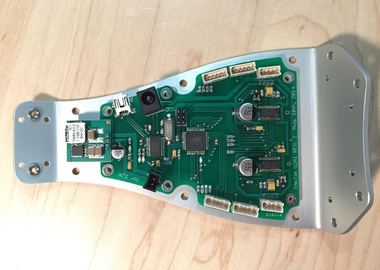
Inside each camera stalk is a custom PCB containing an MCU for low-level motion control, stepper drivers, and DC-DC power supply circuitry. |
|
|
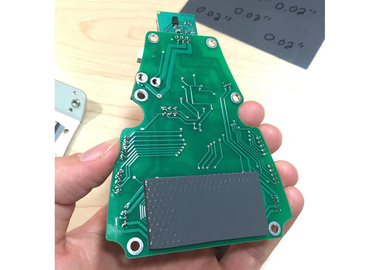
| The aluminum stalk doubles as a heatsink for the stepper drivers, which are coupled using thermal vias and a gap pad on the back of the PCB. |
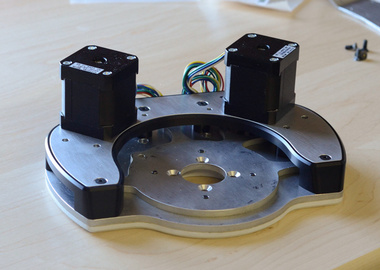
The base assembly is a sandwich of stiff and durable aluminum plates with a plastic housing between. Although in hindsight premature, this was an early view on manufacturability. |
|
|
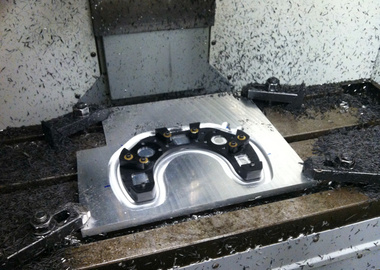
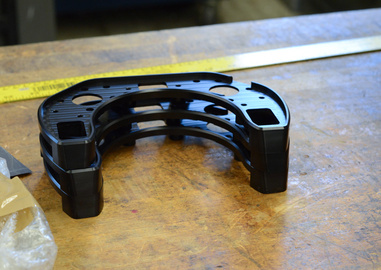
| The main delrin housing being machined from multiple sides using a nest fixture, on a machining center at the MIT Edgerton Student Shop. |
Three top plates, one for each prototype that was built. |
|
|
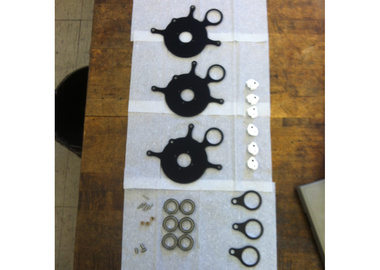
| A collection of linkage components. Some of these were cut on the waterjet, post-machined as needed, and then anodized. |
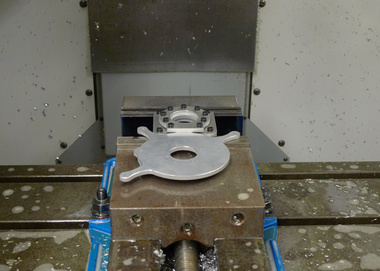
Post-machining the precision bearing bore in a waterjet-cut "shift plate." |
|
|
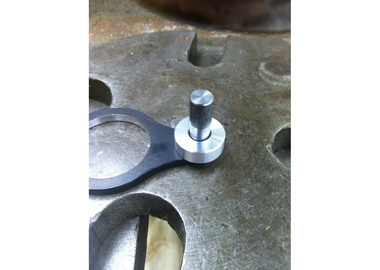
| A variety of press fixtures were created to assist with assembly. This one is used to install bushings. |
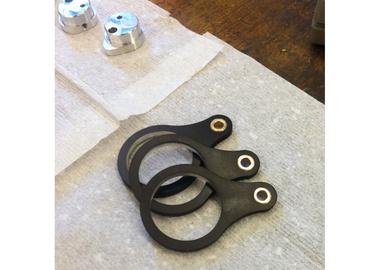
"Shift arms" with their pivot bushings installed. |
|
|
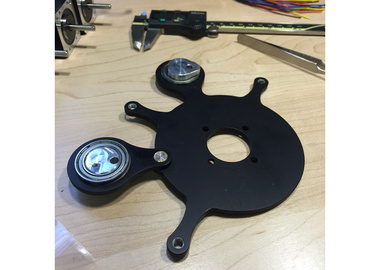
| The linkage design has been one of the most highly conserved elements of Origin, and persists to this day. |
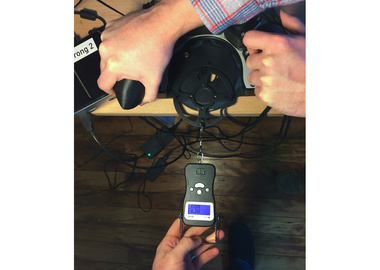
With Armstrong, we sought to better understand the mechanical performance of the positioning mechanism. Here we are testing the holding force of the stepper motors thru the linkage - a critical aspect of cutting performance. |
|
|
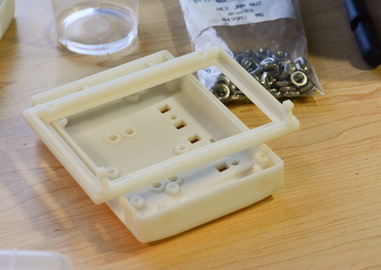
| 3D printed housing shells for the display. |
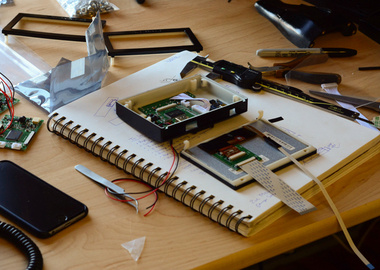
The display assembly. |
|
|
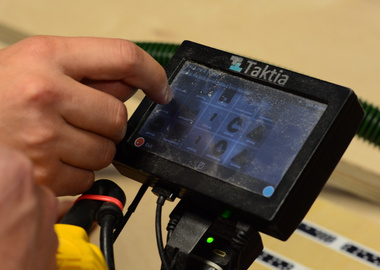
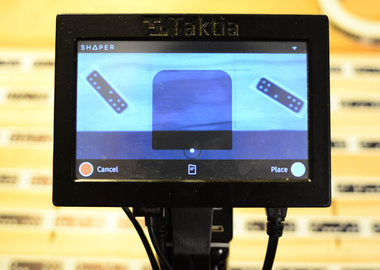
| One important upgrade from v1.5 was the inclusion of a touchscreen interface. This made a massive difference for the user interactions. |
An early version of the Origin UI. |
|
|
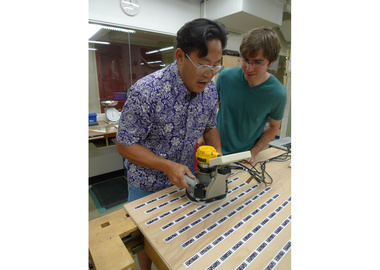
| The MIT Hobby Shop was very supportive to us, even after graduating. Here we are doing some testing with shop director Hayami Arakawa. |
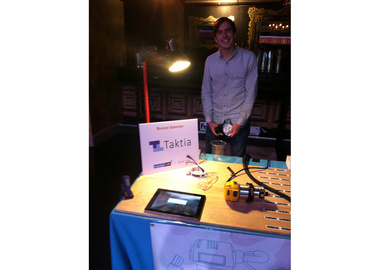
During this period we continued to exhibit at venues like this Tech Crunch event in downtown Boston. |
|
|
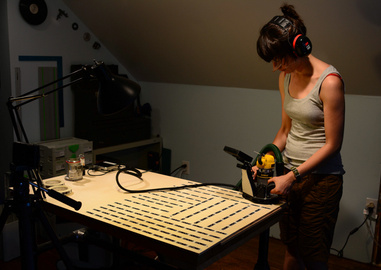
| My friend Nadya Peek, taking Armstrong for a spin in my attic. |
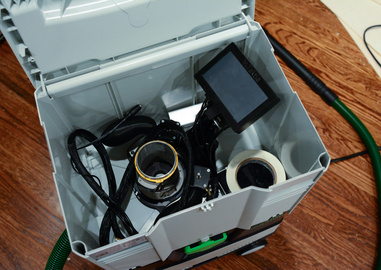
Our first attempt at fitting Origin into a systainer. This foreshadowed a crucial decision and an early touchpoint with our now-sister company Festool. |
|
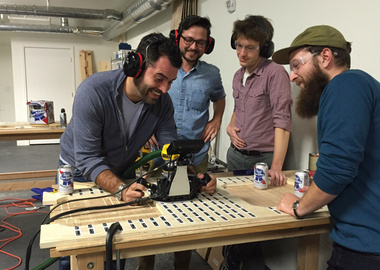
| We continued to use Armstrong for over a year until Brubeck was up and operational. This photo was taken with our growing team and an early investor, in our Oakland office in February of 2015. |