|
|
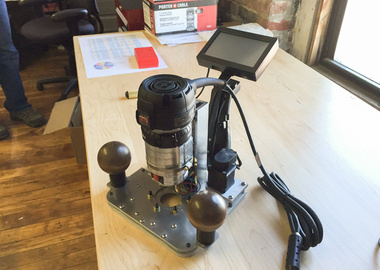
| [Jan. 2015] A massive upgrade to Brubeck was a third axis for automatic plunge and retract, which we first explored with this prototype. |
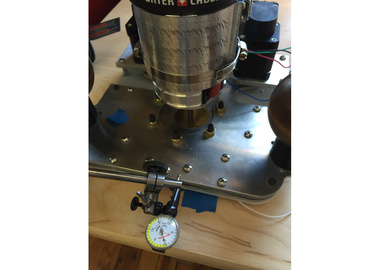
Testing our automatic tool touchoff feature. A scale in the base is constantly measuring the machine's weight, which changes when the cutter makes contact with the workpiece. |
|
|
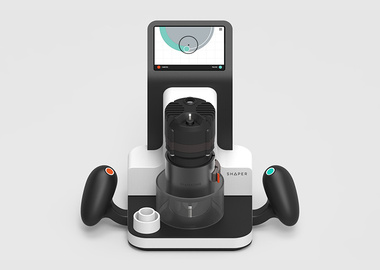
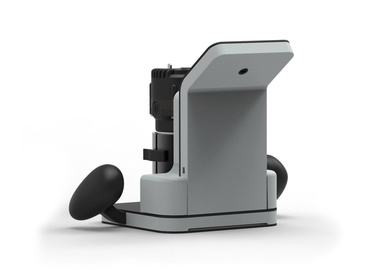
| [Mar. 2015] Design and engineering fed off each other. Renderings were a tool for feedback, leading to this final design. |
A back view showing the camera and integrated LED array. |
|
|
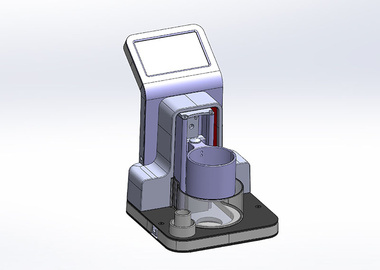
| [Mar. 2015] Brubeck was modeled as a single multi-body part, with over 1000 features in the same file. We changed approaches in Coltrane as the team (and the stakes) grew. |
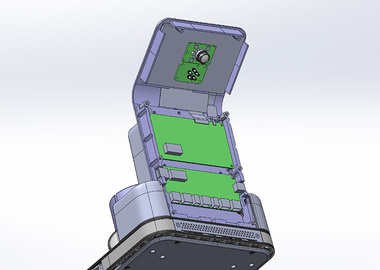
Board outlines and connector placements were determined in mechanical CAD, and then transfered to ECAD for PCB design. |
|
|
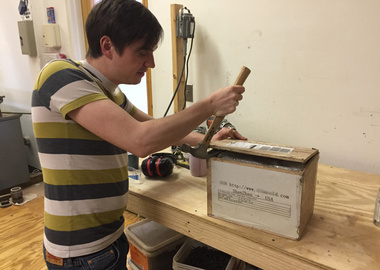
| [Apr. 2015] For the first time, we sent out to have parts made for us, which arrived quite well packaged. |
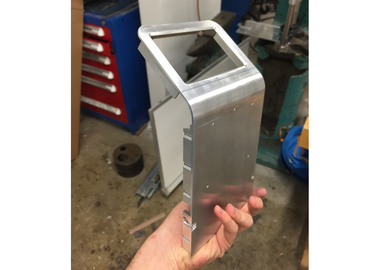
One of the trickier components was the display housing, which had to be machined from plate and then bent. |
|
|
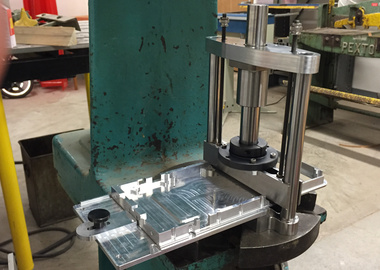
| We designed a custom bending fixture to create the correct radius while clearing various machined features. |
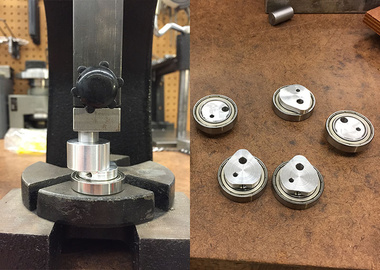
We also created several press fixtures, like this one that helps insert pins into the already installed eccentric plugs. |
|
|
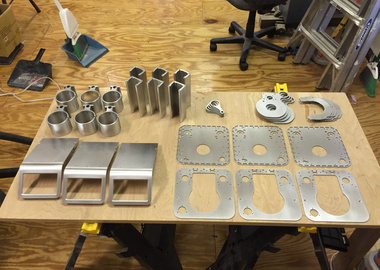
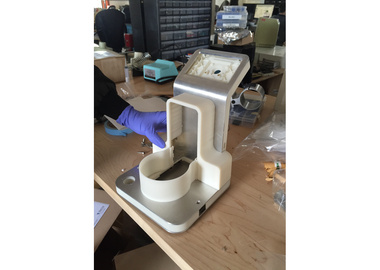
| All of the metal components are ready for dry fitting and then anodize. |
[Apr. 2015] A first look at assembly by dry fitting the major metal and 3D printed components. |
|
|
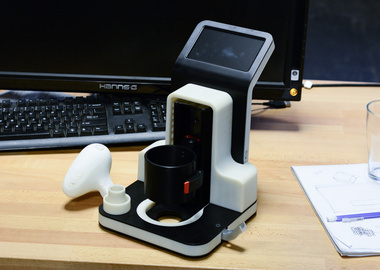
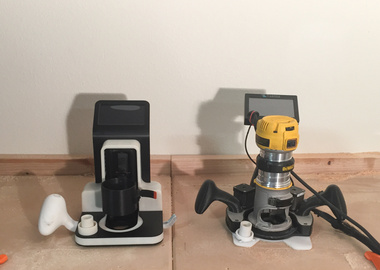
| The first assembly still used 3D printed parts, as the urethane-cast substitutes took a while to arrive. |
Even partially assembled and with 3D printed parts, Brubeck was looking a lot more like a product than Armstrong. |
|
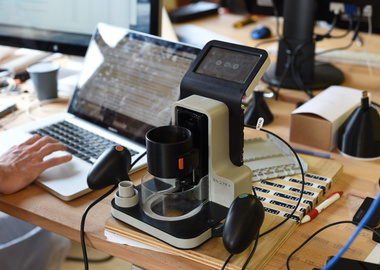
|
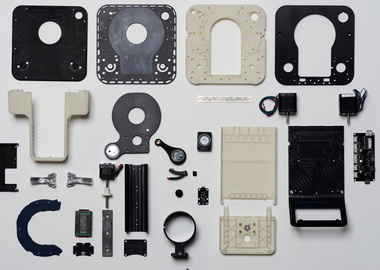
| Most of the Brubeck parts in one place. |
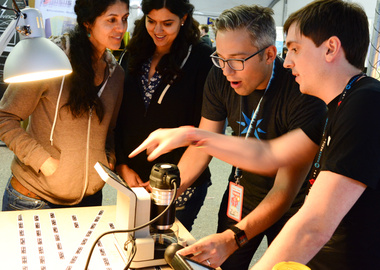
Easily lost in the mechanical focus of this portfolio is the tremendous effort that has gone into software development, and bringing up software on new prototypes. |
|
|
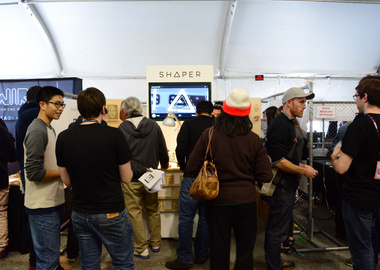
| [May 2015] We debuted Brubeck at the 2015 Bay Area Maker Faire. |
By this point, we had changed our name from Taktia to Shaper, as reflected by our booth. |
|
|
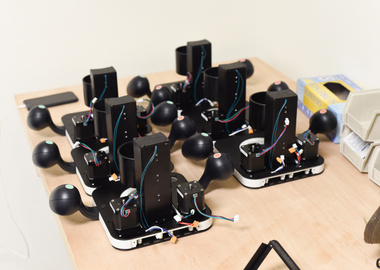
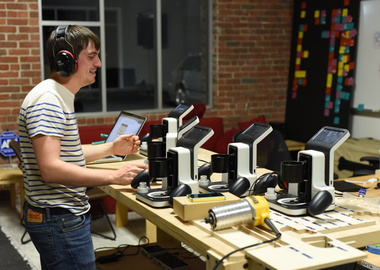
| [Jun. 2015] On of the first decisions by our new CEO Joe Hebenstreit was that we would build another 10 Brubeck units, to support a beta testing program. |
|
|
|
| |
|
|
|
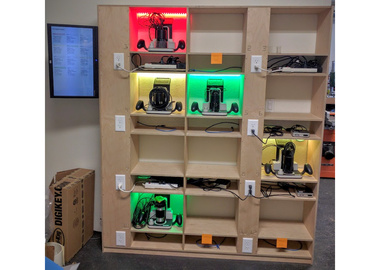
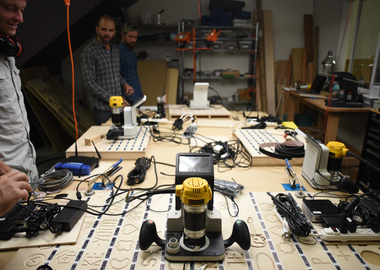
| With so many machines, we needed a place to store them. The "Shaper Basket" ensued. Colored lights indicate which units are good to go, and which need attention. |
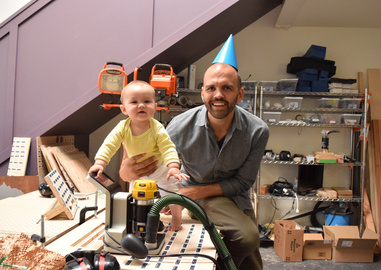
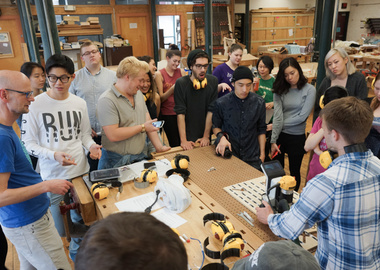
One benefit of many machines is that we could host demo parties! |
|
|
| A demo I did for Prof. Andy Law's industrial design class at RISD. |
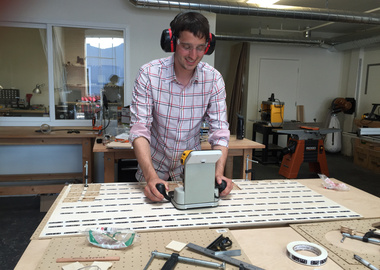
My friend Steve Keating trying out the tool at our office in SF. |
|
|
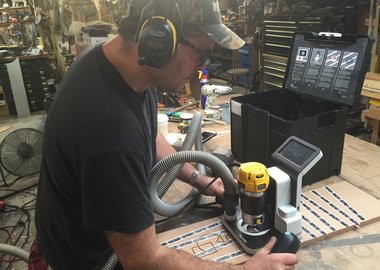
| Jimmy DiResta in his workshop in NYC. |
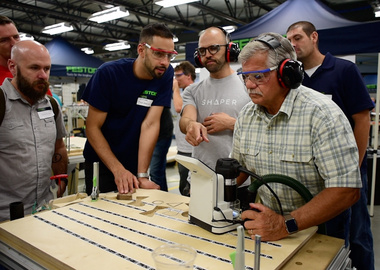
Tom Silva from This Old House, at Festool Connect 2016. |