|
|
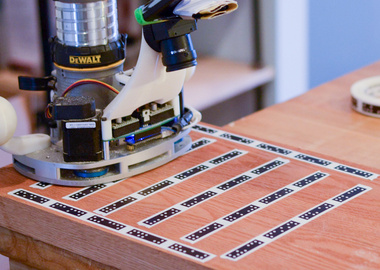
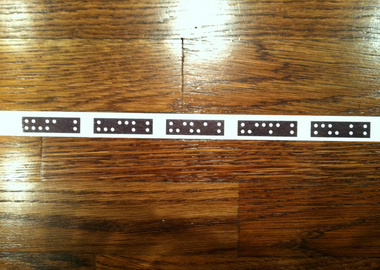
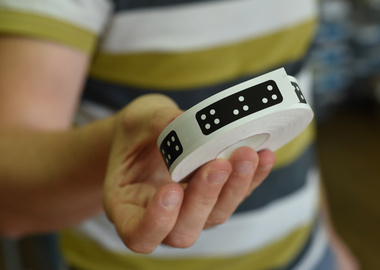
| Our position-correcting router relies on a field of high contrast dominoes - which are easy for the computer vision system to identify - in order to locate itself. |
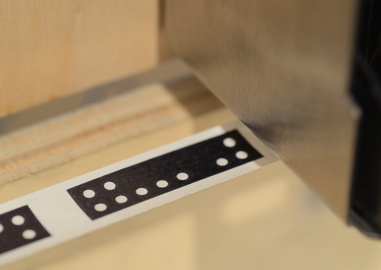
The printing accuracy of each domino directly influences the cutting accuracy of the tool. We print a non-repeating pattern, making each tape field uniquely identifiable. |
|
|
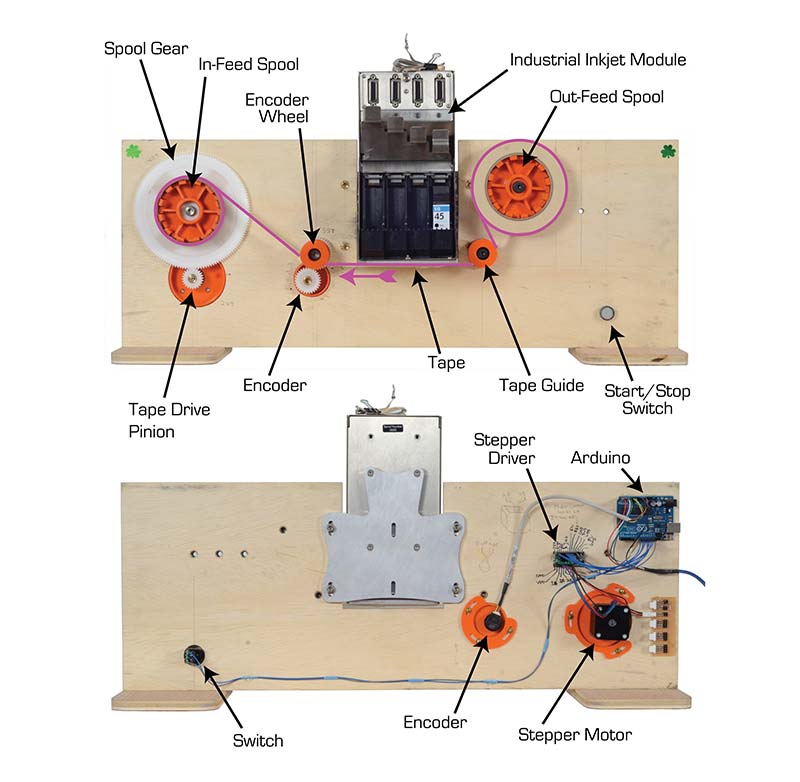
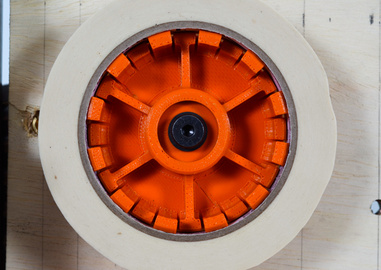
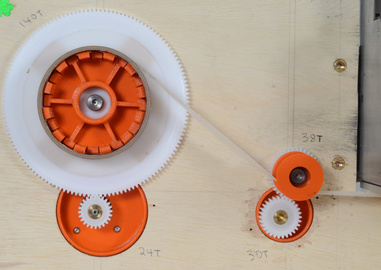
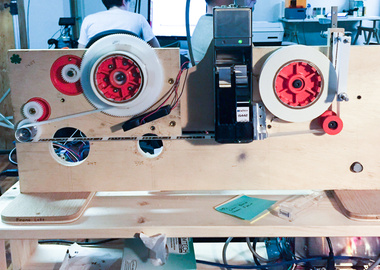
| Each spool has alternating locating features and spring fingers to keep the tape concentric and retained. |
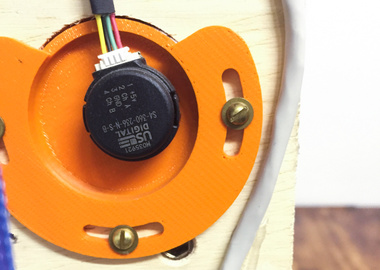
Both the encoder wheel and drive motor are mounted on eccentric pucks, allowing the gear clearances to be precisely adjusted. |
|
|
| This rotational adjustment range can be seen in the slotted mounting features. |
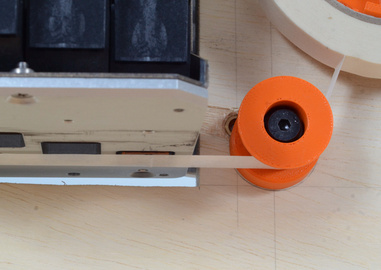
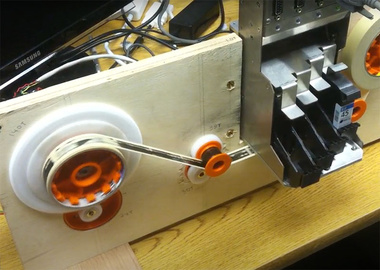
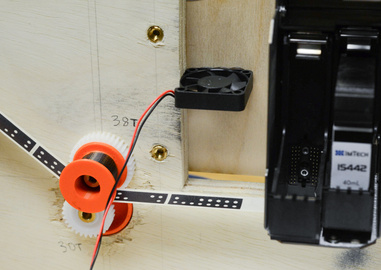
The tape passes under a 0.5"-wide inkjet nozzle. |
|
|
| One of the first challenges we faced was smearing of the standard water-based inkjet ink. The top surface of masking tape has a waxy release coating to keep it from sticking to itself, but also prevented the ink from drying. |
Switching to a solvent-based ink solved the problem. Additionally, we installed a fan to improve the drying time and increase print speed. |
|
|
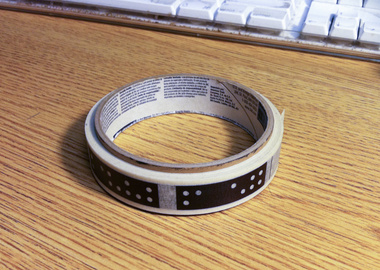
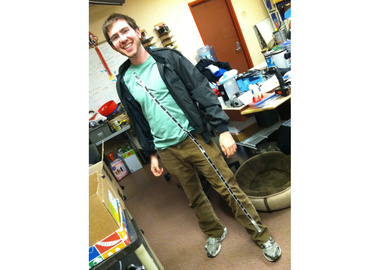
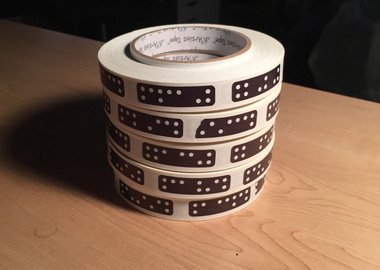
| Finally, a clean roll of printed domino tape! |
A small celebration! |
|
|
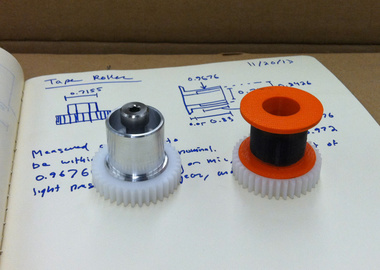
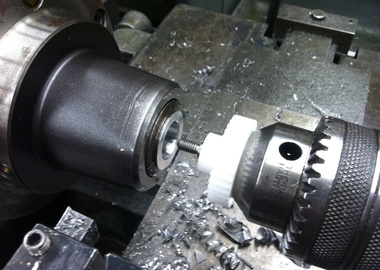
| Next, we focused on accuracy and print speed. One element of this was replacing the 3D printed encoder wheel with a precisely turned aluminum wheel. |
Here you can see the drive gear being pressed into the back of the encoder wheel on the lathe, to help improve concentricity. |
|
|
| Moving the encoder wheel further from the printhead improved accuracy by increasing the wrap angle of the tape, and enabled us to increase speed by lengthening the drying distance. |
Quality control was performed by laying 10 ft of tape on the floor of my attic, and measuring the average domino pitch over that distance. |
|
|
| Once the printing process was dialed in, the tape printer became a vital piece of infrastructure that for several years supported our prototyping and user testing activities. |
With significant effort from the broader team, we eventually switched over to the industrial printing process we use today. |