|
summer 2007
issue 13.1
|
||||
|
Patient to patient | MIT Medical and beyond | Both sides of the story | Getfit@mit 2007: Another successful challenge | Meet the getfit@mit winners
{ print
version
 } }Both sides of the storyWhen the doctor becomes the patient In more than 50 years of practicing medicine, including almost 15 years as MIT Medical's medical director (1986-2000), internist Arnold Weinberg, M.D., has seen a number of patients through hospitalizations and surgeries. But that didn't mean he was prepared for being a patient himself. In 1998, Weinberg had a heart attack while playing tennis, underwent a balloon angioplasty, and spent a week in the hospital. In 2005, he had a hip replacement. "It's humbling for a doctor to become a patient," he says, "but not even physicians are immune from the wear and tear of illness or aging." Trust and communicationThe most important thing, Weinberg says, is to have trust in one's physicians, starting with the primary care provider making the initial referral. "Since I'm at MGH now, and MIT Medical doesn't pay my salary anymore, I think I can credibly say how lucky this community is to have this facility and this band of skilled clinicians, who are able to get to know patients over time," Weinberg comments. "Some MIT Health Plan members stay with us for unbelievable lengths of time, and that long association allows clinicians to really fine tune referrals when referrals are necessary. That's an enormous advantage compared to almost any other type of healthcare system." Doctors have a reputation for being notoriously difficult patients, Weinberg admits, but, he says, he doesn't second-guess his specialists. Recently, for example, he cancelled a planned Ecuadorian bird-watching expedition when his cardiologist questioned the wisdom of subjecting his heart to the strain of the extreme altitudes the trip would have entailed. "I'm a patient who respects his doctors," he says. "So if I want to look at birds in South America, I'll just have to do it at lower altitudes." Weinberg also places a high value on doctor-patient communication. "Besides having confidence in your doctor's clinical skills, you need to feel that you can ask questions or bring up concerns," he emphasizes. "You need to be able to ask questions like, 'What part of the hospital will I be in? What can you tell me about the anesthesia? What are some possible complications? Can we talk about medications, both medications I take now and things you think I'm going to need?' "For instance, I didn't know that I was going to be on Coumadin for three weeks after my hip procedure," he continues. "Of course, if I had thought about it as a doctor, rather than as a patient, I would have realized I needed to be on an anticoagulant," he adds. Weinberg says his experience as a patient has made him pay more attention to how well, and how completely, he explains things to his own patients. Planning aheadIf you're planning elective surgery, Weinberg suggests that doctors and patients also communicate clearly about their respective schedules. "As a patient, look ahead for a time that's convenient for you," he recommends, "and then find out how that timing jibes with your surgeon's schedule. For instance, I would not have wanted my hip replacement to be done by a surgeon who was planning to be away for three weeks starting a week after my operation. You just never know when there's going to be a post-operative problem." And scheduling extends to the recovery period as well, Weinberg adds. "Ask your doctor to be realistic in estimating recovery time," he says. "You know, under ordinary circumstances, given your age and physical condition, what are the doctor's expectations for recovery time if everything goes well? And if it doesn't go so well, how much time are we talking about? "It's better to plan for a longer recovery," Weinberg says. "If you feel better sooner, you can take that bit of extra time to catch up on your reading or take a little vacation. And if you recover more slowly, you won't be wringing your hands because you're not assuming responsibilities as originally planned." Recovery takes timeAfter his two hospitalizations, Weinberg says he's become much more sensitive to the issue of pain control and better understands what's involved in recovering from major surgery, injury, or illness. "I've learned that pain is a real thing, and that physicians should never worry-and patients should never worry-about using too much pain medication and becoming addicted," he says emphatically. "It's for a relatively short time that anyone is going to be using a lot of pain medication, so you just need to do what you need to do. In this day and age, no one should feel they need to 'tough it out.'" Neither should patients expect to "bounce right back" after surgery or hospitalization, Weinberg says. This is something he came to understand all too well after his hip replacement. "Anyone becomes de-conditioned very quickly when they are put to bed, given medications, and don't eat well for a while," he says. "And the amount of de-conditioning is totally unpredictable, except that the older you are, the longer and deeper the de-conditioning process is, which leads to a longer recovery time. I was in pretty good shape when I had my surgical procedure, but I was still feeling the effects six weeks later." Based on his own experiences with elective surgeries, Weinberg says he tries to be encouraging while also conveying realistic expectations. "A hospitalization is a big thing for anyone, regardless of age or physical condition," he emphasizes. "It helps when I can tell patients, 'Hey, it's going to get better. It is going to take a lot of mettle on your part to keep working at it. But, believe me, it is going to get better.'"
{ print version
} |
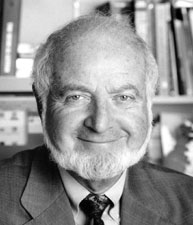 "It's humbling for a doctor to become a patient," says former medical director Arnold Weinberg, M.D., "but not even physicians are immune from the wear and tear of illness or aging."

|
|||
 |
 |
 |
 |
|


Building E23, 25 Carleton St. (Mail to 77 Mass Ave.)
Cambridge MA 02139-4307 Telephone 617-253-4481 |
||||

