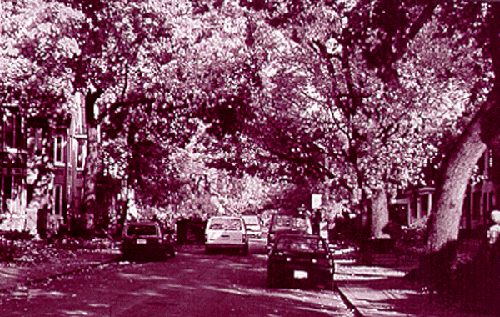
| Nearly 60% of most urban areas could be classified as forest. Urban
forests range from the downtown of large cities to beyond the suburbs to
rural lands being considered for development. Urban forests differ from
rural forests in that they have high densities of fauna (humans) and limited
growing space for trees. The urban forest can be classified into downtown,
city-residential, suburban, and fringe. Further classifications are street
trees, park trees, greenways, yard trees, and open space. In West Philadelphia,
the urban forest comprises mainly street trees, woody or weedy lots, and
gardens. |
| Although not well understood by most urban dwellers, the urban forest
is an ecosystem that carries out a number of crucial biogeochemical processes.
Trees and other vegetation filter pollutants from the air, generate oxygen,
control stormwater runoff, prevent soil erosion, and moderate microclimate.
The vegetation also provides food, nesting sites, and protective shelter
for wildlife. |