| Few people realize just how biologically complex urban areas actually
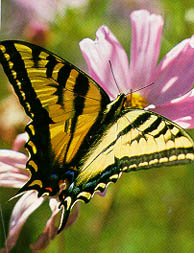
are. Cities abound in animals usually thought of as belonging in rural woods
or meadows out in the "country," e.g, raccoons, foxes, skunks,
hawks, songbirds, fish, butterflies, bats, and even coyotes. |
 |
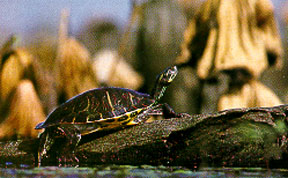 |
Students at Sulzberger Middle School have reported seeing garter snakes,
opossums, raccoons, turtles, rabbits, and numerous birds in their neighborhood. |
| Wildlife habitat is often created in urban areas as part of the development
design process. Even when their primary function is something else, urban
design features can produce valuable habitat. For example, stormwater retention,
detention, and infiltration schemes can be designed to provide permanent
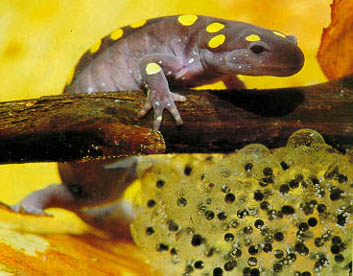
or transient aquatic habitats suitable for a number of species.This spotted
salamander (right), for example, can survive in an urban habitat that provides
undisturbed woodland adjacent to an area that forms vernal (temporary spring)
ponds. |
. |