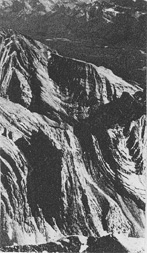

If you learn how to read the earth, it will tell you the story of how it was formed. The landscape of Mill Creek is a result of both geologic and human events. Its landforms tell a story. The story of this neighborhood begins on a much larger scale, beginning with geologic forces. These forces have contributed to the unique characteristics of the land, and may critically influence how you tell your story of the Mill Creek neighborhood. The Piedmont mountain formation was created by the first of three mountain building events called the Taconic orogeny. The closing of the Iapetus Ocean produced east-west pressure and caused the earth to fold, heat, and melt, creating the metamorphic rock that is the bedrock underlying this region. Over time, the bedrock has eroded and broken apart, resulting in the formation of soil. This "natural" soil, in turn has been altered by humans. It is human activity on the land that creates what is called urban soil. Like many East Coast cities, Philadelphia is on a geologic fall line. This fall line is between the Inner Coastal Plain and the Piedmont Province; the rocks in the Schuylkill River are an expression of this fall line. The development of Philadelphia began when early settlers were unable to continue navigating up the waters of the Schuylkill because of the fall line. |
.