What's New... (as of June 2015)
The 22nd annual MIT-Princeton Microsymposium on Polymers will be held in MIT on June 10 and June 11 2015. Graduate students and postdocs from the Cohen-Rubner group at MIT and the Register group at Princeton will present a number of talks in Room 66-360. The list of presenters can be found here.
Professor Cohen has been elected to the American Academy of Arts and Sciences, a learned society and policy research center that dates back to its founding in 1780. The Fellows of the academy are drawn from a wide variety professional activities including mathematics, physical and biological sciences, social sciences and humanities, business, government, public affairs and the arts. More information can be found at American Academy of Arts and Sciences
The Cohen group is happy to welcome Dr. Kenan Song as a new post-doc in the group. His research focus will be on fabricating and examining the mechanical properties of different polymer coatings generated by Layer-by-Layer deposition.
The Cohen group is pleased to welcome Prof. Khalid Askar who will be collaborating with the Cohen-Rubner groups for 2 years on developing a high performance multifunctional coating for desert based solar cells.
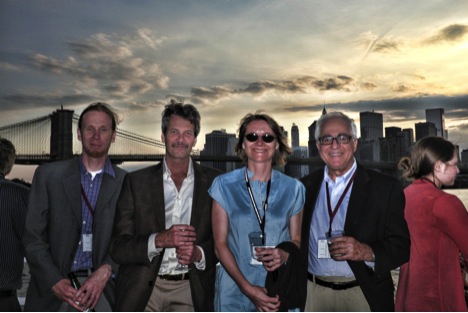 The Cohengroup was well represented at the conference on Layer-by-Layer Assembly that was held on June 23 & 25 at Stevens Institute in Hoboken NJ. The conference was organized by Cohen’s close collaborator Professor Michael Rubner of the MIT Department of Materials Science and Engineering and longtime friend of the Cohengroup, Svetlana Sukhishvili of Stevens Institute. Our groups contributions to the conference technical program were a lecture presented by Cohen that summarized Hyomin Lee’s recently-completed PhD thesis research on H-bonded LbL Films and a lecture by postdoc Roberta Polak on mucin-based release layers. A highlight of the conference was the dinner cruise around Manhattan. Photo below shows Rubner and Cohen with other conference attendees (far left) David Lynn from Wisconsin and (center) Catherine Picard from Grenoble France. Roberta Polak appears at the right admiring the New York skyline.
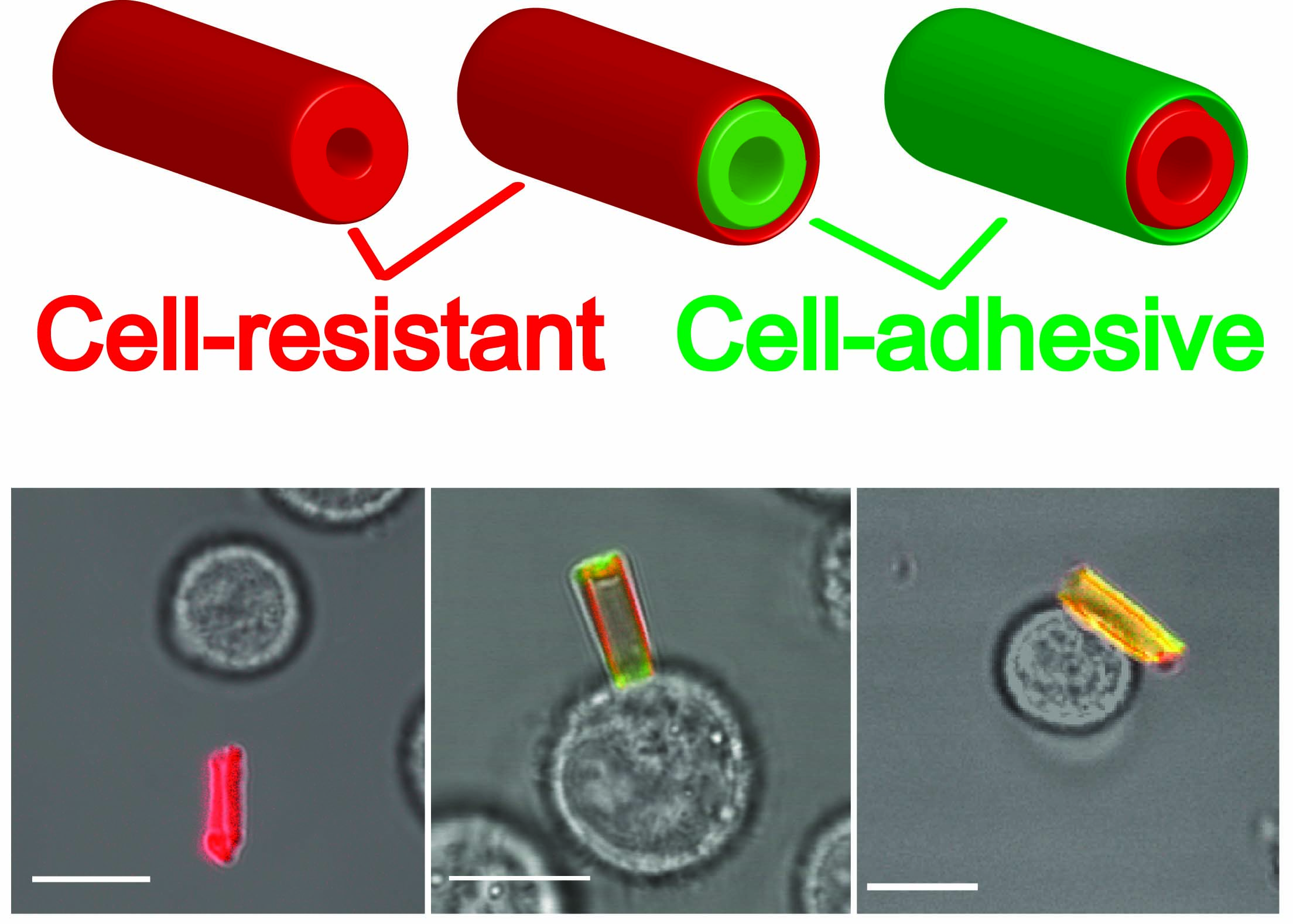
Graduate student Rosanna Lim won first place in the materials engineering and sciences poster session at the annual AIChE conference in San Francisco. She presented on the "Covalent Attachment of Polyelectrolyte Multilayers to Cells."
The Boston-based Marion and Jasper Whiting Foundation considers proposals on an annual basis to support participation of New England college professors in international scholarly activities of various types. Professor Cohen's 2013 proposal to the foundation was one of 36 selected for funding from the pool of 118 proposals considered. He will participate in a workshop on 'Fog and Dew Harvesting: Theory and Practice' that he and Dr. Daniel Beysens will host at ESPCI Paris Tech on Monday September 30. The workshop agenda is available for download.
Work on fog harvesting led by group members Kyoo-Chul Park (PhD '13) and Shreerang Chhatre (PhD '13) was featured on MIT news. The reasearch findings are available online in the journal Langmuir.
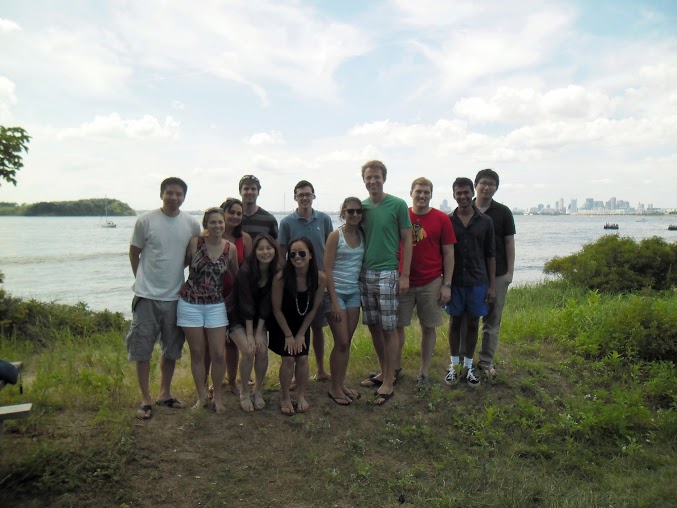
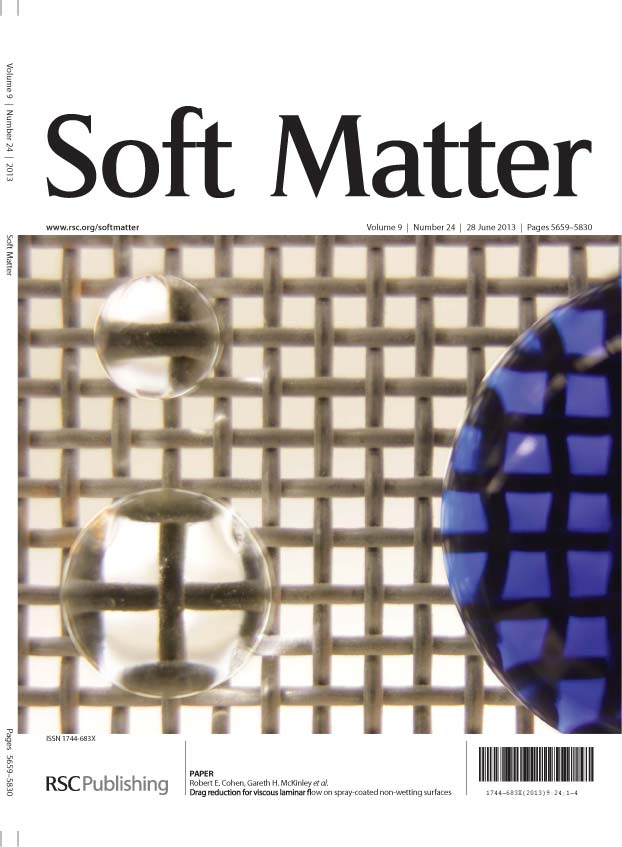
The 20th annual MIT-Princeton Microsymposium on Polymers will be held in MIT on June 12 and June 13 2013. Graduate students and postdocs from the Cohen group at MIT and the Register group at Princeton will present a number of talks in Room 66-360. The list of presenters can be found here.
Jonathan Gilbert's work on 'Depth-profiling X-ray photoelectron spectroscopy (XPS) analysis of interlayer diffusion in polyelectrolyte multilayers ' has been published in PNAS.
Hyomin Lee's work on 'Zwitter-Wettability and Antifogging Coatings with Frost-Resisting Capabilities' has been featured on MIT news.
Graduate student Jonathan Gilbert presented a talk on "Methods of polymeric backpacks attachment for cell-mediated drug delivery" in the 244th ACS National Meeting & Exposition in Philadelphia, Pennsylvania in the Abiotic/Biotic Interfaces session (Thursday, August 23 at 2:00 PM).
The 19th annual MIT-Princeton Microsymposium on Polymers will be held in Princeton on June 14, 2012. Graduate students and postdocs from the Cohen group at MIT and the Register group at Princeton will present a number of talks.. The list of presenters can be found here.
Graduate student Siddharth Srinivasan was one of the recipents of the 2012 Peebles Award for his work on the 'Perturbation Analysis of Accuracy of Contact Angle Determination for Sessile Drops on Liquid Repellent Surfaces'. He was also was the runner-up for the 2012 Alan Gent Award for the Most Distinguished Student Paper.
The following group members will present talks at the 86th ACS Colloid and Surface Science Symposium at June 10-13, 2012 at Johns Hopkins University, Baltimore, Maryland.
- Mon, Jun 11, 9:50 - 10:10 AM
Non-wetting surfaces and estimation of slip lengths
S. Srinivasan, R. E. Cohen, G. H. McKinley; - Wed, Jun 13, 1:50 - 2:10 PM
Utilizing dynamic contact angle tensiometry to quantify the kinetics of switchable surface rearrangement
J. A. Kleingartner, H. Lee, G. H. McKinley, R. E. Cohen - Wed, Jun 13, 3:40 - 4:00 PM
Water-harvesting mesh surfaces
K. Park, S. S. Chhatre, A. Deng, R. E. Cohen, G. H. McKinley
Prof. Cohen has been awarded the prestigious Paul J. Flory Polymer Education Award for 2012. This award is presented biennially in recognition of outstanding achievements in promoting undergraduate and/or graduate polymer education. An award symposium in honor of Prof. Cohen involving a number of distinguished invited speakers will be held during the Spring ACS National Meeting in San Diego at 8:00 AM on Wednesday, March 28, 2012.
