HomeSearch Sitemap Contact

Shortcuts Go
   Request Services Maps & Floor Plans In Development & Construction Sustainability About Us Parking and Transportation For Facilities Employees  
 
nav bullet off Cogeneration Plant
nav bullet off Conservation
nav bullet off Landscaping Initiatives
nav bullet off Recycling
nav bullet off Solar Power
nav bullet off Sustainable Design

Conserving the Environment and Resources

The Department of Facilities is accelerating efforts to make MIT a model environmental citizen. The Institute’s environmental goals guide the department’s efforts to manage the life cycles of new and old buildings, reduce waste and increase recycling, produce green power, and conserve resources. These efforts have resulted in two MIT buildings receiving LEED certification LEED (Leadership in Energy and Environmental Design) is the nationally accepted benchmark for the design, construction, and operation of high-performance green buildings.

NW35, the graduate residence hall, Ashdown House received a LEED-Gold certification from the U.S. Green Building Council. Overall NW35 was awarded 40 LEED points for optimizing a sustainable design, using no-toxic materials and incorporating innovative sustainable solutions. NW35 is the first LEED-Gold Building on campus.

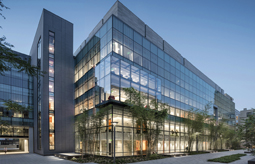
MIT's Brain and Cognitive Science Complex, received a Silver certification and was the first MIT building to receive this prestigious rating. The LEED Silver target was identified early in the design process so that necessary documentation from the designers and builder could be captured for the LEED qualification package. In addition, the new Sloan building project team anticipates a Gold rating. MIT has committed to collecting and submitting LEED documentation for certification. While valuing certification as an accepted measure of sustainable design, a well-designed and energy-efficient building remains MIT's goal. Learn more about the Brain and Cognitive Science Complex or about MIT's sustainable building program.

Building

Facilities staff develop standards to assure that environmental and conservation initiatives are designed into each construction project. Facilities has registered two new buildings for the prestigious Leadership in Energy and Environmental Design (LEED) certification. Renovations focus on conservation and sustainability and recent demolition projects recycled 96 percent of waste.

Recycling

The department works with EH&S to develop and implement a recycling effort that aims to increase campus recycling above its current rate of 40 percent. MIT has boosted the range of recyclable items to include printer cartridges and computer monitors, food waste and cardboard, and made buying recycled products an Institute priority. A "Do's of Recycling" flyer lists what's recyclable on campus.

Energy Efficiency

Facilities award-winning cogeneration plant saves resources and reduces pollution by producing electricity with a natural gas turbine engine then turning resulting hot exhaust gases into steam. The plant reduces MIT's pollutant emissions by 45 percent.

Conservation

Since 1990, MIT has instituted conservation efforts throughout the physical plant. Recent equipment upgrades in six campus buildings and low-flow bathroom fixture improvements in both residential and academic buildings save more than 37 million gallons of water each year. Replacing steam valves on 3,000 campus radiators resulted in annual savings of nearly 18 million pounds of steam valued at $233,000.

The Department of Facilities has installed 70 "VendingMisers" on cold beverage machines across campus. Using a custom passive infrared sensor, these systems power down vending machines when the area around the machine is unoccupied and automatically re-power the machines when traffic returns. The result is a potential 46 percent reduction in energy consumption on each machine. Over the course of a year, this translates to a savings of approximately $140 per machine.

 image
 Related Links
 MIT Energy Initiative (MITEI)
 Environment at MIT
 Mass Department of Environmental Protection: Waste & Recycling
 Working Group Recycling (WGR)
 Sustainability at MIT
 Contact Info

Facilities

Department Directory

Environment, Health and Safety

Edward Akerley
Interim Manager

Engineering

Peter Cooper
Manager, Sustainability
Engineering & Utility Planning
making MIT work Massachusetts Institute of Technology