
HomeSearch Sitemap Contact

Shortcuts Go
   Request Services Maps & Floor Plans In Development & Construction Sustainability About Us Parking and Transportation For Facilities Employees  
 
nav bullet off Cogeneration Plant
nav bullet off Conservation
nav bullet on Landscaping Initiatives
 - Pocket Gardens
nav bullet off Recycling
nav bullet off Solar Power
nav bullet off Sustainable Design

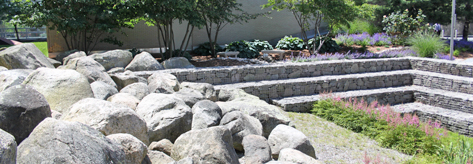
Stata Swale

Plant list
Trees
Acer rubrum (Red Maple)
Plataus x acerifolia (London Planetree)
Pinus strobus (White Pine)
Quercus bicolor (Swamp White Oak)
Salix babylonica (Weeping Willow)
Amelanchier (Serviceberry)
Betula pendula (White Birch)
Hamamelis virginiana (Witch Hazel)

Shrubs
Comptonia peregrine (Sweetfern)
Ilex glabra (Inkberry)
Vaccinium angustifolium (Lowbush Blueberry)
Viburnum trilobum (American Dwarf Cranberry Bush)

Ferns/Groundcover
Arctostphylos uva-ursi (Bearberry)
Gaultheria humifusa (Wintergreen)
Polystichum acrostichoides (Christmas Fern)
Zingiber officinale (Ginger)

Ornamental Grasses/Wildflowers
Astilbe varieties
Chasmanthium latifolium (Northern Sea Oats)
Filipendula rubra (Queen of the Prairie)
Heracleum maximum (Common Cowparsnip)
Iris versicolor (Harlequin Blueflag)
Juncus effuses (Common Rush)
Lobelia cardinalis (Cardinal Flower)
Lobelia syphilitica (Blue Cardinal Flower)
Scirpus validus (Softstem Bulrush)

Did you know?
Approximately one half of the Stata Center site is drained to the biofiltration swale. The swale is constructed with soils and designed to include specific plant species that act as a natural filter. The plant species in the Stata Swale are capable
of filtering oil and grease as well as debris from stormwater.


Location
Stata Bioswale
 Related Links
  Garden Tours
  Pocket Garden Foldable Map 11X17 [pdf]
  Campus Map
 Contact Info

Facilities

Department Directory

Grounds Services

Norman Magnuson
Manager
making MIT work Massachusetts Institute of Technology
