
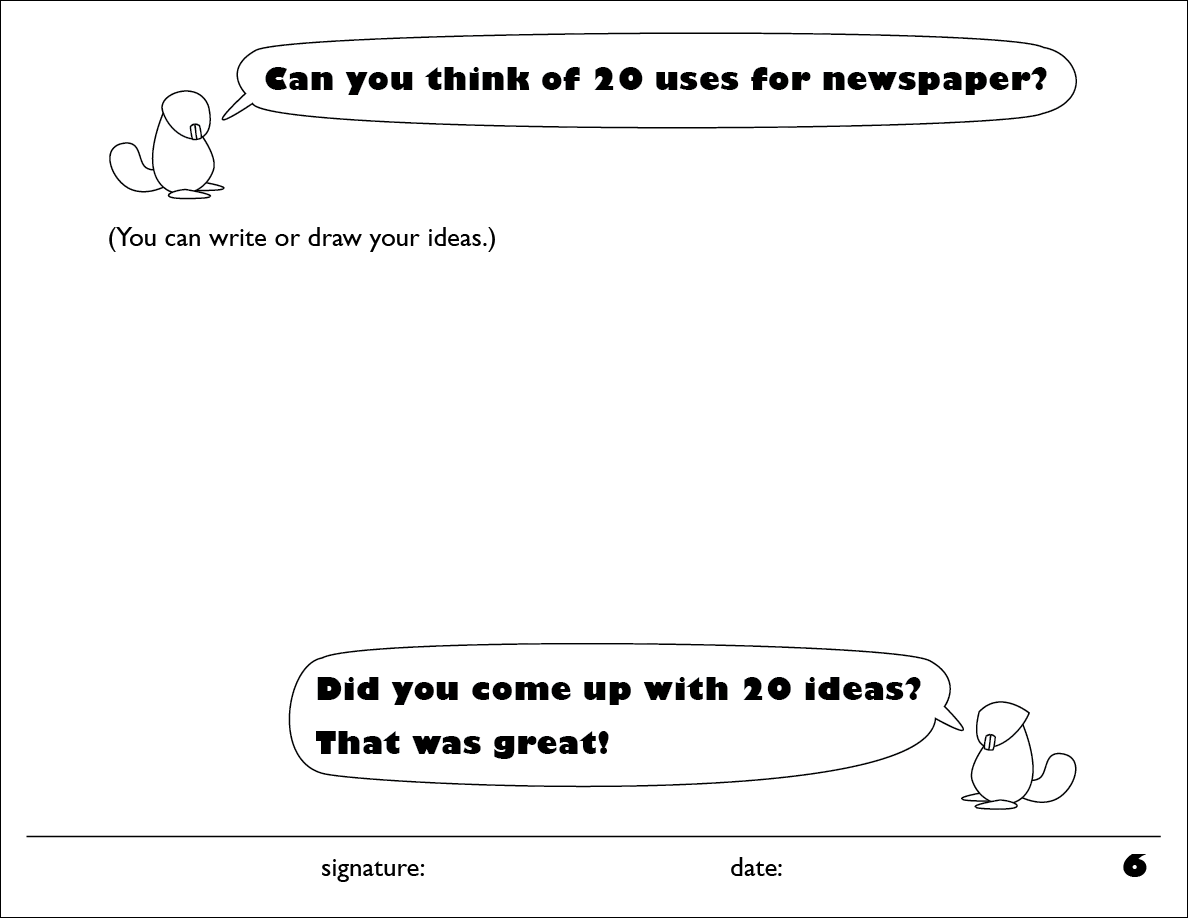

In thinking about the layout for the notebook, we realized there are many different audiences we could design for. Two audiences we were most interested in are aspiring design students and young kids, age 7–10.
For the design students, the notebook could provide an introduction to idea generation methods, sketching, and concept refinement — some of the basics of what courses like 2.009 or 2.00b currently teach.
For the young kids, the notebook could offer a taste of the design process, covering brainstorming, making observations, and drawing. We decided we were more interested in the concept for a kid’s notebook, as well it makes more sense as a product that could be sold at the MIT Museum Shop.
Thinking back to our own experiences using kids’ activities books, and doing a lot of research for what is currently on the market, we found that a lot of workbooks provide very prescribed activities. The examples are somewhat limited and don’t provide much room for original thought or creativity on the part of the child.
This is where design-o-mite’s notebook comes in. We want to provide a minimal structure, enough to motivate the child, but also allow enough freedom to let the child explore and develop their own ideas.
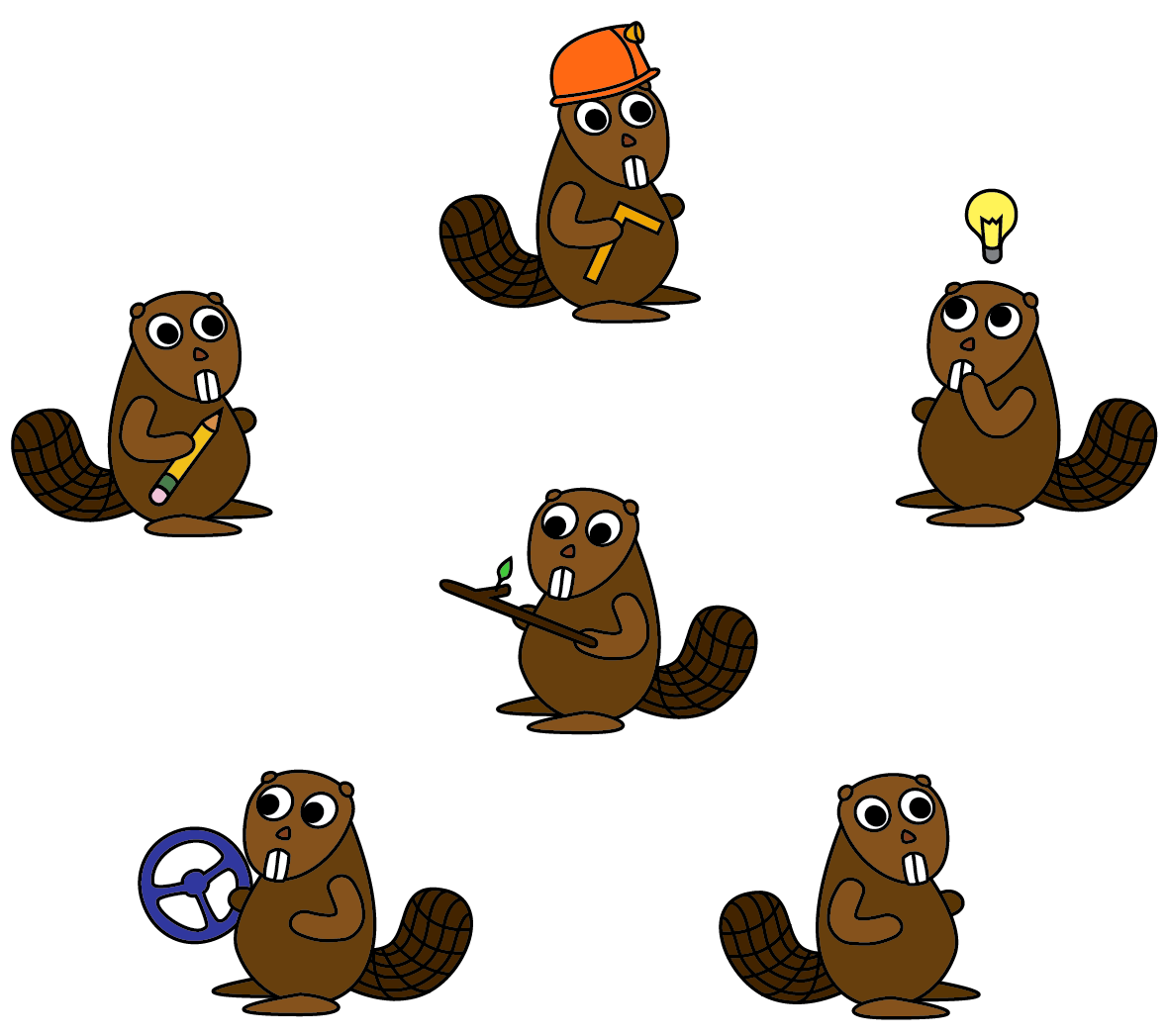
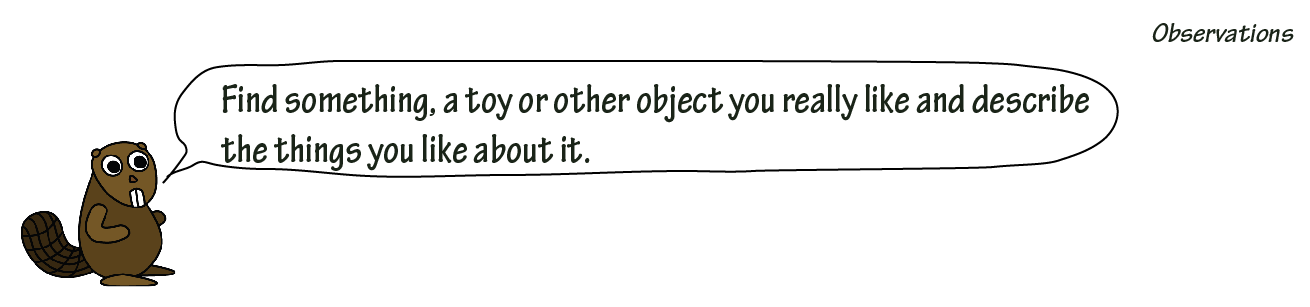
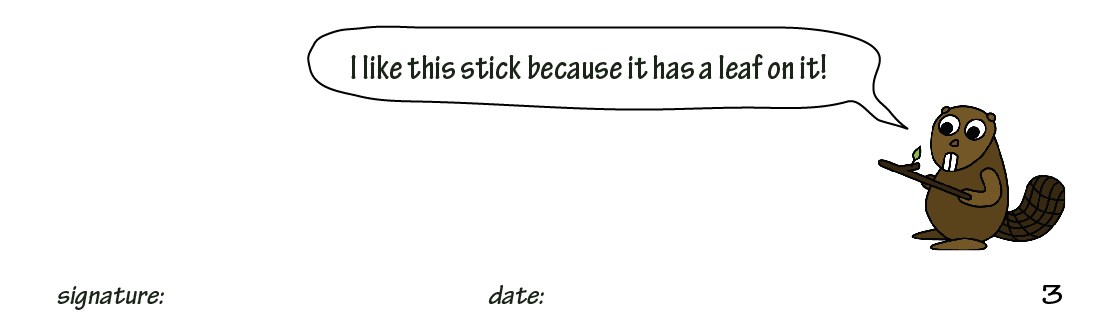
In order to give a sense of continuity for the activities in the notebook, a young Tim the beaver will be a persistent character who gives a face to the narration, offers the motivation behind the design activity prompts, and provides a form that the child can relate to. The young Tim the beaver can be equipped with different props to suit the situation or section in the book. In this example, he has a pencil for some of the drawing exercises.
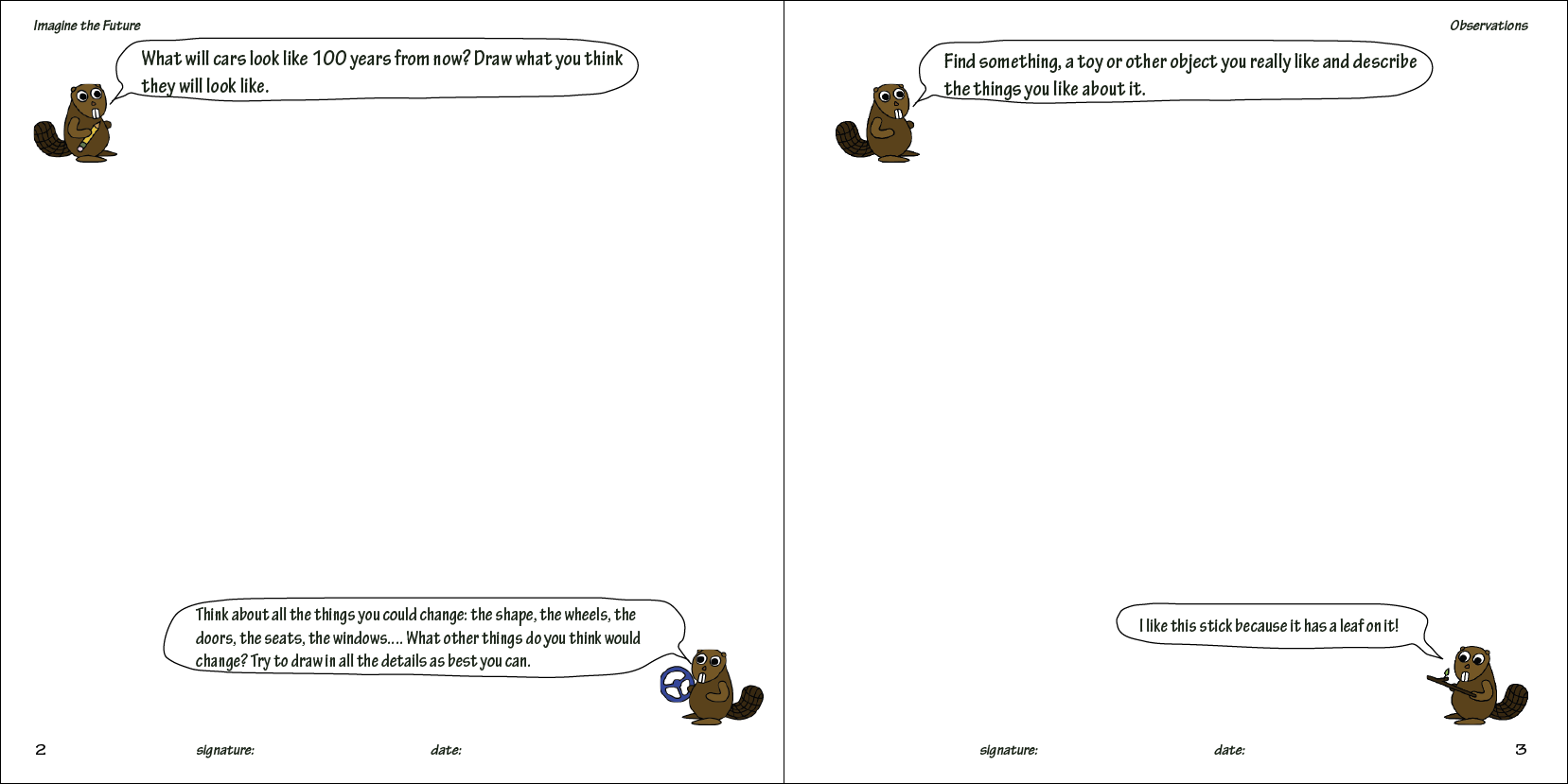
This sample book layout done in Adobe InDesign, shows two facing pages. We’ve left a lot of room on the page for the child to write or draw. At the top of a page is an example of prompt; young Tim asks the child to think of an object and to describe what they like about it. This is the first part of a multi-part process where the notebook guides the child through thinking about objects they like, dislike, identifying those characteristics, and inventing their own version they would like better. This series of activities introduces the child to thinking critically about design and design decisions. At the bottom of every page is a space for signature and date — just like a real design notebook.