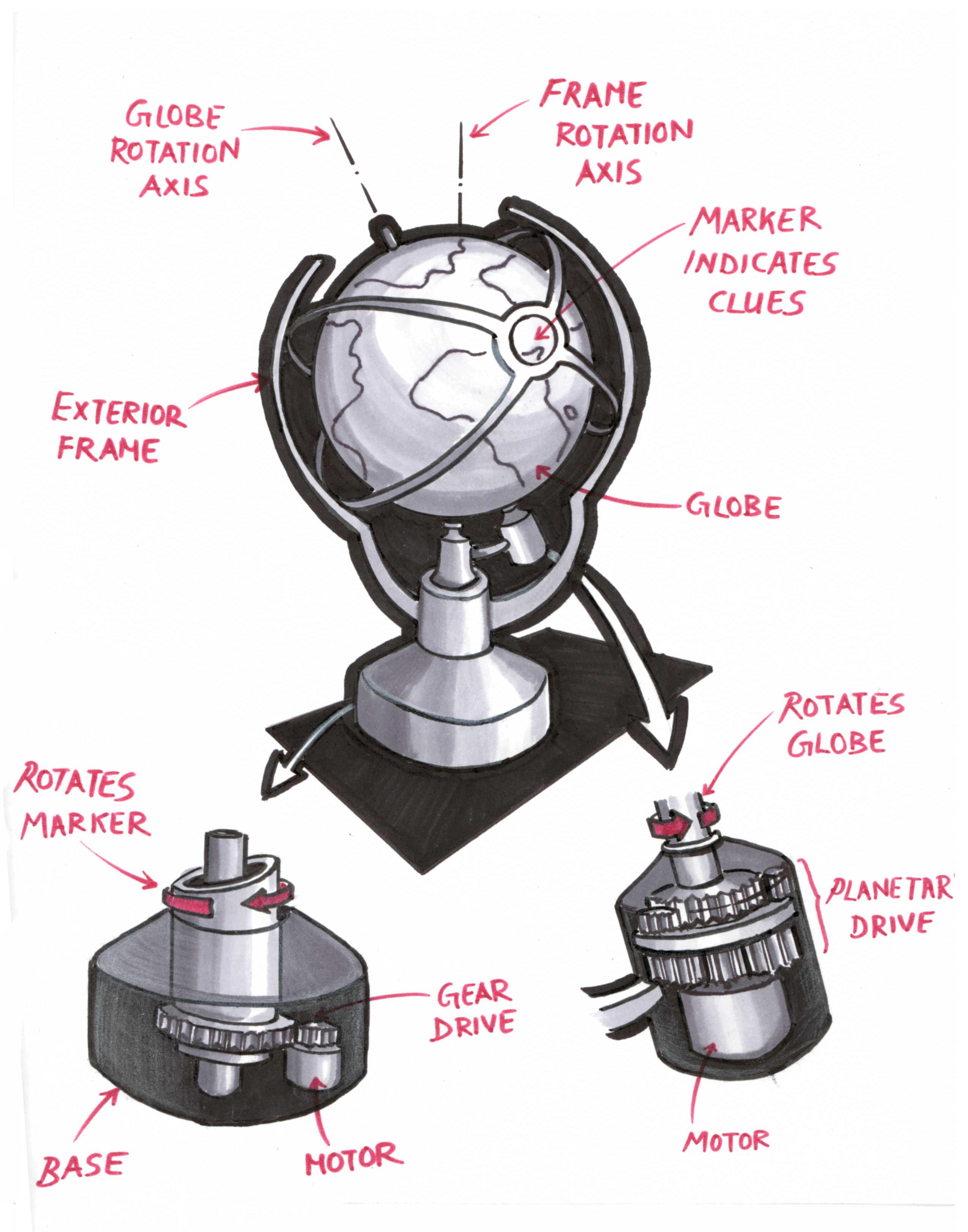
This is my rendition of the globe from Storyboard II. I imagine retrofitting an existing victorian-style globe to develop this prop.
The globe is wrapped inside a metal frame which contains a visible marker to identify clues. The frame will rotate about a vertical axis using a motor and gear train that is fitted inside the base (lower left). This mechanism could also be placed inside the table that the globe rests upon. This frame would be manufactured from brass (or painted to look like it) because the antique look would better fit the setting.
The globe is rotated about a tilted axis by another motor which is embedded in the holder. This motor needs to be small. Therefore, in order to produce the desired rotation, I have implemented a compact planetary gear set much like the one found in small hand-held drills (lower right). The "whirring" sound of this motor will also provide some audible feedback to the patrons.
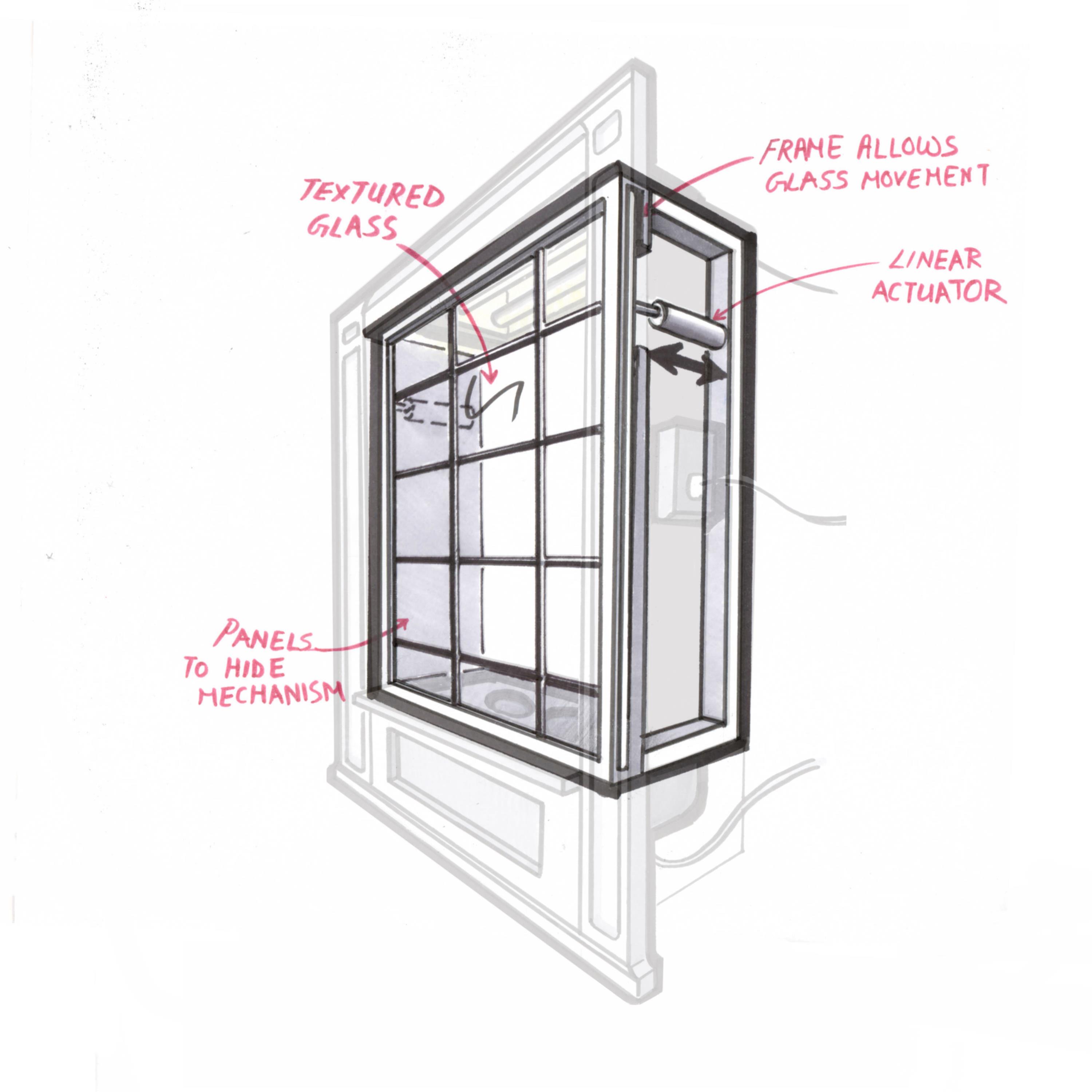
This gag was featured in Storyboard I. The purpose of this device is to give the impression that there is a thunderstorm brewing outside. It would simulate the flashes of light, the howling winds, and the rumbles of thunder that would be experienced during an actual storm. The intention is to generate a spooky atmosphere in the room. To communicate this concept clearly, it has been decomposed into the three main elements: the window frame, the rattling device, and the audio-visuals.
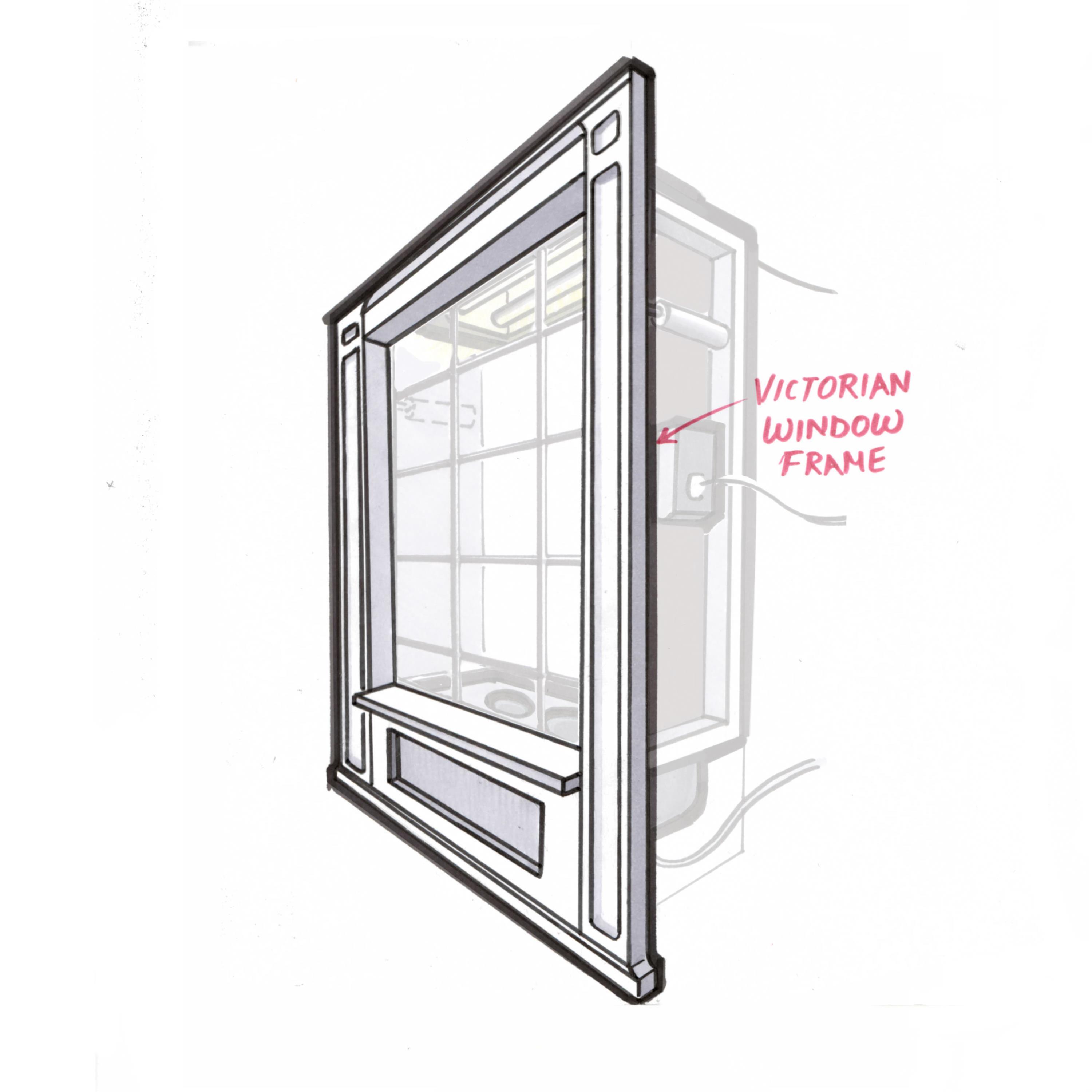
The frame will be mounted on the wall and hide the mechanism behind it. The frame is designed to look like it belongs in an old Victorian home. Typically, it would span the full height of the wall from floor to ceiling.
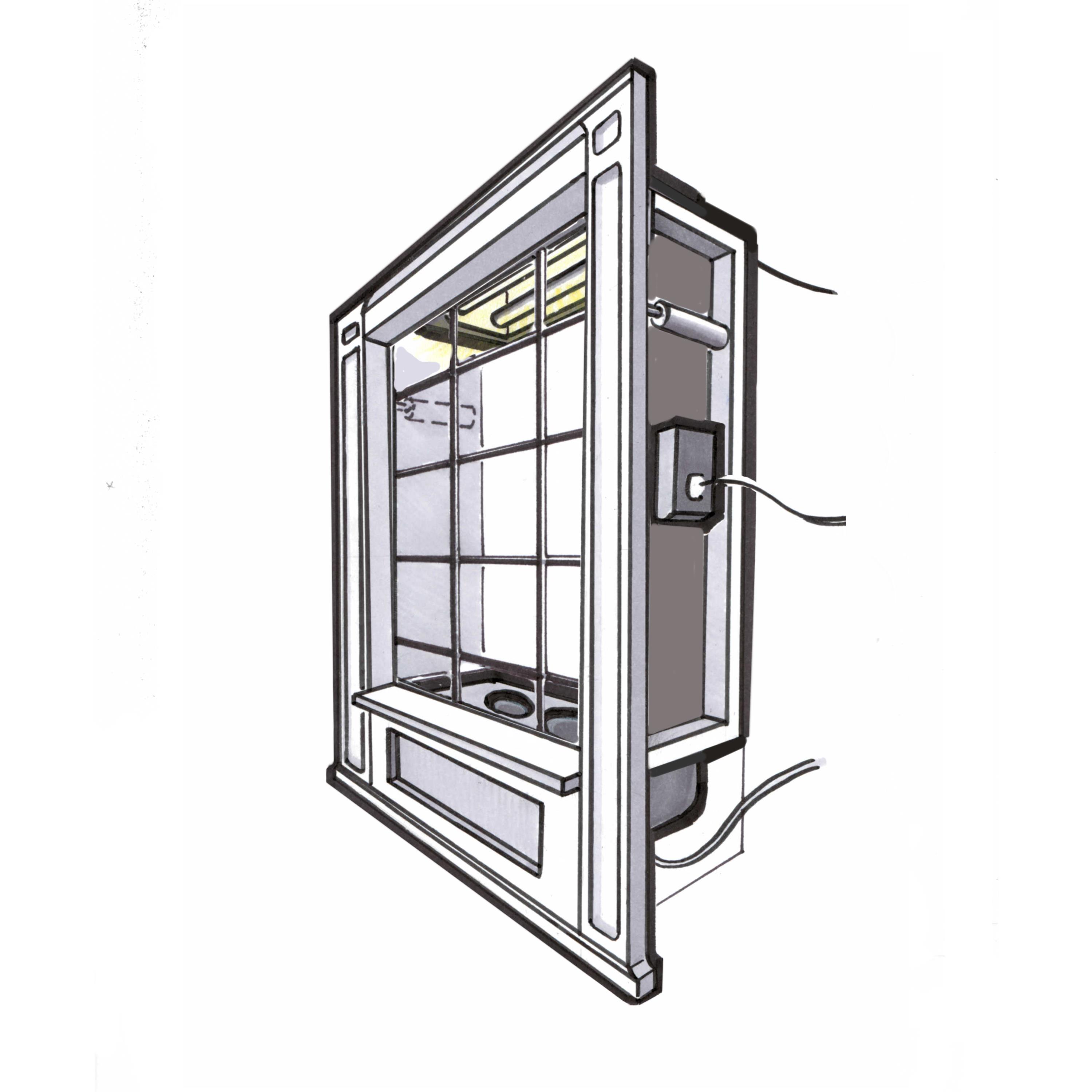
Old windows that are loosely fitted tend to rattle during thunderstorms. To simulate this effect, the pane of glass is fitted into a frame that allows some play. Then, either an electric or pneumatic actuator is used to rattle the pane. The rattling can also be produced by a crank and a regular rotational motor.
A textured pane of glass will be used. Not only is this suitable for the setting, but it would have the effect of diffusing the light that is flashed from the single-source behind it. Overall, this would produce a more realistic simulation of a lightning flash.
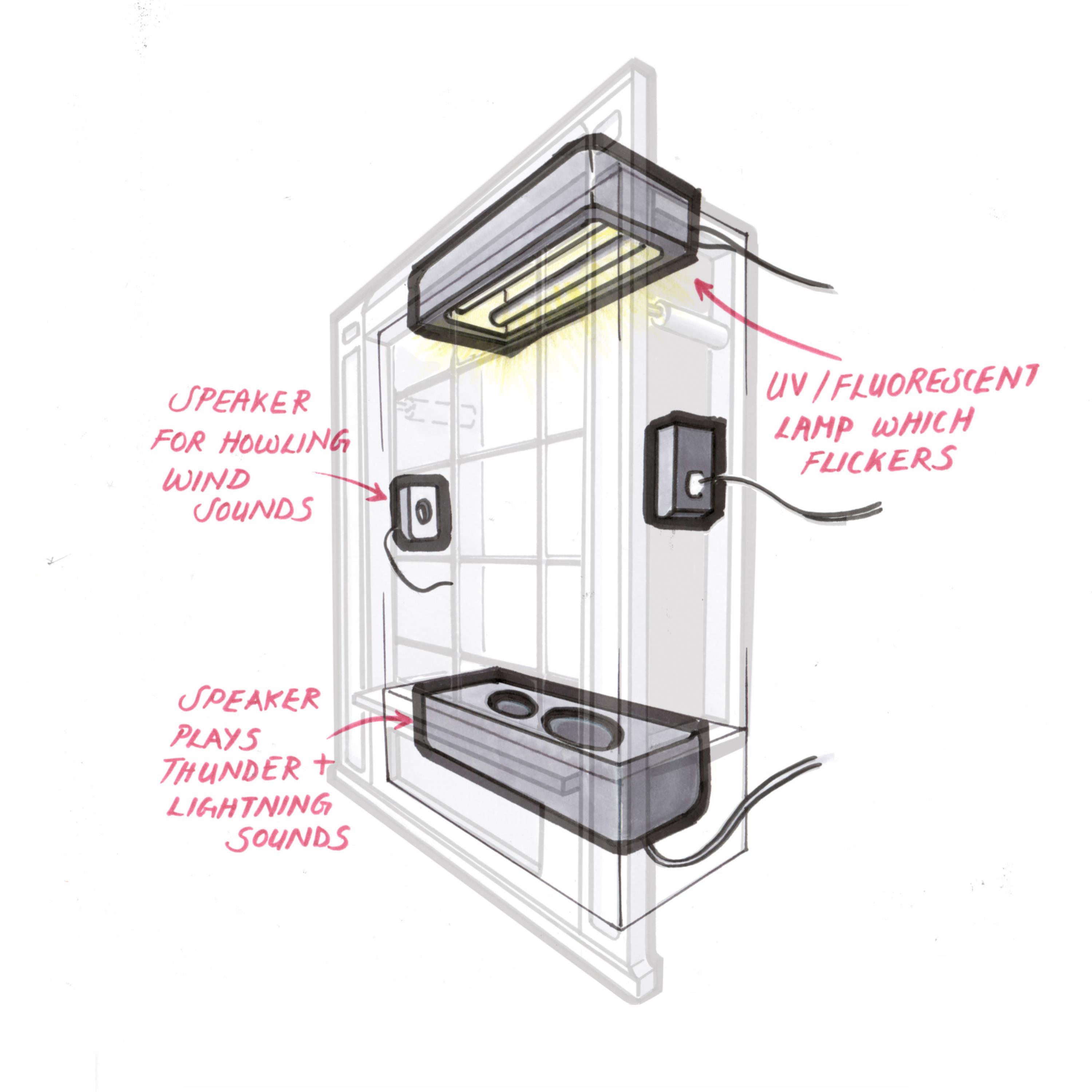
Lastly, this image shows the speakers and lamp that will be used to generate the audio-visual cues.
The lower large speaker will be used to produce the sounds of thunder and lightning. The overhead lamp will be flashed at fixed intervals (determined by the lightning soundtrack) to simulate lightning. A blacklight can be implemented here to reveal clues in the room that are painted in fluorescent paint.
Two speakers were added to the sides of the frame to simulate howling wind.