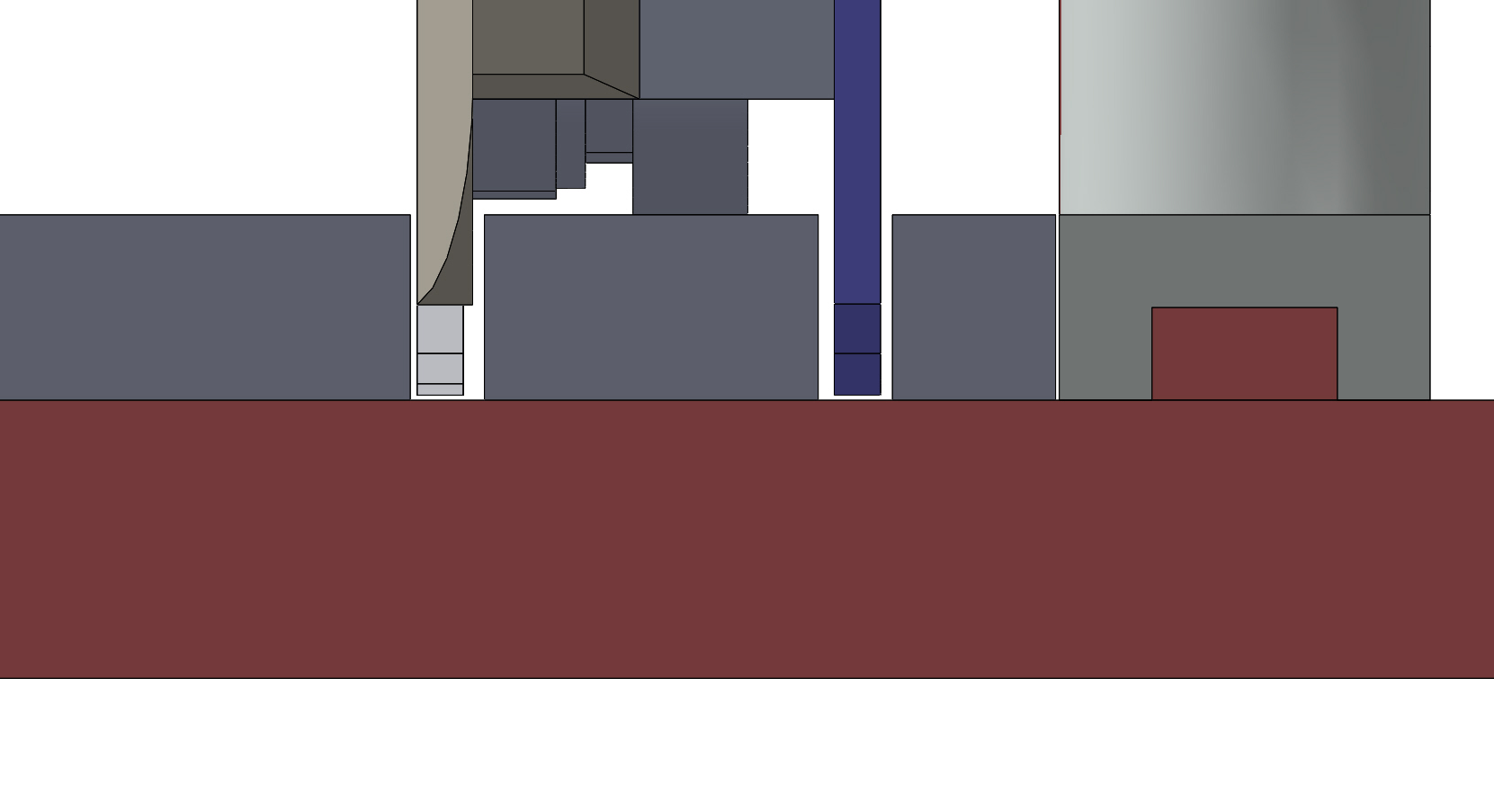
The System
Click on a system element to learn more about it
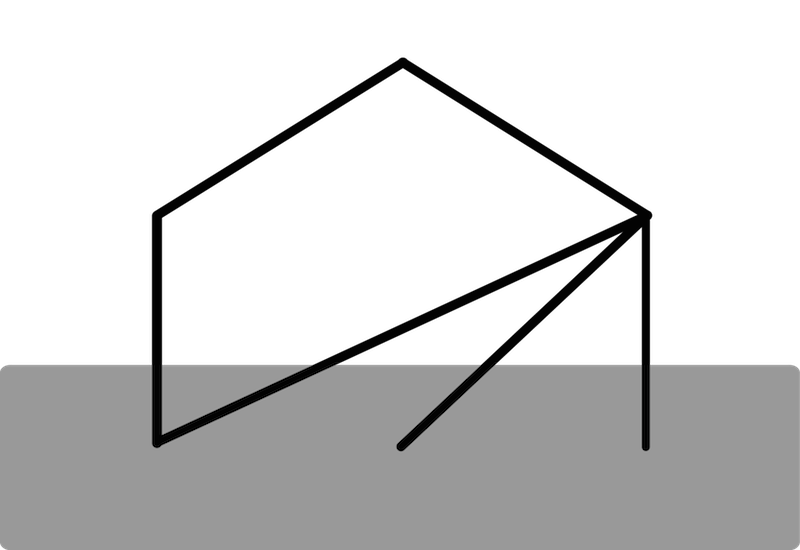
Challenges and Constraints
Minimizing floor cut
There were a number of realizations that occurred as we refined our door design.
Vertical Seam Symmetric Motion Door
Although they can be accomplished in a relatively compact symmetric manner, designs with vertical seam between panels give the impression that they will move out horizontally and rotation seems unexpected and unnecessary.
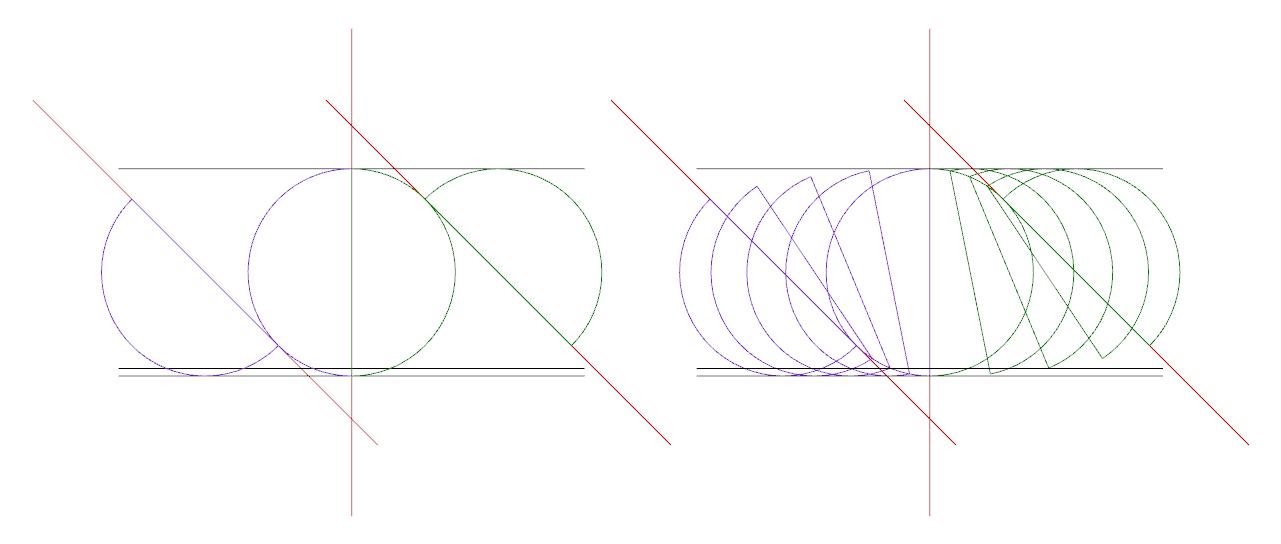 Angled Seam Symmetric Motion Door
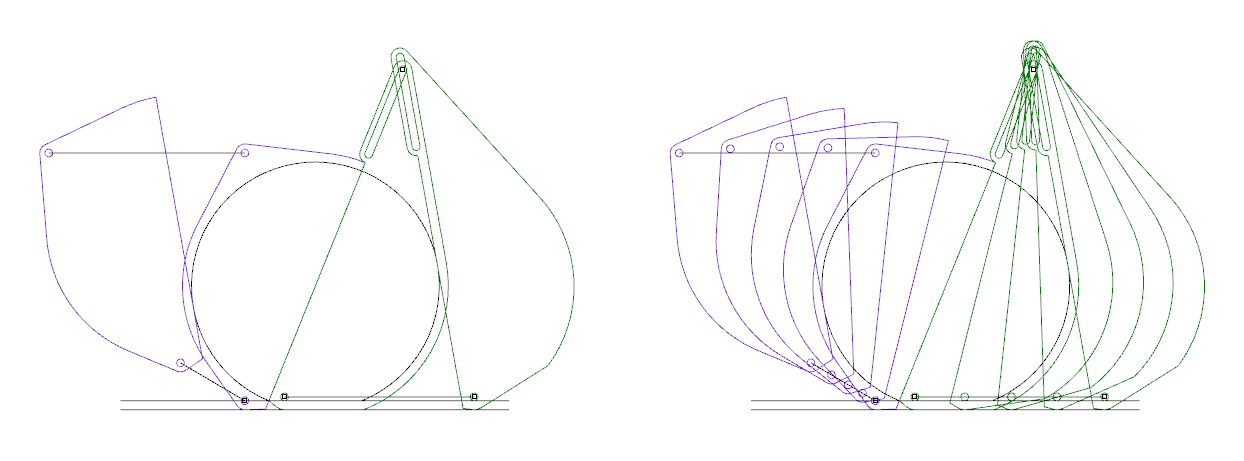
Symmetric designs with the desired starting angle and motion still require substantial floor cut - at least eight inches.
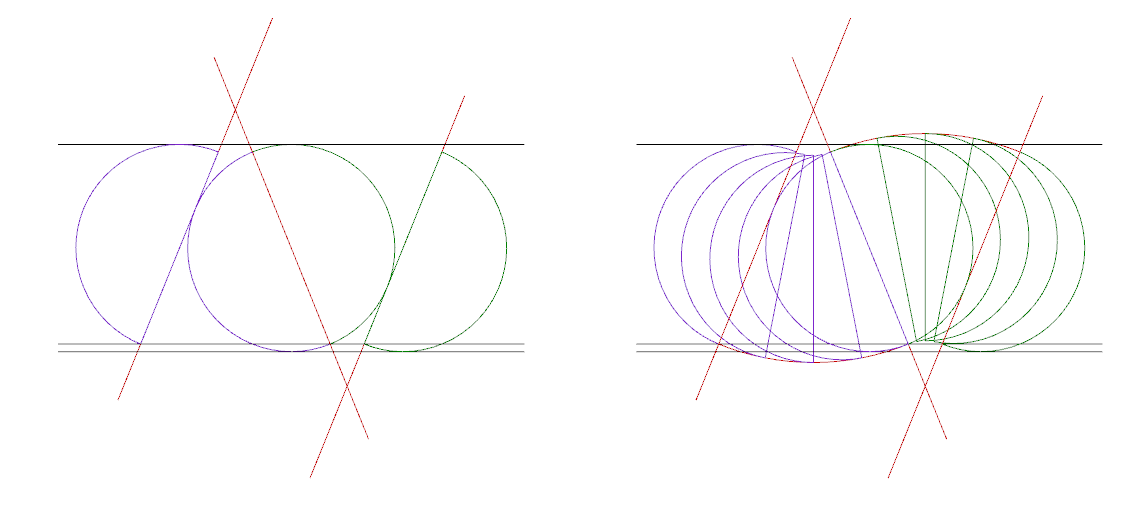 Angled Seam Asymmetric Motion Door
Driving down the floor cut demanded a reevaluation of the design of the door. By adjusting the requirement that the doors move symmetrically to instead only appear that the motion be symmetric, we were able to reduce the floor cut to just two inches. This decision was one that we debated quite extensively and finally it was decided that the benefit of reduced floor cut outweighed the challenge of working with a more complex motion and an additional number of unique parts in the assembly.
Sandwich door panel to minimize width of floor cut
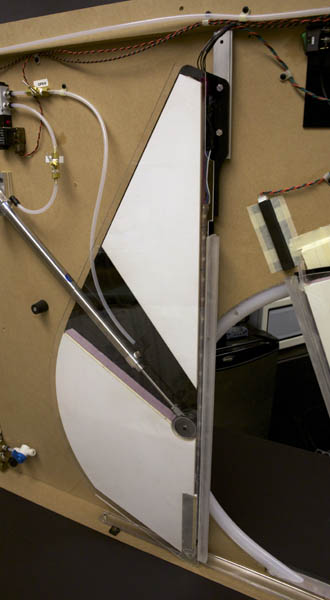
While the floor cut is only two inches deep at full-scale, it still poses a substantial tripping hazard because it is relatively wide. Our design at full scale will require roughly a 5” thick door panel.
The solution we adopted to this was integral to the construction of the door it provided a number of key advantages.
- Ability to easily run internal elements within the door
- Wires for lighting
- Pneumatics
- Rollers
- Provide for a lightweight yet stiff construction
- Enabled us to put diffusers on mating edges for lighting
- Allowed us to make the floor cut only as wide as each of the face sheets of the sandwich panel
Since each face sheet of sandwich panel was designed to be only ½ inch thick, the floor cuts would not be tripping hazards.