Graphic Design | Design Development | Packaging | Future Work
Graphic Design
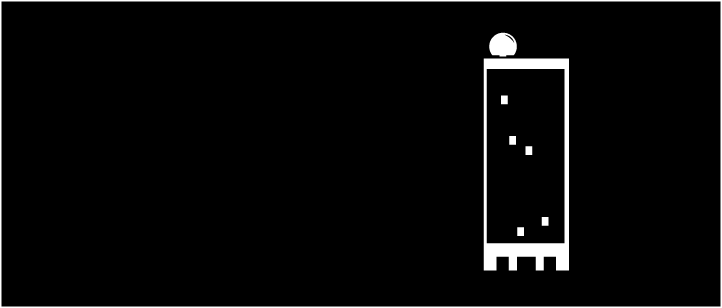
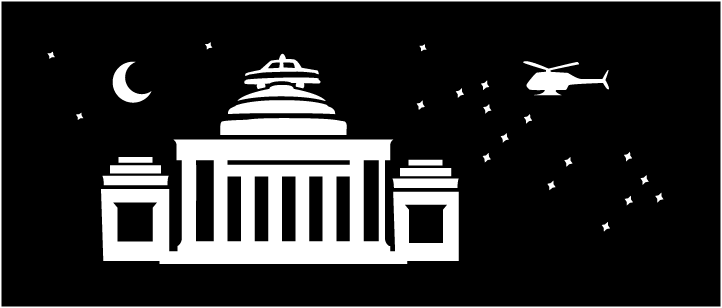
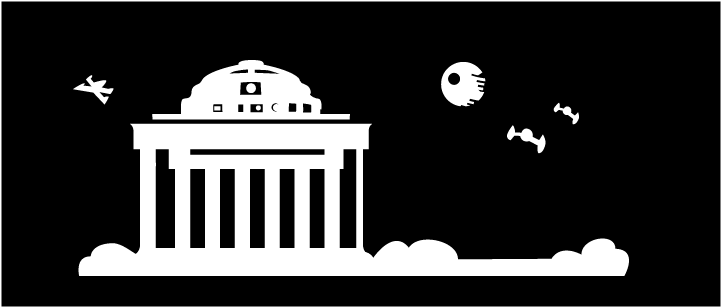
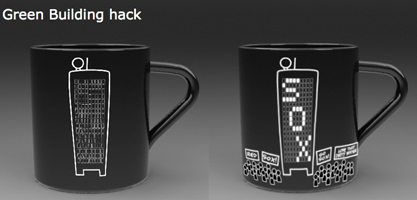
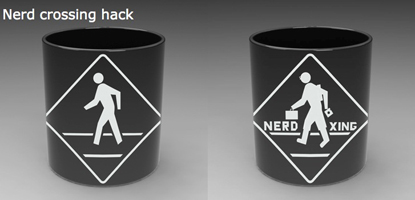
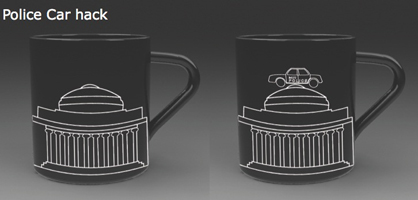
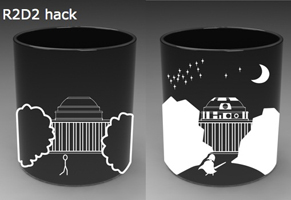
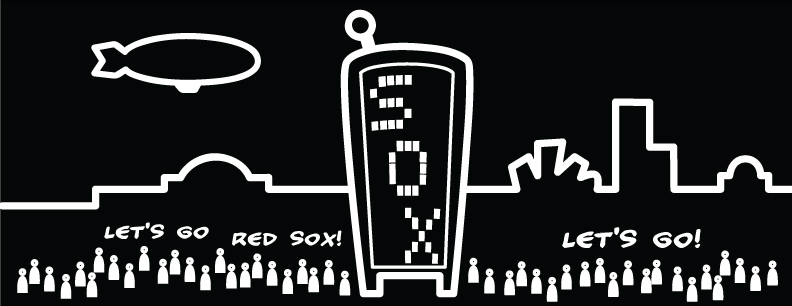
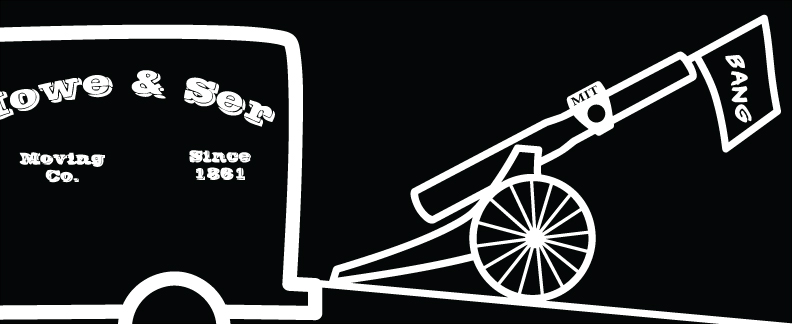
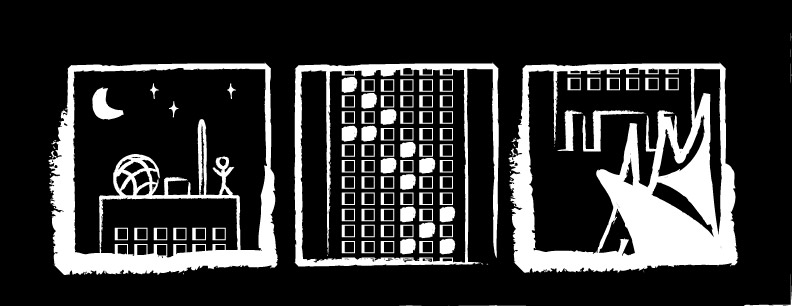
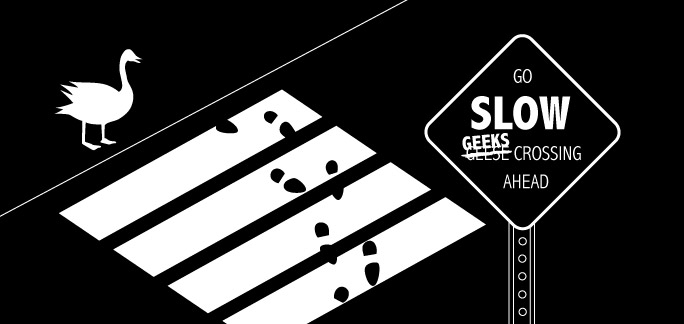
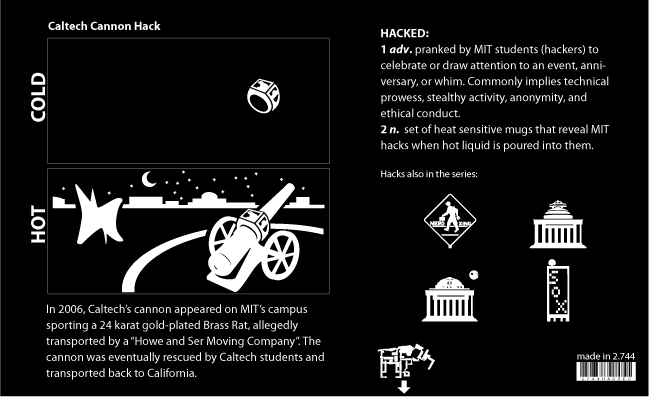
Using solid shapes, the graphic design on the mugs are bold and sharp. The design appeals to an audience that wants a techy, classy, and dynamic feel all in one image. At room temperature, the mug displays a simple, ordinary MIT icon or building. When hot, the design is large enough to make it apparent that the hack is the main focus of the image, while at the same time adding scenery to add to the surprise and cleverness of the design. The design also had to be a practical thickness in order to print to the mug clearly, so the final design removes some finer detail that will be difficult to print using the manufacturing technologies available to us.
|
| |
| |
Caltech Cannon Hack
|
| |
| |
Nerd Crossing Hack
|
| |
| |
Greenspeak Sox Hack
|
| |
| |
Police Car Hack
|
| |
| |
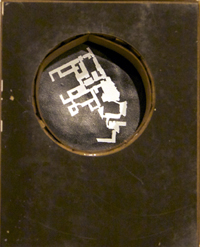
R2D2 Dome Hack
|
Design Development
From the first iteration of our hack designs, we learned that our designs needed to be bold in order to stand out and make an impact. Thin outlines did not provide enough contrast with the background. Additionally, the cold to hot images needed to change somewhat dramatically in order for the heat-sensitive technology to really surprise people; if the hack revelation was too subtle, people would not notice that any change occurred at all.
Taking the feedback from our first iteration generated a second iteration of designs involving three differently styled sets of hacks. A second survey was sent out
(see the survey) and feedback was collected on these styles. It turned out that while users did not like the comic-style designs of the first set, they liked that the hack was large and the main feature on the mug. Most users liked the bold, solid aesthetic of the third set, and the clever use of scenery. Thus, the final design incorporated aspects of both these sets; essentially, the third set buildings were made larger to make the hacks the main focus of the image, and some less relevant scenery was eliminated.
Packaging
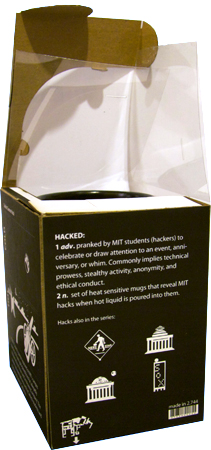
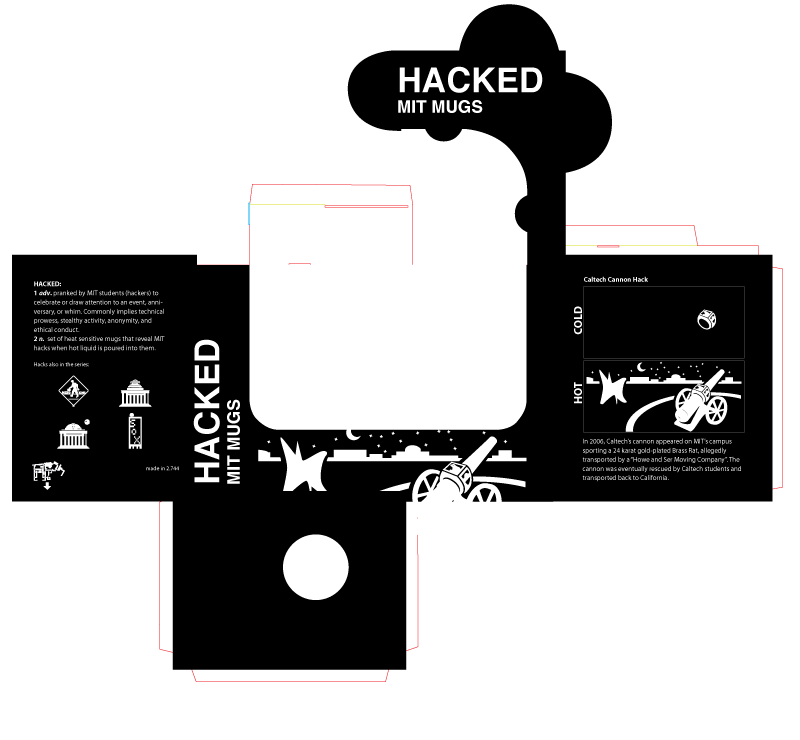
We considered several ways we might show off the texture and details in the product. Originally, we considered an open package with simple a small tag and a booklet with a shelf talker. After speaking with our client, we found that having a containment vessel for the mug was very important for both packing for the client and protection for the customer. With this in mind, we looked at several existing mug packagings for inspiration and decided upon this design:
The packaging is structural and sturdy while still leaving much room for light to illuminate the product. The asymmetrical look also makes the package more fun and interesting. To open the package, the top is lifted and an inner tab releases the mug from containment.
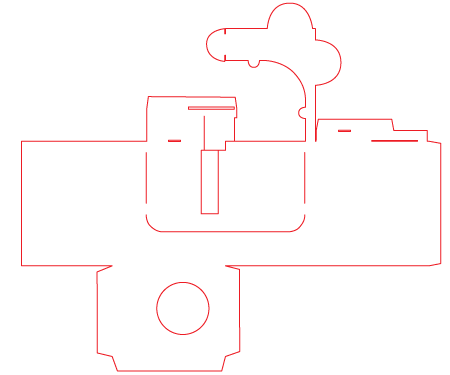
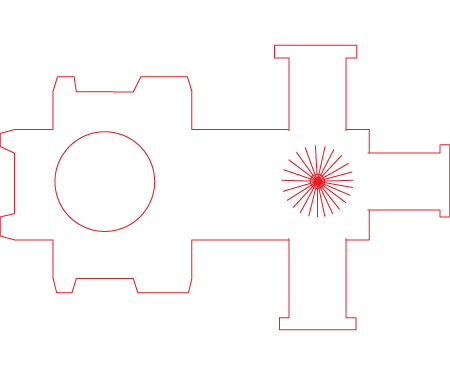
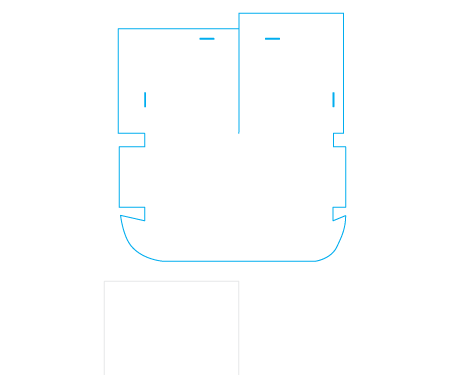
To make this package, we designed three different templates - one for the exterior, one for the interior platform, and one for the acetate window.
The print on the packaging is matte, synonymous with the finish on the mugs. The print includes a blurb about hacking culture, a description of this line of thermo-sensitive mugs, an image of the hot and cold version of the mug, a description of the specific hack, and an indicator to check out the hacker's map at the bottom of the mug.
Future Work
Several improvements can be made for the packaging, namely in assembly time and material use. The current model uses chip board and tight clearance security tabs. The security tabs keep the top/lid of the packaging in place while still allowing easy opening. In the future, we would like to use thin corrugated cardboard to eliminate scoring issues in chip board and test for the ideal clearances to provide for the security tabs.