


User Appeal
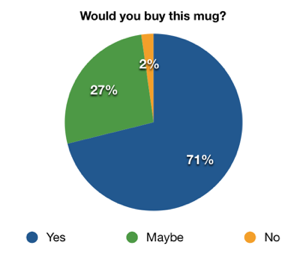
Based on our survey research, the HACKED mug series have a lot of user appeal within the MIT student, staff, alumni and family member audience. These mugs could then be appropriately sold at MIT related stores such as the MIT Museum Store (which sells other color-changing mugs) and the MIT Co-op.During the last iteration of the design process, we asked users if they would buy our mugs.
Cost Analysis
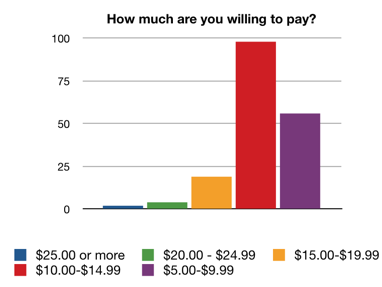
There are some challenges and clear next steps in the development of these mugs into a real product, most especially working with a manufacturer on design details and industrial printing methods and tradeoffs. Our initial request for a quote indicates that for a run of 100 mugs, the unit price would be approximately $12.00. We believe that for runs in the thousands, the cost would drop significantly making the final product available to the consumer at an attractive and competitive price within the $15 to $20 range.Issues
A wide range of issues were tackled as we were going through the manufacturing process of the mugs; many of these issues were solved for the final product, but some issues still remain. As the black ink transitions from a black to transparent color, the color gradient in between is not always pleasing, as the black sometimes fades to brown before fading to the transparent color. This could be due to the way the mug is heat set, as extremely high temperatures cause the ink to yellow. The mug can be set different ways, so different setting solutions will be explored. Furthermore, the printing process is arduous and does not produce consistent results, especially with the white enamel and white epoxy, the two non-toxic options we tested. For this, it would be useful to send the mugs out to be industrially manufactured. Finally, looking into some type of dishwasher-safe clear finish to coat the mug would help prevent the epoxy from wearing and would help create a long-lasting product.Future Work
In addition to the further research suggested in the Issues section, other ideas will be explored. In the future, taking up industrial processes of manufacturing color-changing mugs would be ideal. Applying the designs by printing creates a non-zero thickness that can be seen underneath the black layer of heat-sensitive epoxy, so an industrial process would help to reduce that thickness, either by sublimation or by an industrial screen-printing process. Industrial processes could also allow the design to be a little more detailed such that icons like the dome or the Green building could be more recognizable by people unfamiliar with a more abstract depiction of such buildings.Future sets of mugs could be explored such that each year, new mugs would be printed revealing the hacks made that year. This could increase the audience of the mugs, especially since students would be more attached to hacks that were made during their undergraduate years. These new mugs would be printed for one year, in addition to the older, memorable hacks that would be continually printed.