 |
|
The
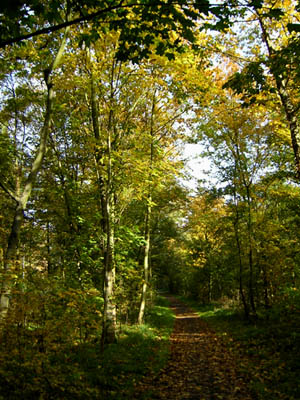
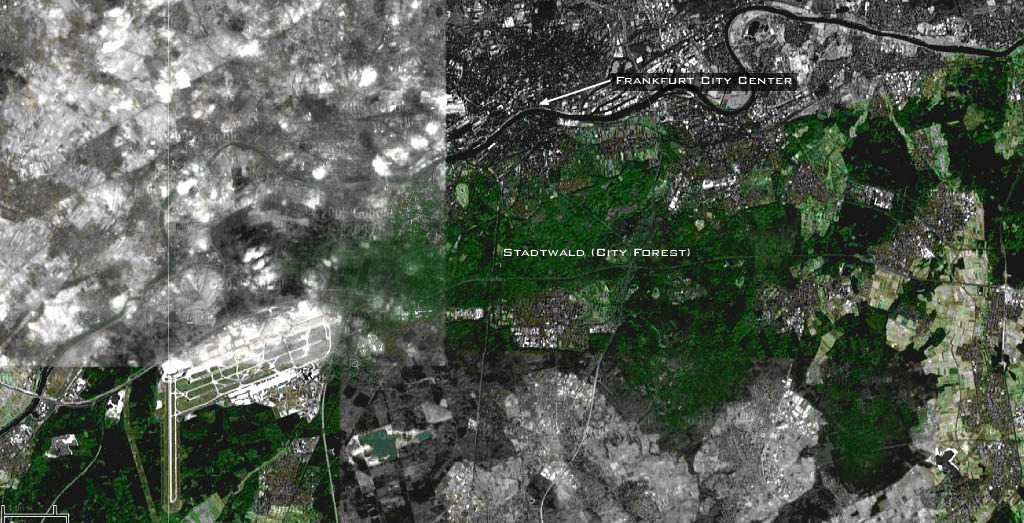
city forest of Frankfurt is one of the oldest managed forests
in the world. Purchased in 1373 from the Emperor Karl IV,
it not only still provides timber and wood products, it plays
an important role in the purification and supply of the city's
water, and helps to regulate the temperature and air quality
of the city. Perhaps the most visible impact it has on the
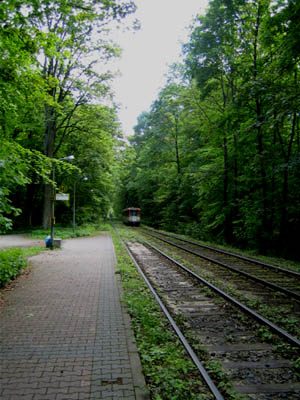
city is its role in providing recreation for its citizens.
Within the city are bicycling, walking, and horseback riding
trails, and various other sports and educational facilities.
Not only does the forest provide a large amount of Frankfurt's
water supply, it also serves as an important component in
the purification of water that is fed into it through perforated
pipes from a water treatment plant. As it filters through
the earth, the water then flows west along an aquifer that
is then tapped for use. Since the groundwater of the forest
is so vital to the wellbeing of the city, no chemicals are
used in its grounds. A retention pond collects the runoff,
preventing it from contaminating the ground water, from a
nearby hill that was created from a landfill.
In addition to filtering the pollution created by the airport
and highways that cut through the forest, the forest also
helps to cool the temperature of the city. Since some of the
prevailing winds originate in the southwest of the city, the
forest not only filters, but also cools and humidifies the
air in summer, and potentially serves as a buffer to slow
down the cold winds in winter.
An intensive succession method of forest practice is used.
Foresters continuously plant and thin the forest as they see
appropriate for its health and provided benefits. Although
pine was most prevalently planted after the Second World War,
there is now a greater diversity of species that have been
planted according to various factors, such as soil condition,
and proximity to paths. The expenses required to maintain
the forest are mostly paid through taxes, although the forest
is able to collect some significant revenue from commercially
sold wood and airport fees.
|