
Anders Haggman
Wireless Easy Off Button: Remote Controller
Concept Refinement
Due to the relatively simple concept that we chose to pursue, we chose to divide our team into smaller groups so that we could explore several variations of the same theme. The basic functionality of our product is a switch that turns off a power strip. The main focus of my design during this iteration was on making the design:
- simple and convenient to use
- motivating for the user
- durable
- aesthetically pleasing
Based on the above criteria, our sub-group decided to deviate somewhat from the concept sketch model that was the used as the basis for our current design direction. Contrary to the wired design of the sketch model, we decided to pursue a wireless option, whilst keeping the simplicity and basic functionality of the sketch model idea.
Basic Functionality
The remote "Easy Off" button systems consists of two main parts: 1. the remote control switch, and 2. the wall brick that is connected to the outlet, and switches off/on any power strips or other equipment connected to it. The remote and brick communicate using RF technology, and according to our calculations only uses a very small amount of energy. Heidi worked on the wall brick while I concentrated on the remote controller.
How It Works.
To turn on, you place the controller on any reasonably flat surface with the "on" side facing upwards. To send the signal to turn off the wall brick (and any connected equipment), simply flip the puck over so that the "off" side is facing up.
The Parts
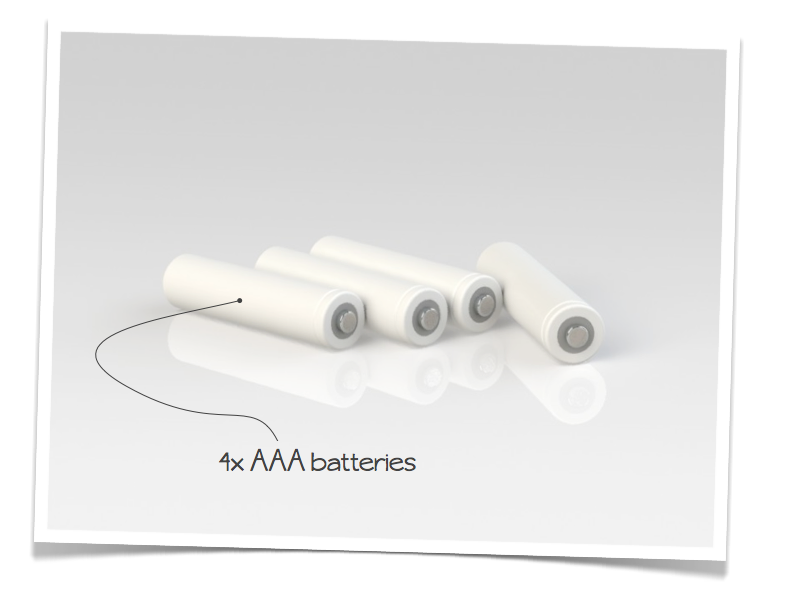
Based on our calculations, and on the criteria that we wanted to be able to use standard sized batteries that are commonly available and rechargeable, we found that four triple-A batteries would be needed for the remote controller. This was the basis for the main dimensions of the remote controller.
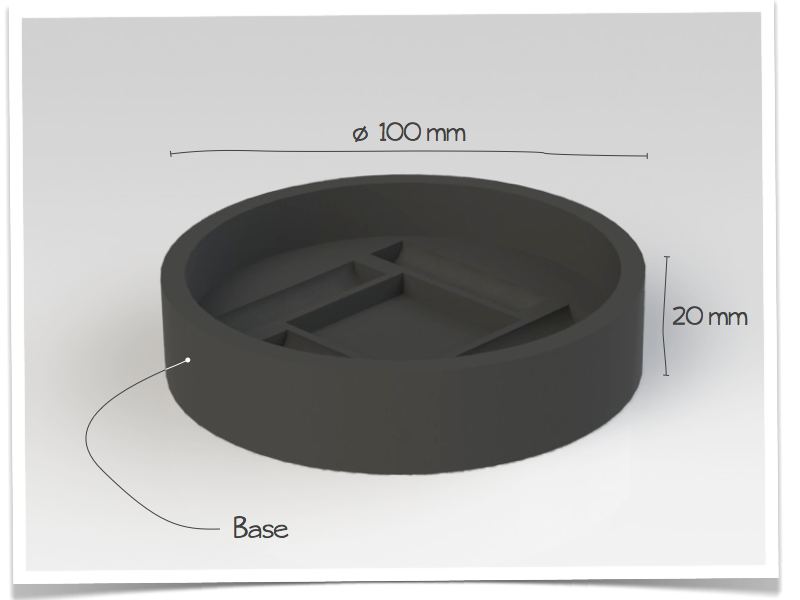
The base section was designed to be as thin as possible, while retaining structural integrity and accommodating the triple-A batteries and electronics. The base can be manufactured from recycled plastic, such as toner re-grind.
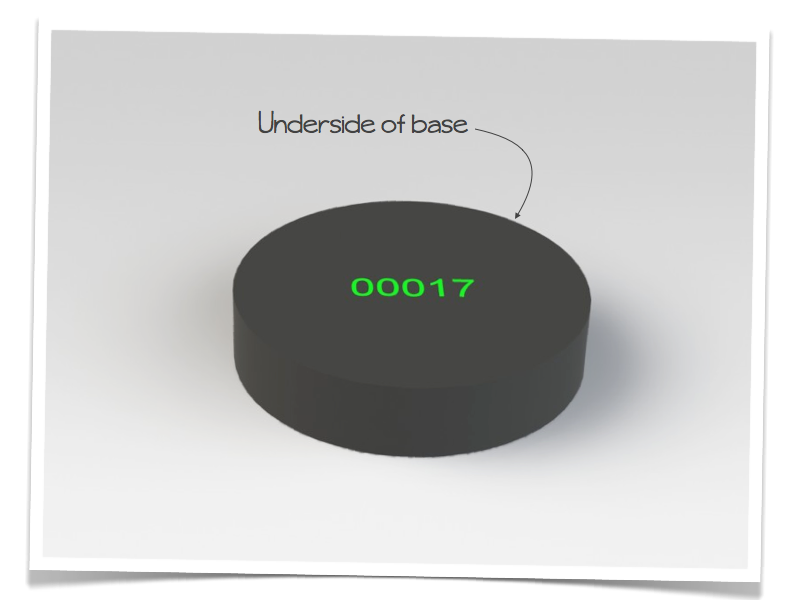
As will be seen later on, several different variations were explored, but for this rendering, a small number display was chosen to go on the underside of the base. This display would indicate how many days in a row the user had remembered to switch off the wall brick (and hence their electronic appliances). Electronics within the device would add one to the number being displayed once every 24h when the "off" side was turned up. If the controller was turned "on" and "off" several times within a 24h period, it would only add one to the number. Additionally, if the controller was left in the "on" position for more than 18h (or some other reasonable number), it would assume that the user had forgotten to turn off his equipment for the night, and would reset the counter back to 0. This would act as a motivator for the users, especially in the beginning when the device is still new to them. After a while it is assumed that turning the equipment on and off, would develop into a habit, and would rely less on the added motivation provided by the counter.
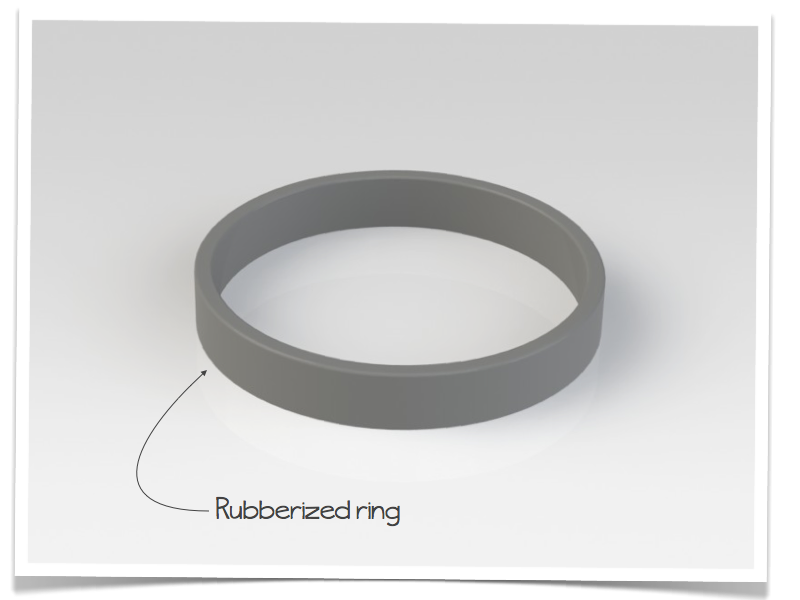
As was discovered with earlier sketch models, and from personal experience, the feel of a product is very important. To avoid scratching of the "on" and "off" faces of the product, and to give it a nice feeling when picked up, a rubberized ring is placed on the outside of the "puck". The rubberized ring is slightly taller than the puck, and therefore keeps it a few millimeters off the surface that it is placed on, thus protecting the front and back faces of the product.
The lid (as well as the back surface) of the product can have various designs. The lightning bolt depicted below, can simply be a picture, or alternatively contain a small LED light (which consumer very little electricity) that pulsates from time to time, to remind the user of the device, and make it more likely that they will remember to turn off their equipment when they leave.
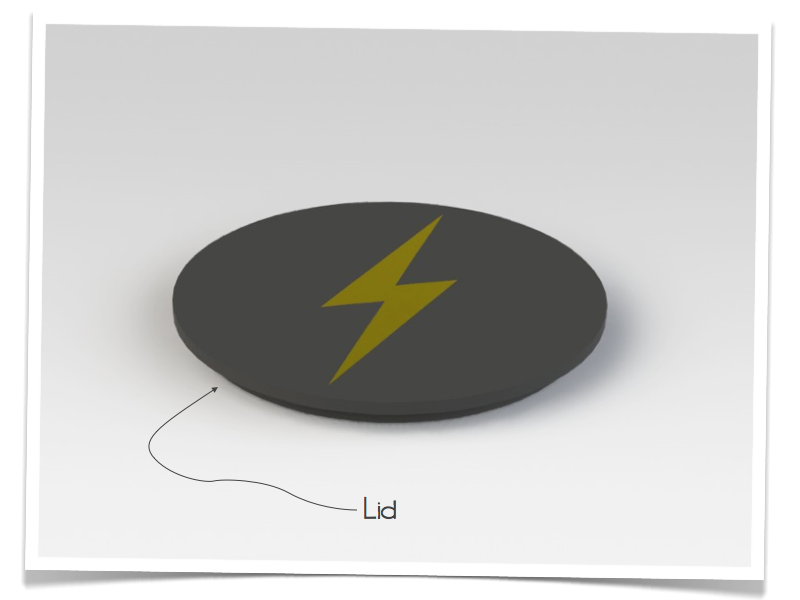
Below one can see the assembled product. The red square in the middle of the base is space that is reserved for electronics that control the possible lights, screen, RF transmission and other aspects of the product. It will also contain the sensor that senses which side of the "puck" is facing upwards (similar to sensors in digital cameras).
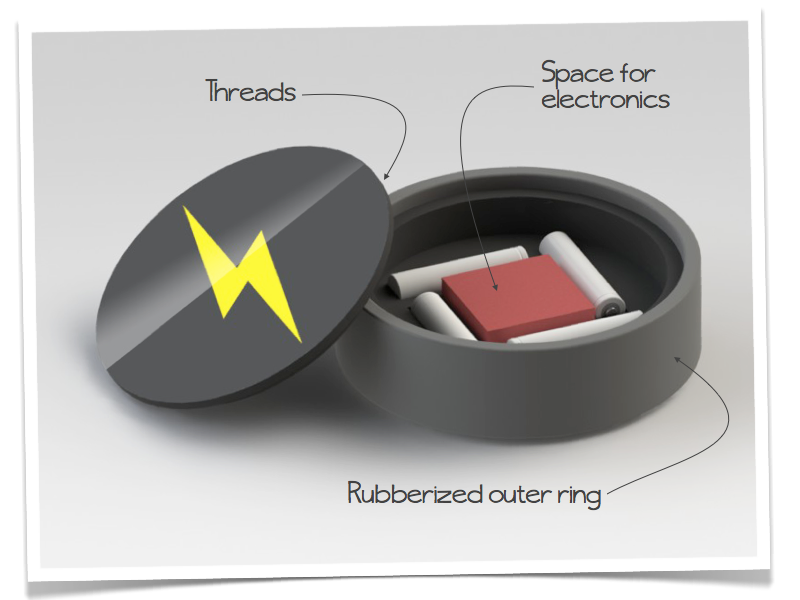
Below a different rendering of the product.
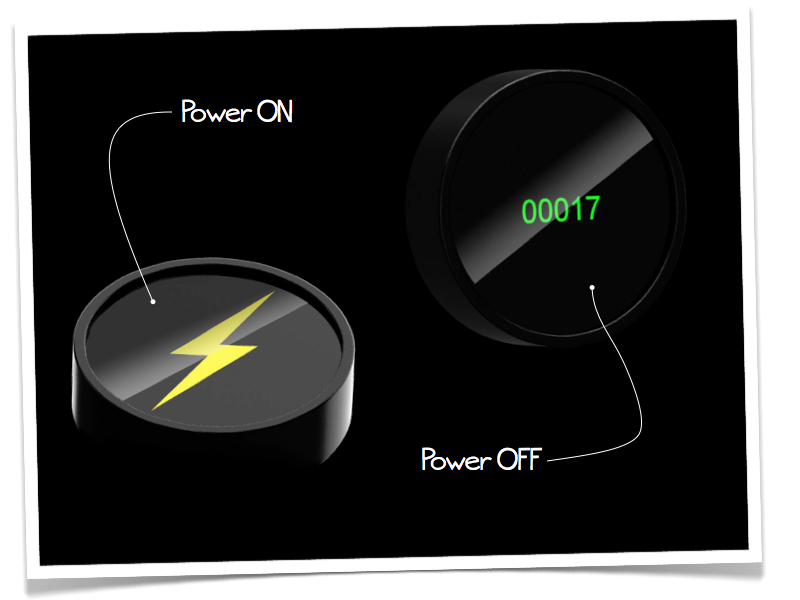
User research showed that different users are motivated by different things, and creating a one-size-fits-all product may be challenging. Therefore, several options have been considered:
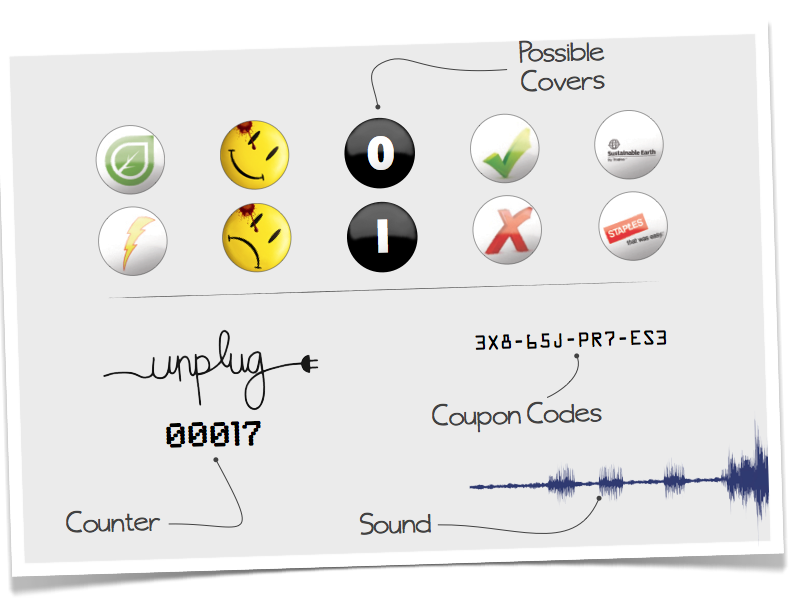
a.) If the most basic model is chosen, that simply has different covers on the back and front of the product, then this might be something that the user could choose to best fit their interior design and personal preferences. For a version incorporating LED lights, Staples would probably choose one or a few designs that the users could then choose from.
b.) Another possibility would be to have a small screen on the "off" side of the product, that would keep track of how many days in a row the user has remembered to turn off their equipment. This may work well with competitive people who are eager to attack challenges, and could be employed in an office environment, where the person who has remembered to turn off their equipment for the most days in a row (and thus save energy, and money for the company) could be rewarded in some way.
c.) Another variation of this for the general public could be that once they have remembered to turn off their equipment X days in a row, the screen on the "off" side of the "puck" would display a coupon code, that the user could then insert into Staples website, in order to get 50% (or some other suitable percentage) off their next purchase of "Sustainable Earth" products from Staples. This would act to motivate the user to turn off their equipment, and therefore help reduce energy consumption, and would also promote business for Staples, since the next time the user needs office supplies, since they have the discount code, they are more likely to shop with Staples, and if the code would only work for discounts for Sustainable Earth products, it would also promote the purchasing of environmentally conscious alternatives to regular office supplies.
d.) Finally, the wall brick and controller could also play a sound for a few seconds when the equipment is turned off, reminding the user of the fact that they have helped protect the environment. (Imagine shutting all your equipment off, and while you leave your, now dark, home office for example, you hear crickets chirping or whales singing.) You would get accustomed to the pleasant sound, and notice it's absence if you forget to turn off your equipment. (Other sounds were also suggested by people being interviewed, such as a Top Gear Jeremy Clarkson type voice saying "You've saved the world!. Needless to say, the choice of sound needs to be carefully examined so as not to be annoying. One way to achieve this could be to have several different models, as coding in different sounds into different versions of the product does not require any extra equipment and is not challenging.)