
Lusann Yang
User Polling
After a couple long discussions with the rest of the group, we realized we needed more information from potential users about what they want in a product. How should we position this product? Who would use it, where would they use it, what would they control with it? How much would they be willing to pay?
We polled 26 friends and acquaintances research to the potential user base for our Easy Off switch.
The poll can be found here.
About the Users
Before examining their responses, it would be helpful to understand who was polled. Our sample set was predominately graduate students or young professionals with an undergraduate degree. The majority of people we questioned were between 22 and 35 years of age. The majority of people we questioned live in Boston.
Of the 26 people polled,
Background Knowledge
What do the users already know about ghost / phantom / vampire power? How knowledgeable is a typical user about the power consumption of his or her devices?
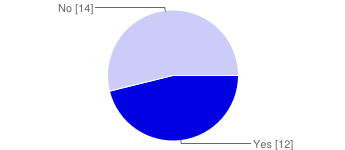
We asked our sample set whether or not they knew what vampire power is. Only 12 people (46%) said they knew what it was. Somewhat less than half of our user base is even aware of vampire power as an issue. Thus, any attempt to pitch this product as a power saving tool should involve some amount of user education as to what vampire power is.
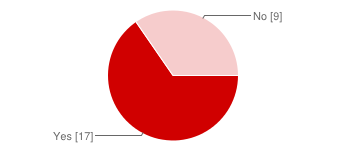
This number becomes more interesting when we recall that 17 people (65%) said they unplug devices when they leave for vacation. This indicates that at least 5 people unplug devices when they leave for vacation for reasons other than vampire / phantom / ghost power; either they’re doing it for surge protection, or because of a poorly understood sense that they ‘should’ or for some other reason. At least one user polled responded that she unplugs certain devices when she leaves because her mother did so.
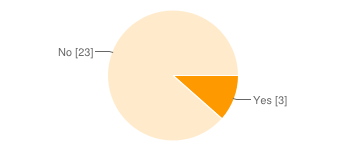
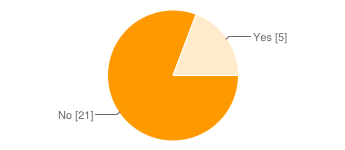
We asked whether or not users were aware of products that address vampire power. Only 5 people (19%) said they were.
Some of their responses:
Three users were aware of one of our competitors, a type of power strip that is controlled by a dominant outlet. The power strip cuts off all the power to all other outlets when the dominant outlet is not drawing power. This allows a user to save vampire energy consumed by the peripherals to his computer (printer, speakers, monitor, etc) when his computer is off. Various iterations of this power strip (by Smart Home USA, Westinghouse, and Belkin) can be found on the market, and average around $25 in price.
Our Product
We quickly introduced our product with some information about vampire power and a short description of the Easy Off button.
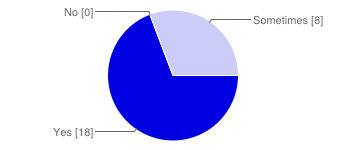
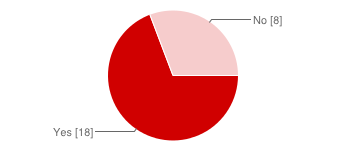
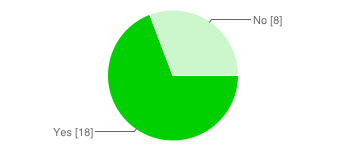
We asked whether or not users thought they had a use for the Easy Off. We had an encouragingly high positive response, with 18 people (69%) saying yes, they could use it.
We asked them what devices they might use it to control. Many people mentioned using it for computers, printers, and associated peripherals. A few people mentioned using it for various chargers. Here are a handful of answers:
While we had envisioned using the power strip at a desk, for a TV, or in a kitchen, it was interesting to imagine using it to control major appliances - like washing machines, dryers, and dishwashers. It was also interesting to realize that several people keenly aware that chargers draw phantom energy. The user who associated it with a music player was clearly aware that one feature of our product is that it effectively adds remote control capability to many devices.
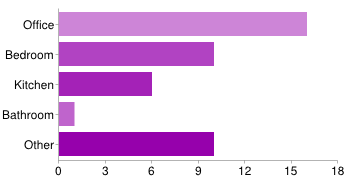
We asked them where they might use it. People were allowed to check more than one box, so the totals add up to more than 26.
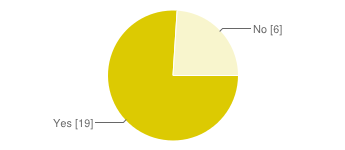
We asked whether or not users would by the Easy Off if it came as a power strip with a remote button. 19 people (73%) said yes! Again, we received an overwhelmingly positive response. However, we suspect that sample selection may have introduced a bias to this question, as everyone taking the poll understood that this product is a class project by a friend. The fact that 19 people said they would buy it when only 18 people said they had a use for it points towards inconsistency on at least one person’s part.
We asked whether or not users would by the Easy Off if it came as a single plug with a remote button. 18 people (69%) said yes. Again, our results are encouragingly high.
We asked users how much they would pay for an Easy Off, in several different ways.
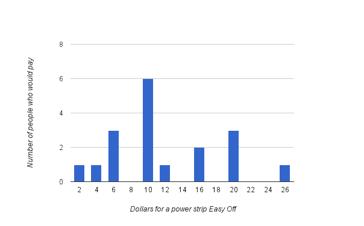
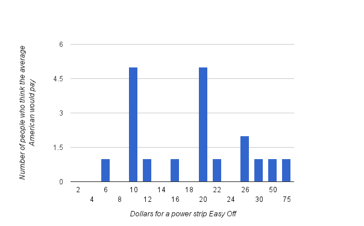
First, we wondered if users would buy an Easy Off button implemented on a power strip. We asked them how much they would be willing to pay for one, and we asked them how much they thought an average American would be willing to pay for one. On average, our friends were willing to pay $11.50 for a power strip version of the Easy Off, and that the average American would pay nearly twice that, $22.33. Interestingly, some people thought the average American would be willing to pay up to $75 for a power strip Easy Off!
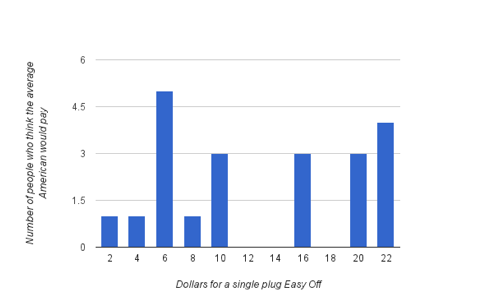
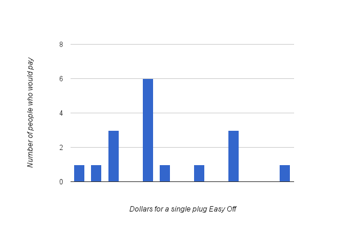
We then asked if users would buy an Easy Off button implemented on a single plug. We asked them how much they would be willing to pay for one, and we asked them how much they thought an average American would be willing to pay for one. On average, our friends were willing to pay the same thing for the single plug as the power strip, $11.50. However, they thought the average American would pay less than that for the single plug item, only $11.10.
We asked what issues, if any, our users could foresee in using this device.
For the most part, people were concerned with mustering the mental energy to build using the Easy Off into their lifestyle:
This user feedback reflects our primary concern with this product. Future iterations will necessarily feature better strategies to help users incorporate the Easy Off into their daily habits. Without changing our user’s habits, a typical person might easily never use the “Easy Off” feature.
Some people were concerned with logistical issues:
We have considered several strategies to help solve these problems. We’ve considered giving the Easy Off a time delay coupled with an off indicator (a chime, a light, a click, or some other type of indicator) so that if a user accidentally hits the Easy Off, the user has a minute or two to turn it back on again before all power is cut. We’ve considered giving each individual outlet its own “always on” switch, so that objects like DVRs or alarm clocks are always powered.
A couple people were concerned with having too many buttons, and their proposed solutions were startlingly similar:
A brilliant suggestion. We have already identified RF circuitry as an ideal candidate for low power remote control of the Easy Off; it would be sensible to make all Easy Off units remote controllable via the same unit, allowing users to use only one switch for several devices in different locations.