
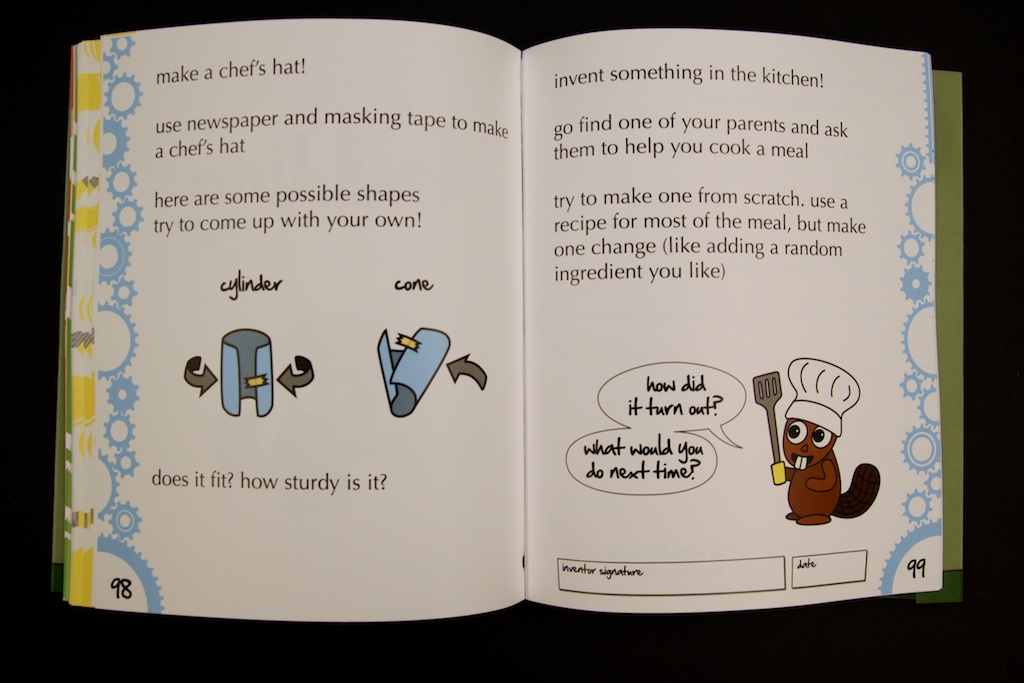
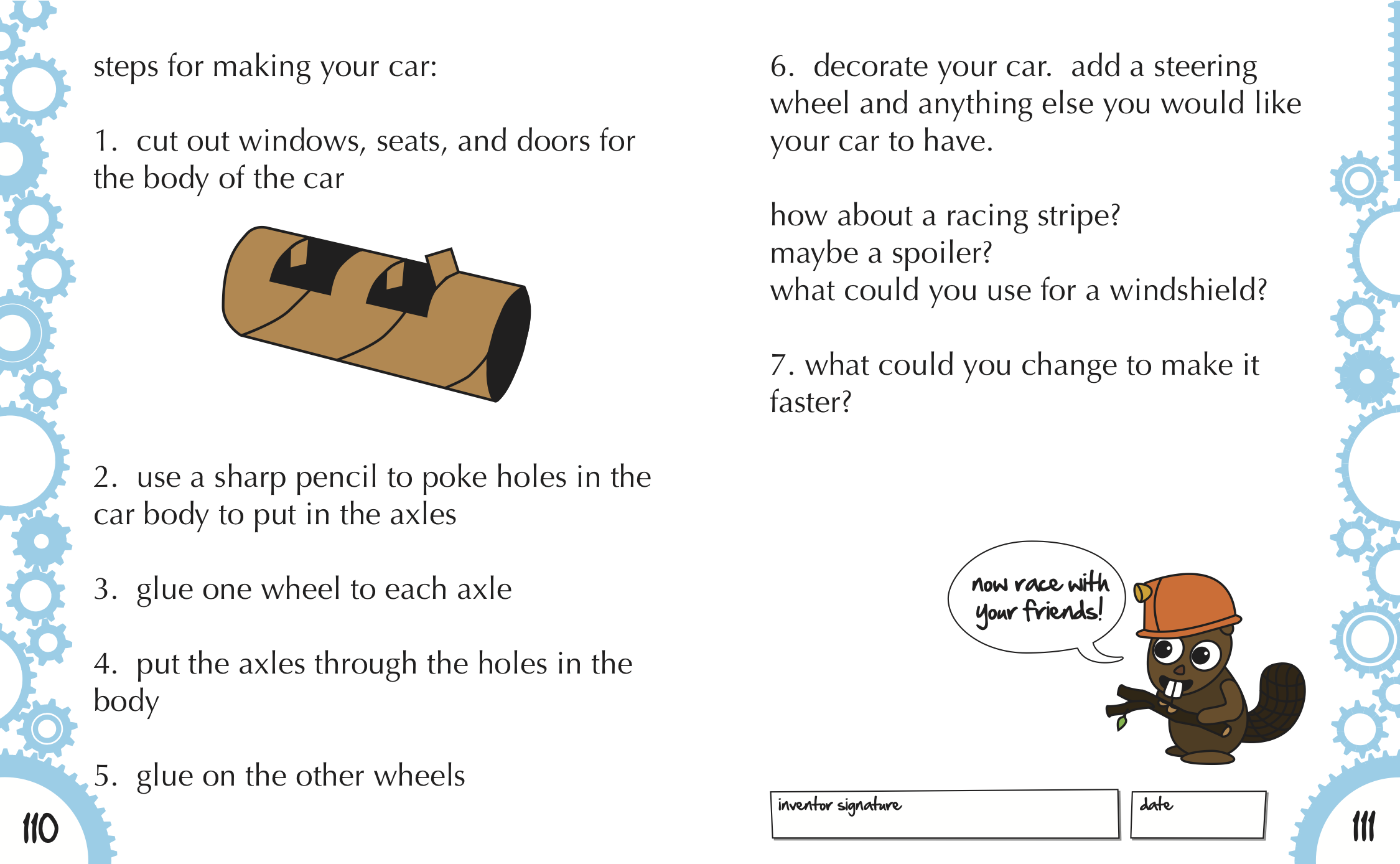
The building section intends to take the user outside the book in the last stage of invention. Immediately, the layout of the book changes. The beaver, our guide through the invention process, is now ready to build, equipped with a hardhat and twig. The border of the book also changes, from lightbulbs symbolizing new ideas, to gears, symbolizing movement and machinery.
The building section includes two different types of prompts: those that are very prescribed, and those that are open-ended. The prescribed prompts use listed instructions to guide the user through building a physical object using household materials. We found that children enjoy following step-by-step instructions that lead them to a final product. All prompts in the building section use household materials that are inexpensive and readily available — i.e. newspaper, toilet-paper rolls, and pencils. This way, children are not material-limited and can build as many things as they want.
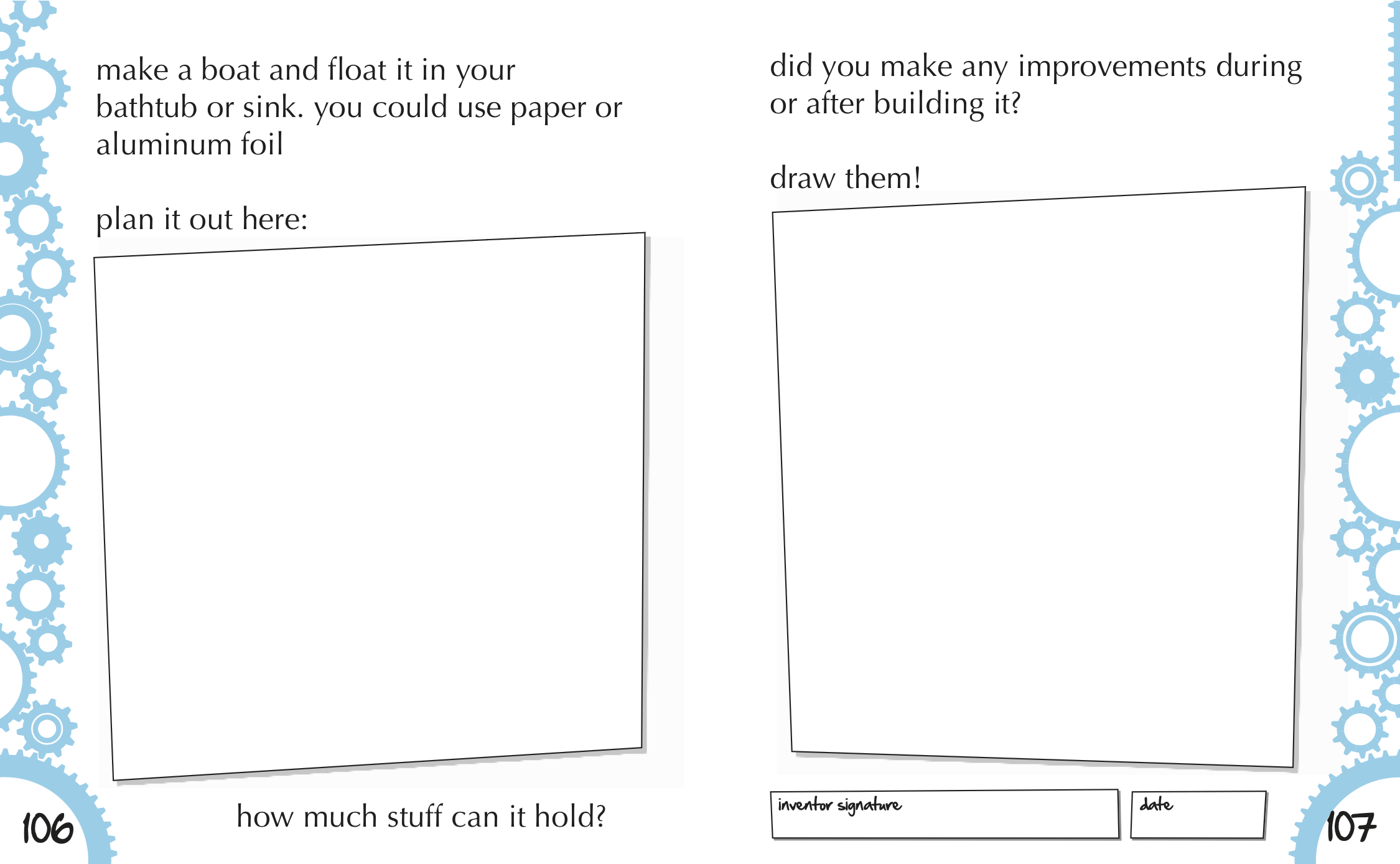
The other kind of prompt is more open-ended and incorporates drawing as a means of teaching planning and iteration. Before a child builds a product, he or she is given space to draw (or plan) out the concept beforehand. This draws in from all other sections of the book — the child must ideate and invent a concept, but also communicate it through good drawing. After the child has completed his or her design, there is the opportunity for iteration. The book asks questions to have the child reflect on what he or she has created. For the chef’s hat, does it fit? For the boat, does it float? Additionally, the book encourages the child to make improvements and design new versions of the product. This way, the child is not limited by one design, and isn't finished after he or she makes one model of the product.
This concept of iteration is one that is unique to our book — other craft books are limiting in the amount of material provided to the child, or the fact that they do not call for reflection upon design. We hope that this will spur creativity and inspire children to further their building and design.