
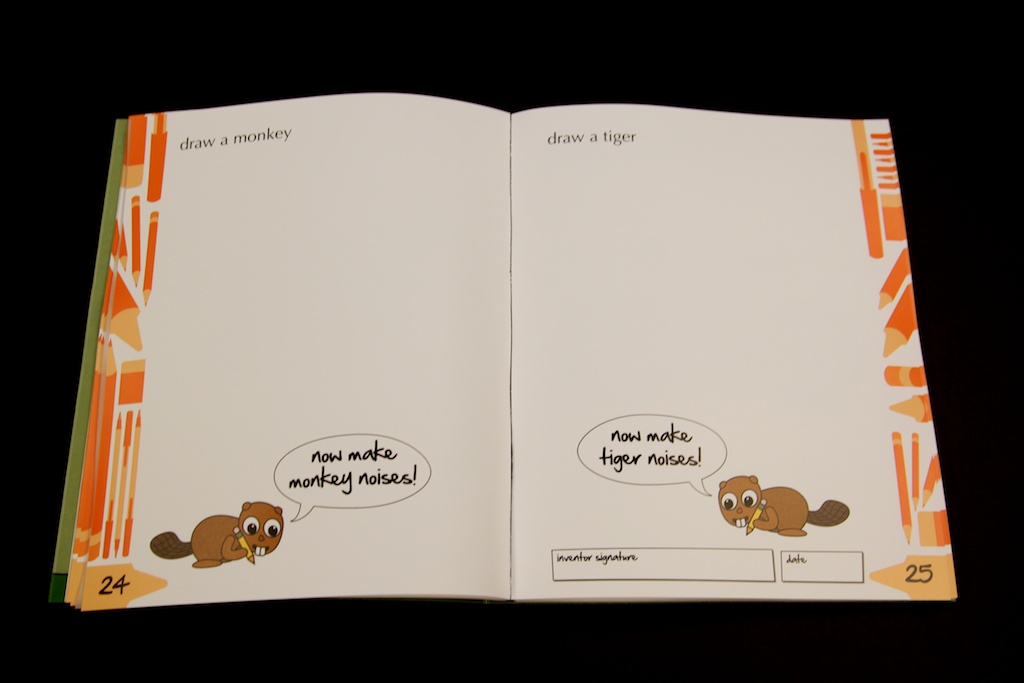

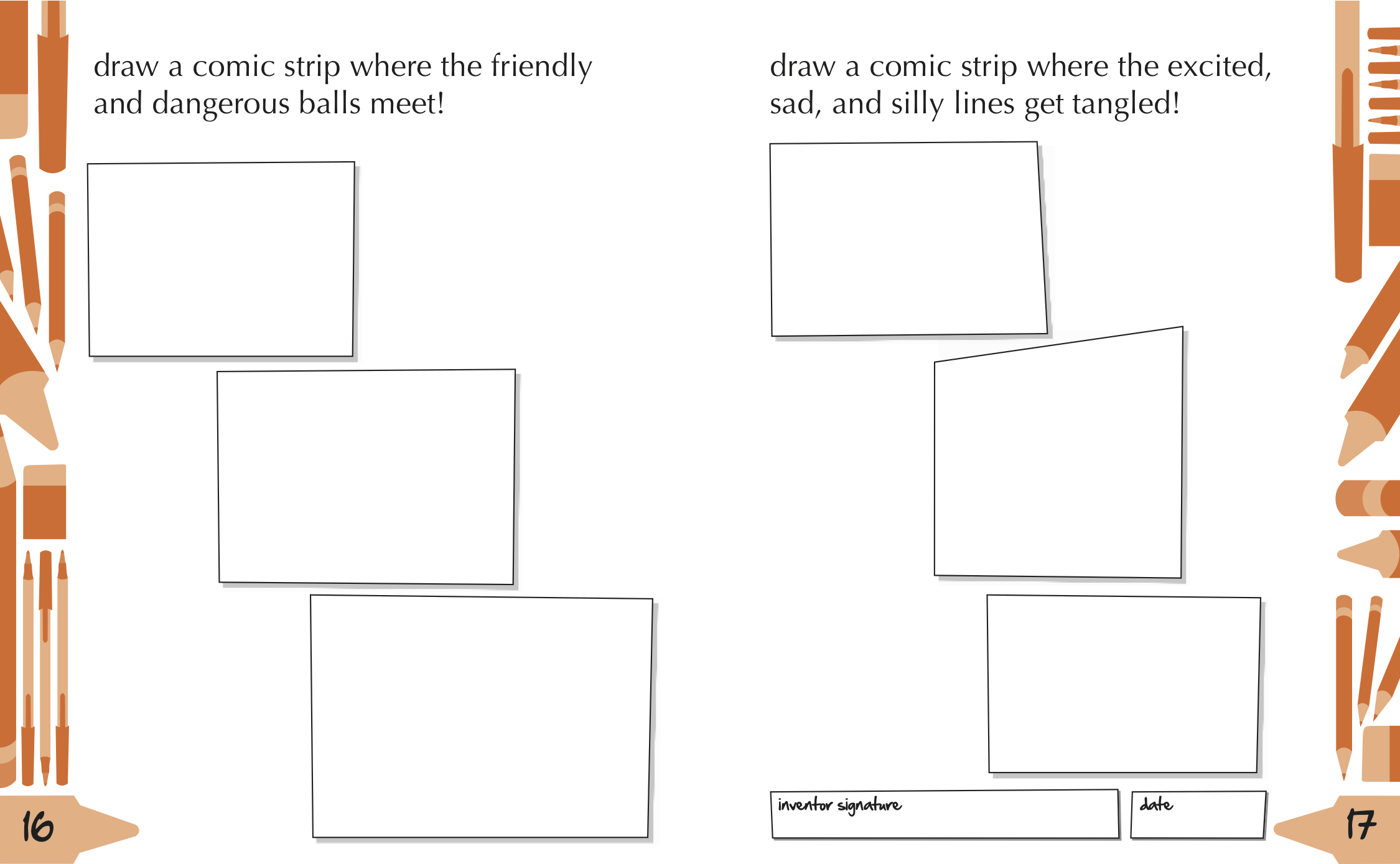
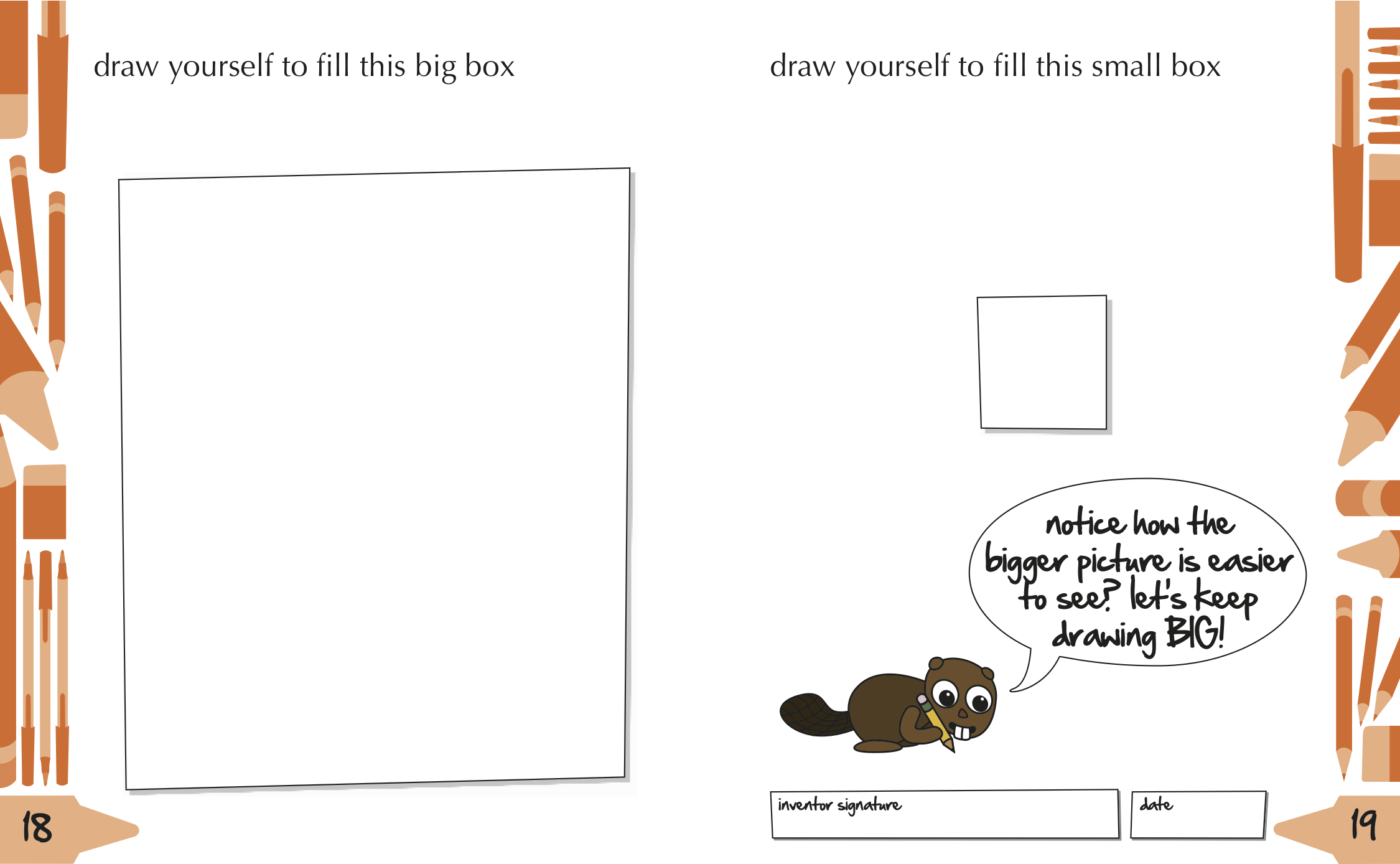
The first section of the book was included to act as a warm up for the children. This section gets the children used to drawing things and thinking creatively, while still keeping the tone light and fun. There are two main types of activities in the drawing section. The first type of activity simply encourages the children to draw something crazy and fun in order to get them relaxed and ready to think outside the box. Example prompts for these include having them draw a set of pictures like a cartoon strip, or to draw a ball that is happy or sad. The other type of activities in this first section are ones that try to teach the children how to draw effectively. This does not necessarily mean that they should be expert artists at the end of the section, but they should better understand the fundamentals of drawing. One example activity is where the children are asked to draw themselves in a very large box, then try drawing themselves again in a very small box, thus demonstrating how it is easier and more effective to draw large.
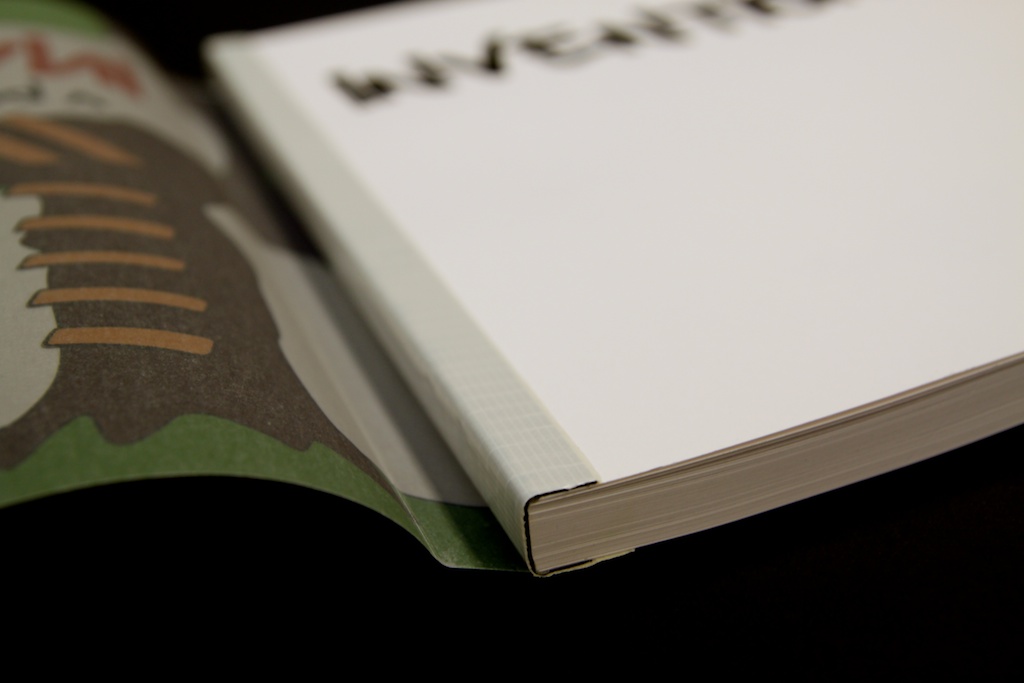
The drawing section also affected the material choice of the book and other aspects of the printing process. The drawing section includes several sheets of tracing paper that allow the children to trace a base figure from another page, then add on to with whatever modifications they may wish. The tracing paper activities were some of the favorites when we performed play testing, with the children constantly looking for more. The selection of the weight of the paper was also done to accommodate the drawing section. It is very important that each page can be used without too much bleed through from the opposing page. We tested several weights of paper and selected a thicker page than most books to ensure that the ink from a standard washable children's marker did not bleed through drastically. Finally, because most of the activities in the book require lots of drawing, the book is bound using a tape binding like a real lab notebook, which allows the book to lay flat for easier drawing.