
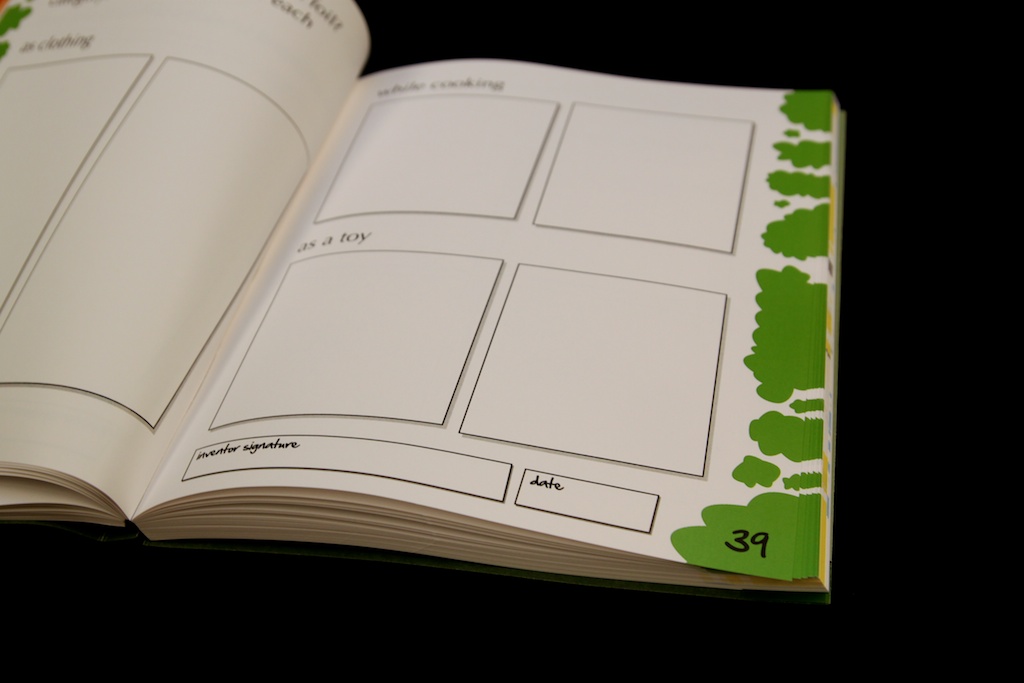
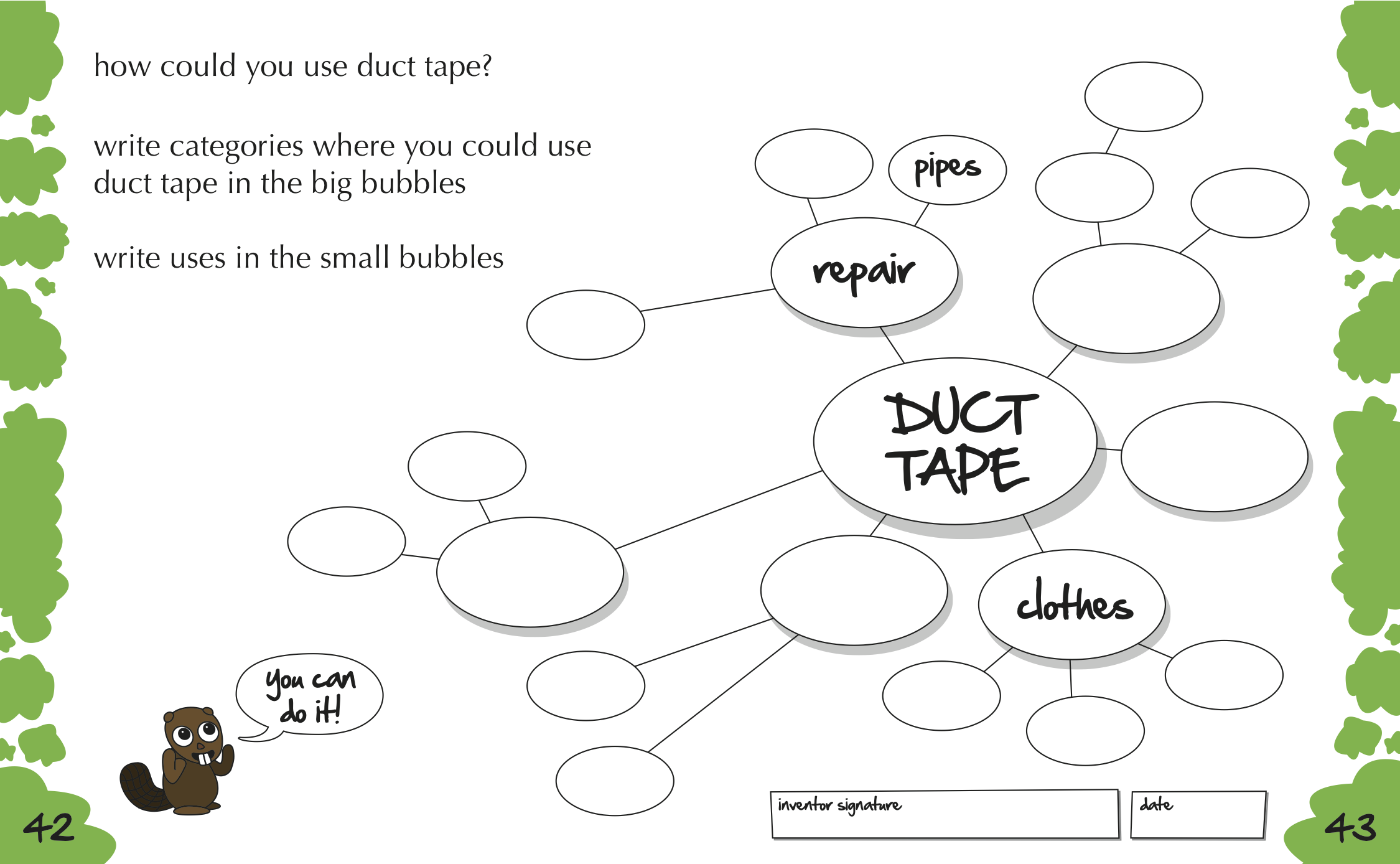
The ideation section of the notebook focuses on coming up with a large volume of ideas. We have included brainstorming, thinking of likes and dislikes for products that already exist, thinking of uses for everyday objects like aluminum foil and reciprocity exercises.
At, first we had lists where the users were supposed to write words, but after playtesting we realized that we needed to have lots of drawing instead. Elementary schoolers worry a lot about spelling and tend to write in complete sentences. To limit this idea-stifling behavior, we asked rhetorical questions for the user to answer verbally or to themselves and limited writing to names of pictures.
We do have mind-mapping exercises (although we don’t refer to them as such), which involve filling in a lot of bubbles with words. At first we were concerned that these exercises would not be appropriate for our target audience, children 7-12. Because the bubbles encourage children to focus on one thing at a time, it is a managing exercise. During playtesting we have had surprisingly creative results.
In the future, this section will need to be differentiated more from the invention section. This is challenging because ideating is inherently linked to inventing. Currently, there are some exercises that do not speak to idea volume. Those could be moved to the inventing section, and the exercises that do focus on coming up with many ideas in the inventing section can be moved to ideating.