
|





Please view the storyboard before reviewing this sketch model to fully understand how it fits into the plot.
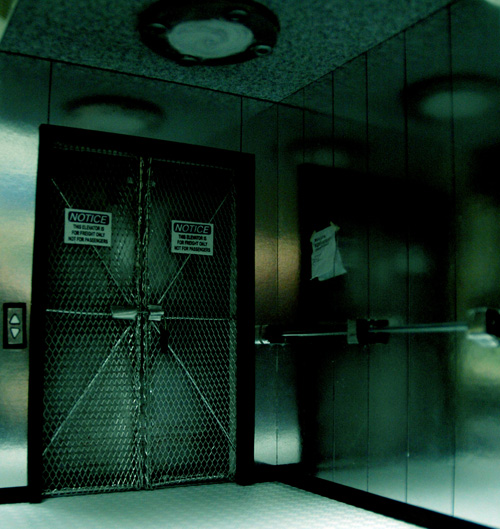
This sketch model of the service elevator serves three purposes. The first is to show what a service elevator inside the agency might look like. The second is to show how all the works-like sketch models fit together. Finally, this model provides a means of testing various capacity scenarios using scaled figures.This model is 1/12 scaled size and shows only two walls. The other two walls could be identical and opposite.
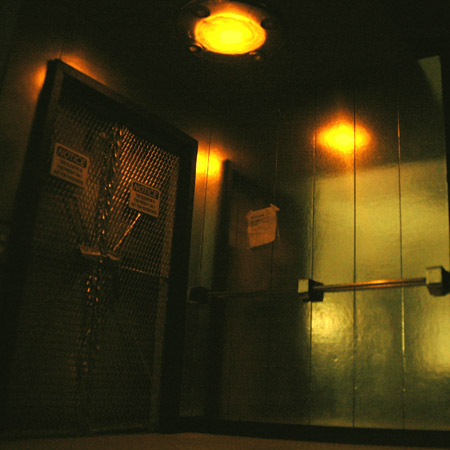
For the ambiance, the service elevator must have a rugged industrial look, yet not seem out of place in a high tech espionage agency. This cross between clean and rough aides in the transition between the tech op room and the service tunnel. It was designed with shiny metallic panel walls and a corrugated metal flooring. A notice is taped onto the wall. This is perhaps a clue to help the agents when inside the tunnel. The taped notice also adds to the rugged feel of the service elevator. The service elevator can be lit in many ways, but for this model, a single dim yellow overhead light provided an eerie glow.
This model shows the placement of the complementary works-like sketch models. The elevator doors are composed of two parts: the outer heavy metal doors which swing outward and a metal gate which slides or folds inwards. The doors are discussed further in the scrolling wall sketch model.
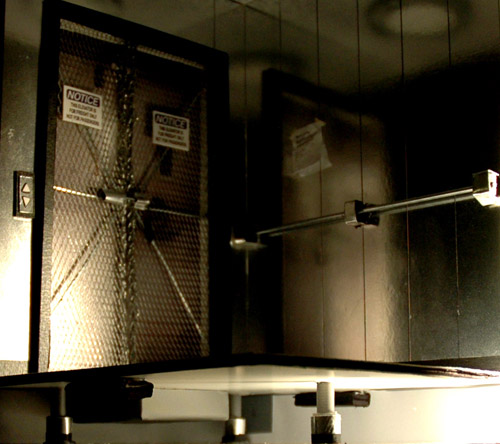
The current work-like sketch model is activated by three pneumatic pistons which are shown here below the elevator floor. Around these pistons, one can see the audio speaker boxes as well as the air fan. Details on these works-like models can be found in the motion and special effects sections.
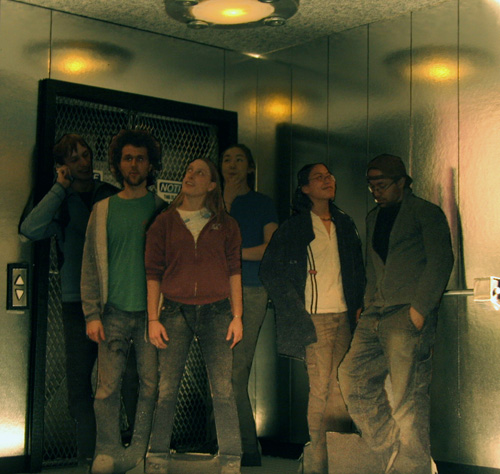
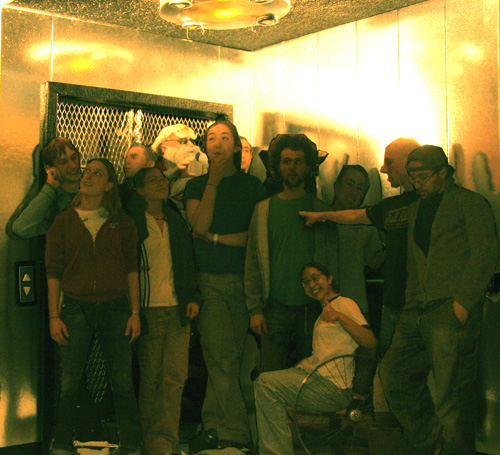
This looks-like model was also used to test capacity scenarios. The following figures show the elevator with 6 passengers and 15 passengers including a wheelchair. (note: this model was designed using the previous 6'ft x 6'ft floor plan measurements. The current allotted space is 6'ft x 8 ft')
Larger images of the model can be found here.