|
Visual Simulation with a Scrolling Wall |
||
|
Sam Jewell and Jessica Vechakul worked together to create the visual illusion of descending from the Tech Ops Briefing Room down into the Tunnel via a service elevator. To better understand the motivation for a service elevator in the spy adventure look the Gromits’ storyboard for a service elevator before reading these concept model details.
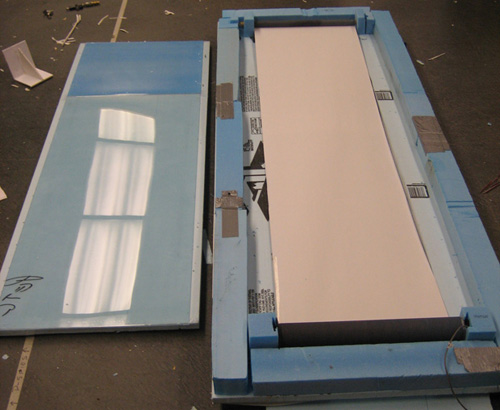
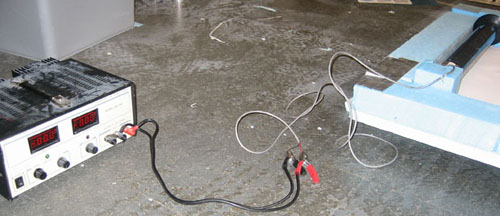
The visual effect for the service elevator can be achieved with a scrolling image of the inside of an elevator shaft, activated simultaneously with a wind and vibration effect, and a descending motion effect, each of which have been simulated by other Gromits. When the spies have left the service elevator and closed the doors behind them, the scrolling mechanism will automatically reverse to reset the image for the next group.
|
||
| VIDEOS | ||
|
Service Elevator we want to Simulate |
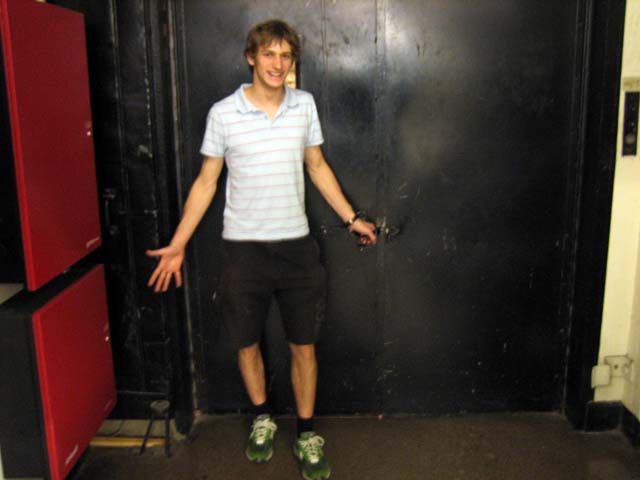
Current working Sketch model |
|
 |
 |
|
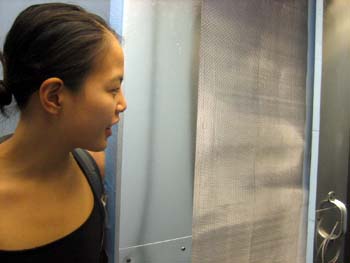
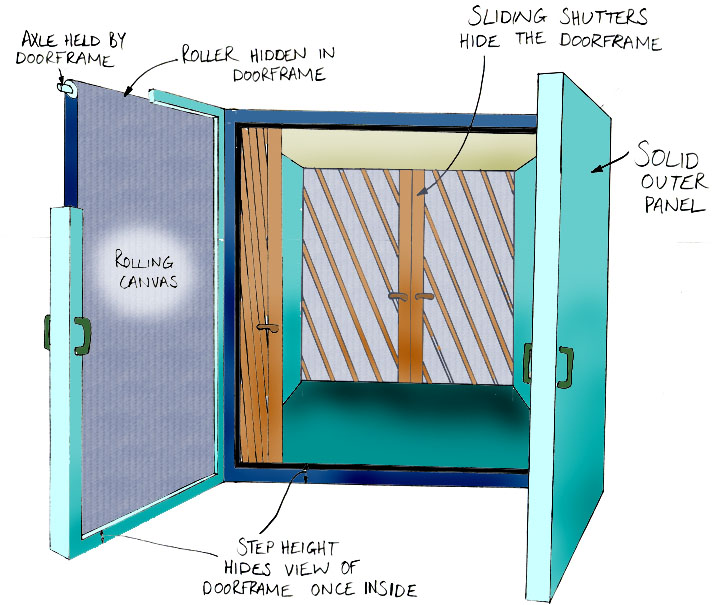
Here you can see we have a long way to go, before we get the desired user interaction with the elevator. We really want to have two sets of doors, each with latches/handles as shown in the first video. However, the concept model was useful in determining that a scrolling screen can be effective in creating the illusion of descending in an elevator. We will test this concept model with the other effects of vibration and wind, and the falling motion to see whether these combined elements can convincingly simulate an elevator ride. The final implementation of this visual effect will look more like the sketch below.
|
||
| PLANNED ELEVATOR ARRANGEMENT | ||
 |
||
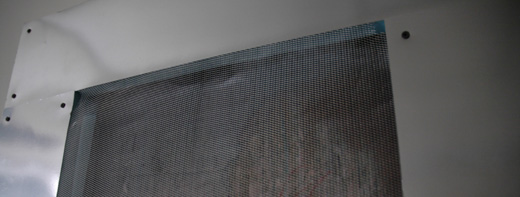
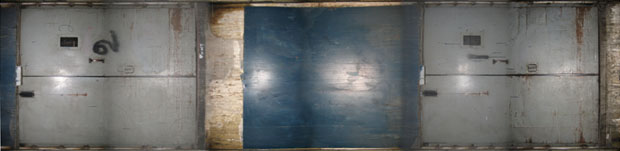
The initial image on the rolling canvas in the door of the elevator is meant to blend in with the solid surface of the door so that the spies will not notice that there is a canvas in the door when they walk past. The spies must close this door, and then another accordion-style folding wire mesh gate before the elevator can begin to move. The accordion wire mesh gate will have some solid segments to block the passengers’ view of the solid parts of the door surrounding the moving image. The elevator walls will also hide the parts of the solid perimeter of the door which will not move, and the middle section of the accordion gate will do the same. Thus, from inside the elevator it will seem like the whole door (the canvas) is moving up, and only the accordion gate is stationary. See the videos below for the effect we want to create. The final image on the rolling canvas will also blend in with the door of the tunnel entrance so that when they open the accordion-style gates, they will not be able to notice the difference between the scrolling paper and the rest of the door. This arrangement will require us to package the rollers very tightly into the door, which will be a challenge. It might also require that there be a step at the entrance to the elevator, which may not be feasible. However, another alternative is using sliding accordion doors (like those in the coffee house in the student centre) to block the riders of the elevator from being able to see the perimeter of the solid door surrounding the scrolling image. |
||
|
||
|
Side View |
|
 |
||
|
Front View Side View Back View |
||
|
|||||||||||||
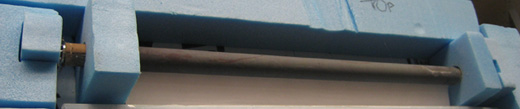
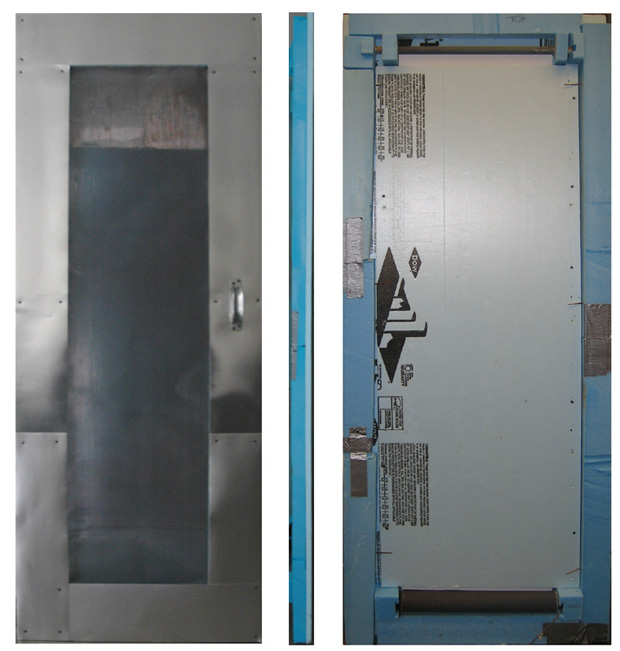
The image of the elevator shaft was created by taking several pictures inside a service elevator shaft, and splicing the images together with a photo-editing software. A full-scale image was printed out, and attached at one end to a motorized roller and at the other end to a spring-loaded roller. |
|||||||||||||
|