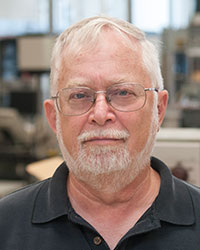
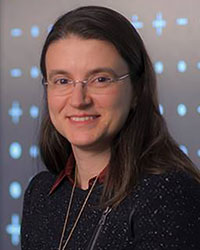
Ronald G. Ballinger Associate Professor of Nuclear Engineering, and Materials Science and Engineering.
SB ‘75 WPI: SM ‘77 (nuclear engineering), SM ‘78 (materials science), ScD ‘82 (nuclear materials engineering) MIT
Corrosion and fatigue; environmental degradation of materials; stress corrosion cracking behavior in nuclear systems; nuclear fuel behavior modeling; life assessment; failure analysis and materials for advanced reactor designs.
Environmental degradation of materials is often the life limiting factor for engineering components. Thus, improving performance and developing insight into fundamental behavior often results in an extension of the performance envelope for materials and components. Our research programs, integrating experimental and analytical approaches, are focused in three general areas:
When one thinks of materials for fusion applications, the discussion quickly focuses on materials for “first wall” applications. In a fusion system, the first wall is the first structural component that the fusion plasma encounters, which is thus exposed to high temperatures and radiation damage. Developing materials for first wall applications is a key to eventually using fusion for power production. However, other materials problems are also significant, including the development of high field magnets for confining the plasma. Magnets for fusion applications must be reliable, resistant to radiation damage, and capable of developing very high magnetic fields. Superconducting magnets meet these requirements as long as their cost (directly related to the mass of the superconductor in the magnet) can be controlled. In our laboratory we have focused on developing the structural material that houses the superconductor. Programs include: developing high-strength, low-coefficient of expansion structural alloys for cryogenic service; and examining the effect of processing and service environment on the performance of superconducting magnet structural materials.
As a result of our research, new materials have been developed that allow either the mass of the magnet to be reduced for the same field strength as previous designs or higher fields to be developed for the same size of previous designs. Cost savings on the order of 25-40% can be achieved. These developments have placed our laboratory in the forefront of materials development for superconducting magnets.
The goals of this research program are: (1) to understand the fundamental mechanisms of degradation of materials in environments typical of nuclear power and fusion environments, and (2) to develop materials resistant to degradation. The detailed chemical, electrochemical, and mechanical behavior of materials are being studied. Environmental effects being studied include corrosion, stress corrosion cracking, hydrogen embrittlement, and corrosion fatigue. Our specific programs in this area include: initiation and growth of cracks in nickel-base alloys, modeling of crack-tip chemistry in high temperature aqueous systems, the effect of radiation on environmental cracking of metals, flow-assisted corrosion in iron-base alloys, and corrosion of light water reactor (LWR) cladding materials.
The current generation of light water reactors has served the industry well over the past 25 years. However, these systems have often performed at less than desired reliability, resulting in operation costs that are not competitive with other forms of energy production. Again, environmental degradation of materials has been responsible for much of the decrease in reliability. Advanced reactor systems are being developed that will be more reliable, less expensive to build and operate, and will address proliferation concerns. In our laboratory, we are focused on developing new or improved materials for these advanced designs.
We have ongoing PhD investigations into corrosion behavior and structural materials development for Pb-Bi (lead-bismuth) cooled reactor systems; advanced particle fuel development for high-temperature gas-cooled reactor systems; materials development for helium gas turbine and heat exchanger systems; and advanced cladding development for light water reactor systems.
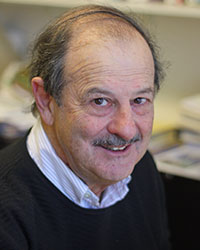
Linn W. Hobbs Professor of Materials Science and Engineering, and Nuclear Engineering
BS ’66 (engineering science, materials) Northwestern University; DPhil ’72 (science of materials) Oxford University
Radiation damage in materials, nuclear waste; amorphization; glass structure; high-temperature corrosion; transmission electron microscopy; biomaterials
Britain, France, Russia, and the U.S. have all elected to solidify high-level nuclear waste from weapons production and nuclear fuel reprocessing as a borosilicate glass poured into stainless steel canisters. While a forgiving waste form, capable of accommodating a wide range of objectionable radionuclides in solid solution, glass is a metastable solid, subject to crystallization during processing, and is substantially less environmentally durable than many crystalline solids. It also exhibits little solubility for actinides such as plutonium. Other crystalline solids are demonstrably more geologically stable (many oxides, fluorides, silicates, titanates, zirconates) and, in combination, can atomically isolate a range of specific radioisotopes in well-coordinated atomic sites as durable alternative waste forms. A disadvantage is that many lose crystalline order (amorphize) in the displacive radiation field of the incorporated radionuclides, accompanied by large volume changes (leading to fracture) and reduced resistance to leaching. We are investigating why some crystals are stable against amorphization, while others amorphize easily, and involved in designing crystal structures and compositions (such as zirconate pyrochlores and oxide spinels) that are especially resistant to amorphization. We are also studying the atomic structure of radiation-amorphized crystals using diffraction techniques and molecular dynamics modeling and the atomic rearrangements in counterpart glasses in displacive radiation fields.
Non-metallic materials in nuclear environments (e.g., silicon carbide in fusion reactor first-wall designs, crystalline nuclear waste forms such as silicates or perovskites in solidified high-level waste, silica dielectrics in radioisotope batteries in satellites, silicon and silicas in navigational devices in nuclear defense systems) undergo atom displacements from particulate radiation (fast neutrons, beta emission, alpha-decay recoil) that alter mechanical, electrical, dimensional and structural properties. Often displacements occur in extended collision cascades involving thousands of atoms that can be convincingly modeled using Monte-Carlo and molecular dynamics computer simulations. We perform these on a 32-processor parallel Beowulf computer cluster using empirical potentials matched to properties of the unirradiated solids. At such high displacement densities, analysis of the resulting disorder requires the use of topological algorithms for identifying locally altered atomic environments. In this way, we can identify atoms that are part of point and extended defect structures, and atoms that become part of amorphized regions (or, in the case of initial glasses, reordered regions), from atoms whose local environments have not altered. Such algorithms are also effective in identifying critical percolation points in the damage when, for example, amorphized regions in irradiated crystals isolate into crystalline islands.
Crystals are so intensively studied, and crystallography so extensively taught in educational curricula, because the periodic repetition of identical unit cells reduces the structural problem for crystalline solids to one of a very few atoms, easily revealed by diffraction techniques and quickly grasped by students. Deducing the atomic structure of glasses, with no periodicity, and understanding their behavior, potentially involves the independent identification of trillions of atom positions and identities. Their structural possibilities are not, however, limitless, and are in fact constrained by steric considerations, local bonding preferences, and the modes of self-assembly to be remarkably close to those manifest in analogous crystalline arrangements. A combination of topological mathematics and computer simulation is being applied to elucidate structural possibilities for network glasses (for example, the borosilicate glasses used as nuclear waste media, amorphized SiC, and amorphized crystalline waste media) and to distinguish between them.
Radioisotope-powered electrical generators have existed since the late 1940s, with progress more recently spurred by the need for long lasting, reliable power supplies for satellites. These devices tend to be large and utilize heat to produce high temperatures necessary for acceptable Carnot-cycle efficiency. Direct conversion of radiation energy to electricity offers an alternative approach not limited by a Carnot cycle. The simplest of these schemes consists of a pair of parallel plates separated by a dielectric, one plate of which is coated with a charge particle radiation emitter (alpha or beta source), the second plate acting as a collector of these emitted particles. The radiation charges the capacitor until it reaches a steady-state voltage determined by the leakage current through the dielectric. We are collaborating with Draper Laboratory in building a miniaturized (MEMS technology) prototype, using appropriate radioisotopes post-activated in the assembled device by thermal neutron irradiation. The radiation effects of activation (largely from the accompanying fast neutron flux) on the dielectric are being evaluated at MIT using the MIT Reactor as the neutron source, electrical measurements to monitor current leakage, and precision X-ray diffraction and electron microscopy to follow attendant microstructural changes.
Many materials currently used for prosthetic applications in the human body were initially developed for other applications. A widely-used example in orthopaedic prosthesis (replacement knee and hip joints, tooth implants) is the Ti-6%Al-4%V metal alloy developed originally for aircraft applications. A novel Zr-2.5%Nb alloy developed for casing fuel elements in the Canadian CANDU nuclear reactor design has been found to be more benign in the body (less allergenic) and especially effective for the femoral condylar component of replacement knee joints.
The alloy is deliberately oxidized at high temperature to form a hard, scratch-resistant, adherent oxide coating that substantially reduces wear (and accompanying particulate-induced inflammatory response) of the polyethylene tibial tray counterpart against which it articulates. We are investigating the oxidation layer microstructure and interface structure and chemistry to explain the remarkable toughness and adherence of this efficacious coating. We are also investigating the apposition and mineralization of new bone forming around orthopaedic implants coated with osteoconductive substances that accelerate anchorage of the prosthetic device in the surrounding bone.