
NSE Students Spotlights

|
Developing materials for stellar performance in fusion power plantsNSE doctoral student Zoe Fisher is researching how defects can alter the fundamental properties of ceramics upon radiation. |

|
Researching high-fidelity methods to make small modular reactors more cost-effectiveHer native South Korea is among the world’s leading nations in nuclear energy. Third-year doctoral student, Youyeon Choi, is leaning on her work experience in Seoul, and her love of multi-physics modeling to pursue doctoral research at MIT NSE. |

|
Aligning economic and regulatory frameworks for today’s nuclear reactor technologyToday’s regulations for nuclear reactors may have been well designed for existing technologies but are unprepared for how the field has evolved and what might come down the pike. Through systems modeling and by studying environmental transport of radionuclide inventory, Liam Hines NSE doctoral student wants to ensure that policy keeps up with the technology. |

|
Studying astrophysically relevant plasma physicsThe third-year doctoral student has always loved a hands-on approach to science. Research in lab-based astrophysics has enabled him to experiment in an otherwise heavily theoretical subject. |
|
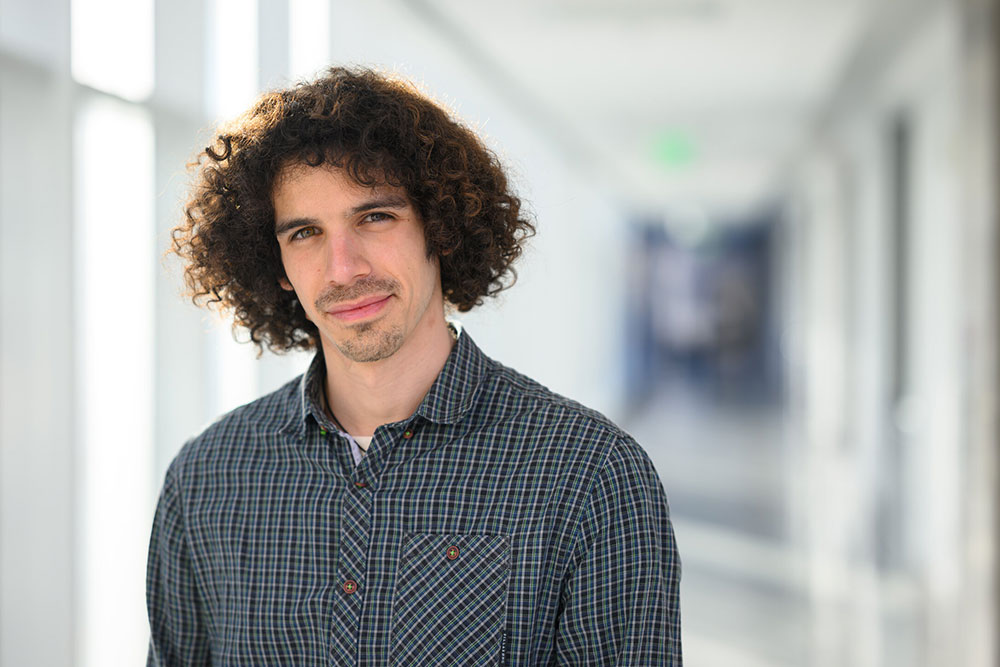
Modeling the threat of nuclear warAs part of his doctoral studies in MIT’s Department of Nuclear Scienc and Engineering, Eli Sanchez focused on understanding whether hypersonic missiles are a threat to global security. |
|
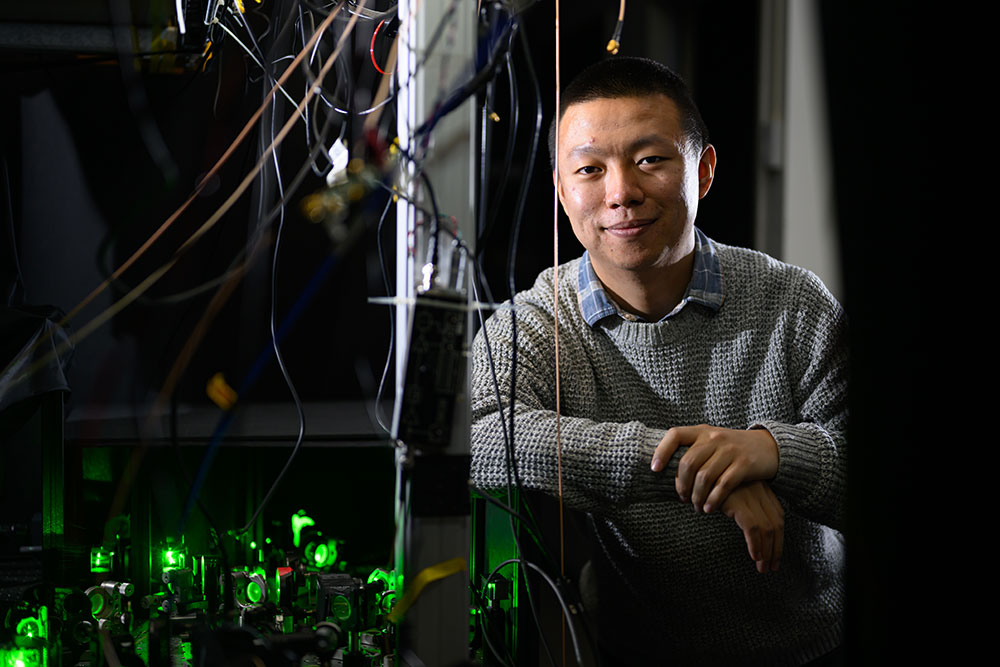
Exploring quantum phenomena through an engineering perspectiveGuoqing Wang has channeled a deep love of physics to the study of different aspects of quantum sciences. |
|
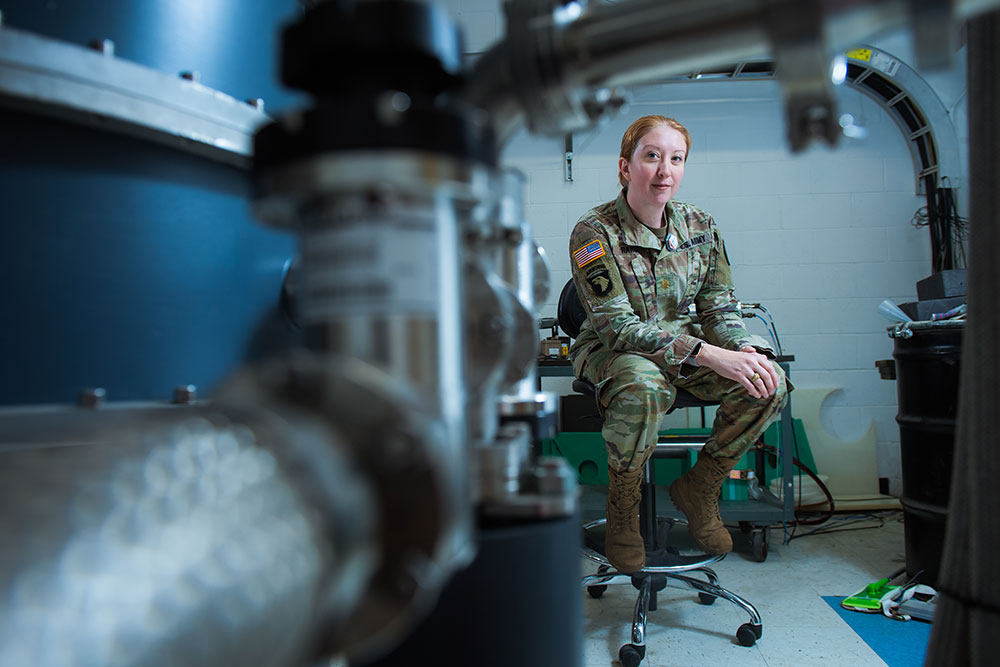
Soaring high in the Army — and in researchAfter three deployments in Afghanistan, Lieutenant Colonel Jill Rahon is pursuing research that will help verify conformation of nuclear treaties. |
|
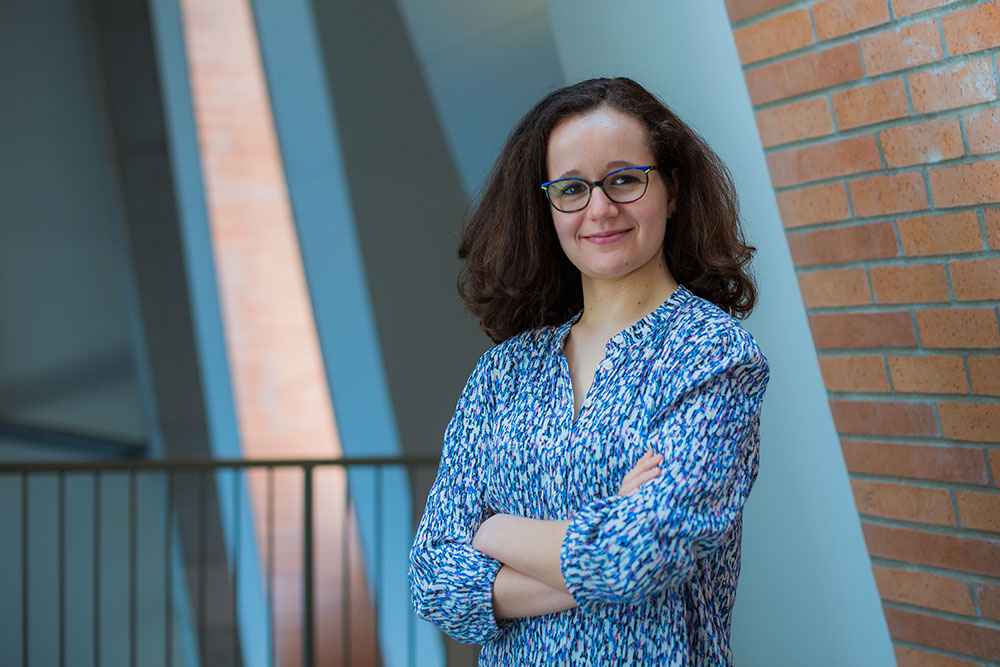
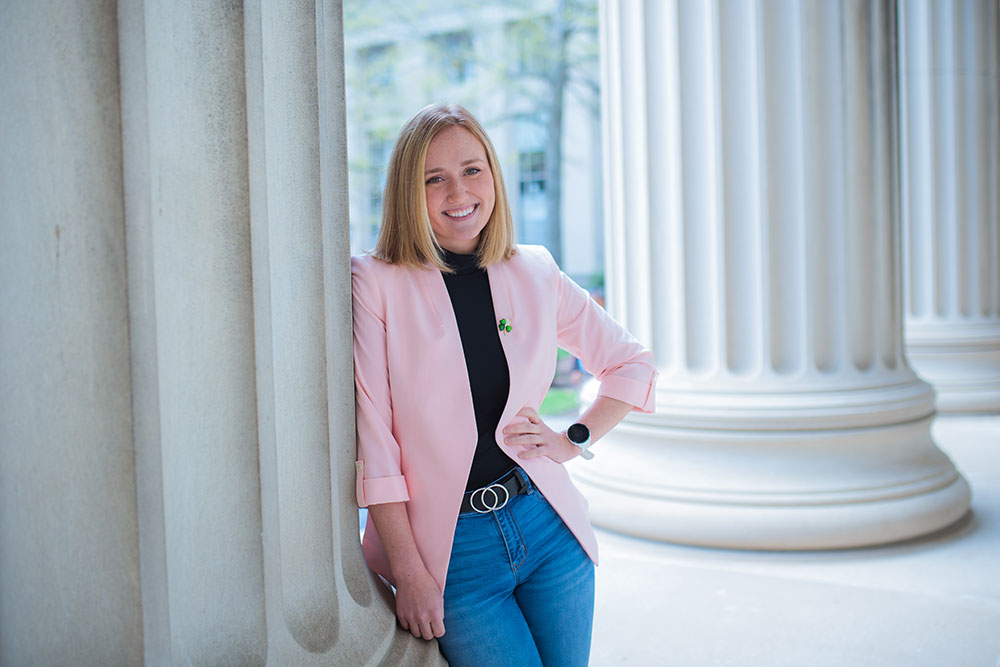
Optimizing construction and operation of nuclear energy facilitiesKeen to accelerate the adoption of nuclear energy, Isabel Naranjo De Candido is working on methods to optimize construction and operation of production plants. |
|
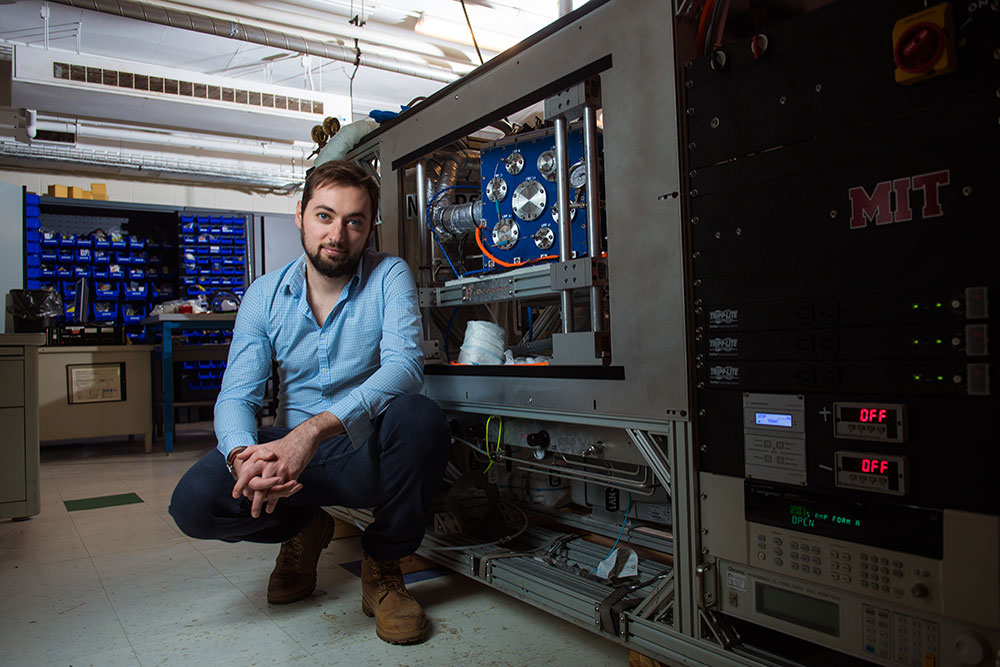
Winning over nuclear skepticsKaylee Cunningham might love nuclear engineering and computer science but recognizes that her training could be for naught if myths continue to plague the industry. The activist is committed to help &emdash; one TikTok at a time. |
|
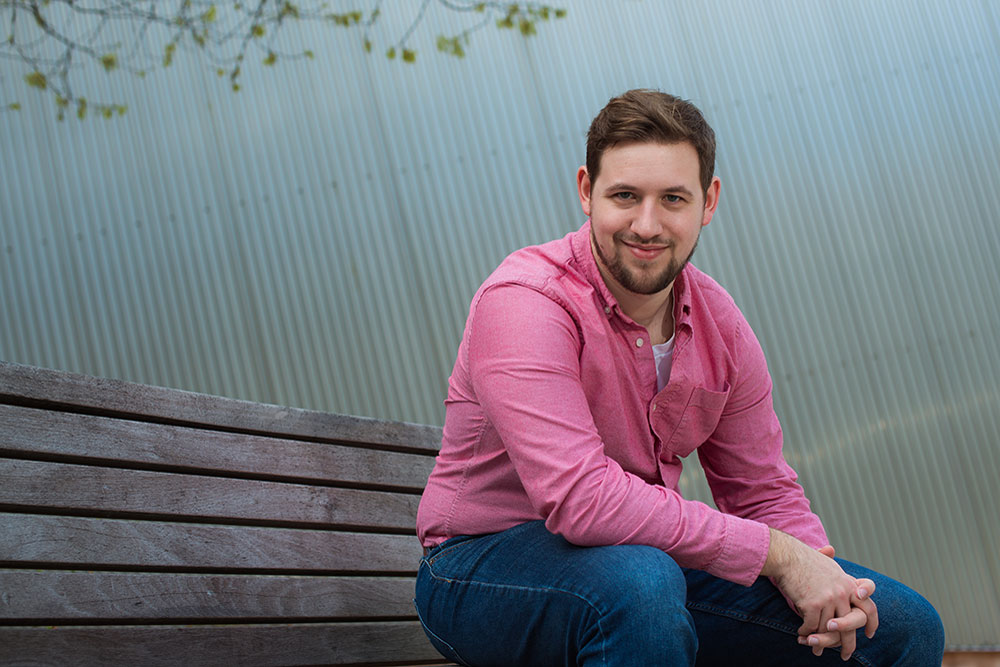
Understanding boiling to help the nuclear industry and space missionsAlways fascinated by physics, Florian Chavagnat is propelling his love of the science to answer fundamental questions about heat transfer that will shape the success of nuclear power plants — and extended missions in space. |
|
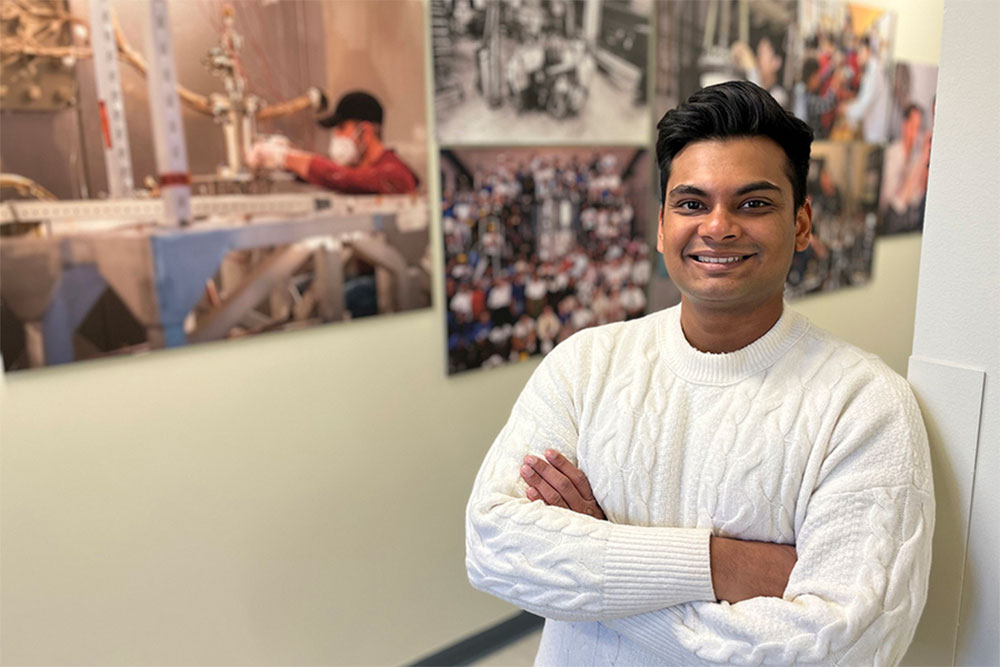
Printing a new approach to fusion powerplant materialsThrough research on additive manufacturing of metal-ceramic composites, the fourth-year nuclear science and engineering doctoral student, Alexander O'Brien is enabling a category of high-functioning materials that can deliver the next generation of fusion devices. |
|
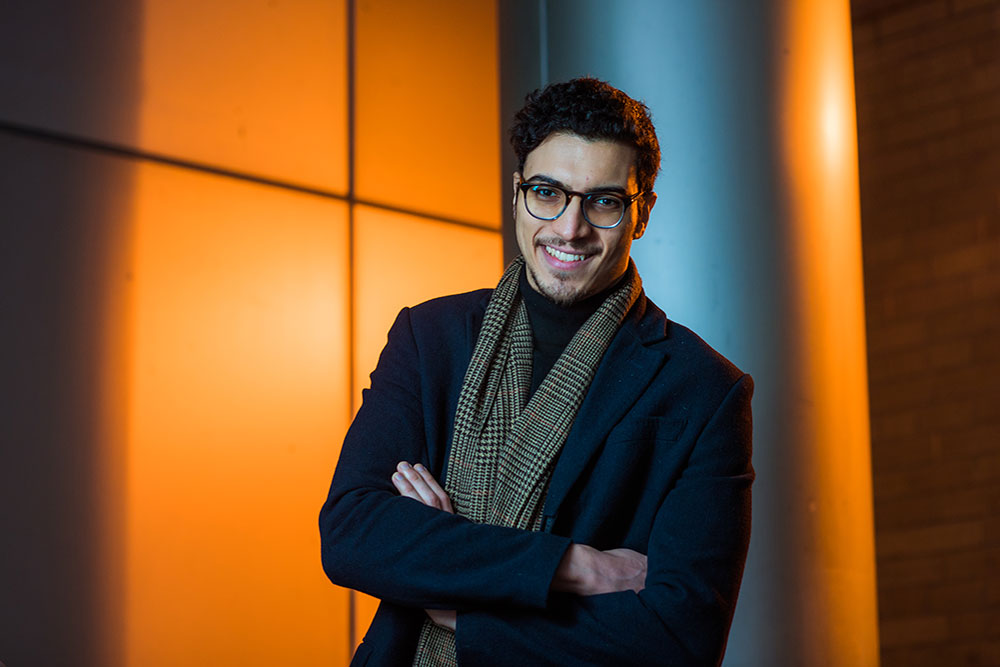
Exploring the bow shock and beyondPhD student Rishabh Datta seeks to further understanding of astrophysical phenomena. |
|
Assil Halimi: Working to Make Nuclear Energy More CompetitiveThrough research on high burnup fuels and improving the design of nuclear power plants, the second-year doctoral student is adopting a dual approach to addressing some of the industry’s toughest challenges. |
|
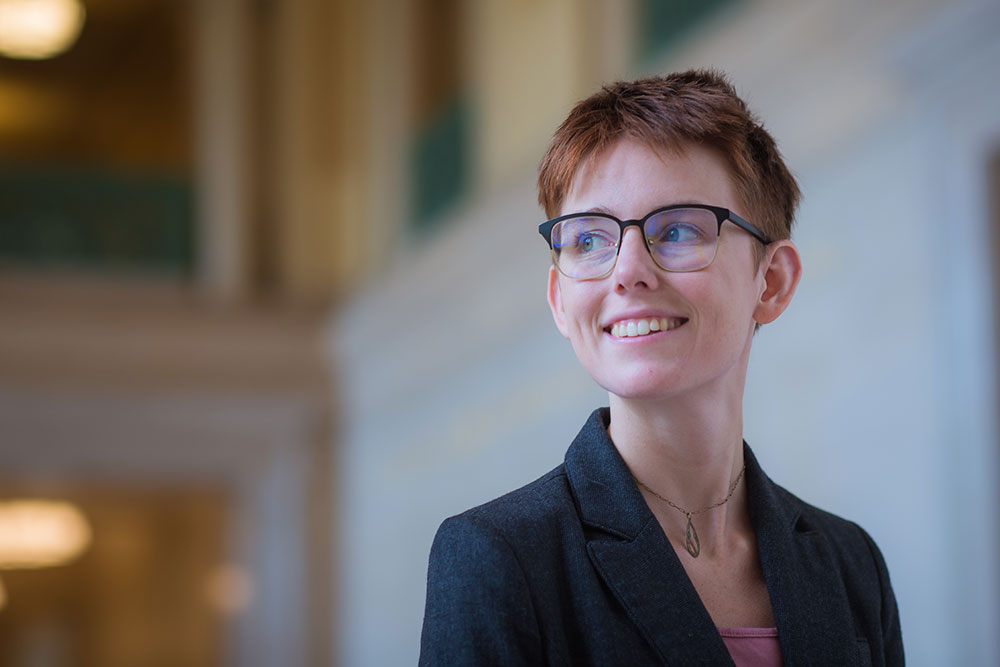
Simulating neutron behavior in nuclear reactorsAmelia Trainer’s work is fundamental to understanding how nuclear reactors operate. A passion for computer modeling and poetry have stood her in good stead through her research career. |
|
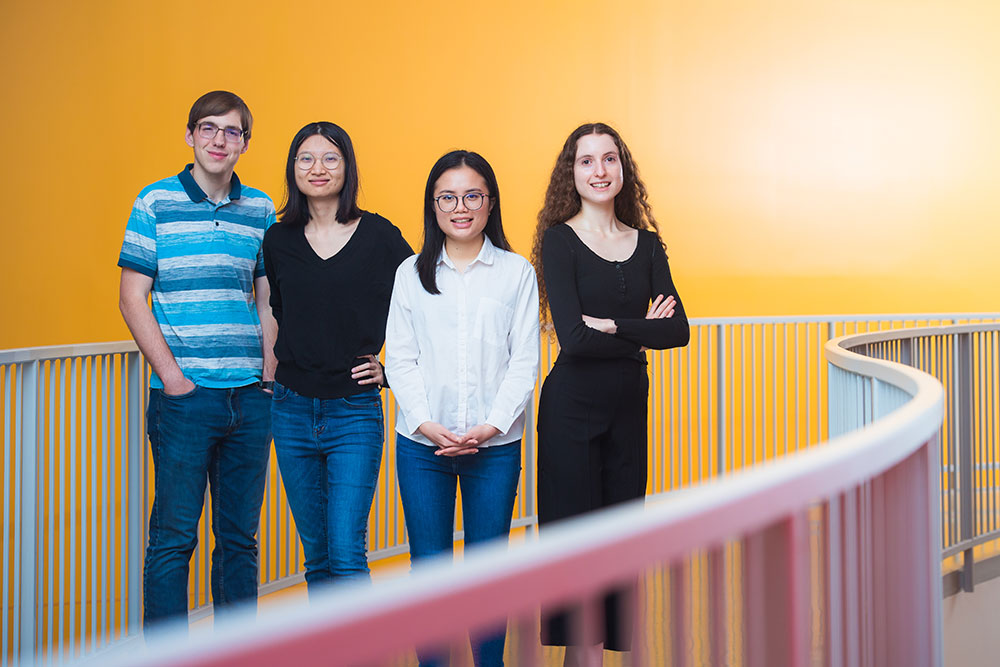
The task of magnetic classification suddenly looks easierMIT undergraduate researchers, Helena Merker, Harry Heiberger, and Linh Nguyen and PhD student, Tongtong Liu, exploit machine learning techniques to determine the magnetic structure of materials. |
|
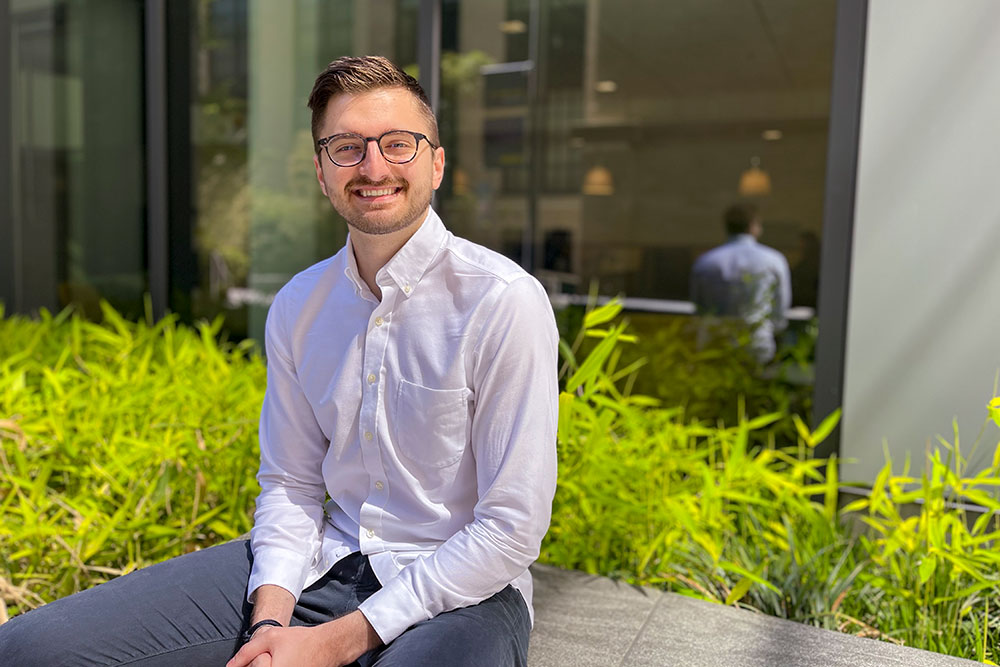
Seeking a way to better stabilize the fusion environmentIn a residency supported by the Department of Energy, the NSE PhD candidate, Evan Leppink, will explore the high-field side of the DIII-D tokamak. |
|
Mining valuable insights from diamondsA passion to understand natural science phenomena ignited Changhao Li’s love of quantum physics. |
|
Finding her way to fusionZoe Fisher’s undergraduate research journey leads to a role working on the SPARC tokamak |
|
Fast-tracking the search for energy-efficient materialsDoctoral candidate Nina Andrejević combines spectroscopy and machine learning techniques to identify novel and valuable properties in matter |
|
Helping make fusion a realityFusion has great potential as a carbon-free energy source but plasma turbulence presents a problem. Rachel Bielajew is taking on that challenge and helping make a better world—through science and community action. |
|
Crossing disciplines, adding fresh eyes to nuclear engineeringGraduate student, Limiao Zhang, sees surprising connections between the behavior of cars and bubbles. |
|
Waging a two-pronged campaign against climate changeWith a nuclear energy startup and cost-modeling tool, PhD student Robbie Stewart aims to speed construction of new plants for decarbonizing the economy |
|
The boiling crisis — and how to avoid itPhD student Madhumitha Ravichandran identifies the three main factors that trigger the boiling crisis through machine learning models |
|
Understanding imperfections in fusion magnetsMIT Energy Fellow Richard Ibekwe finds flaws in high-temperature superconducting tapes, so they can be measured, fixed or embraced. |
|
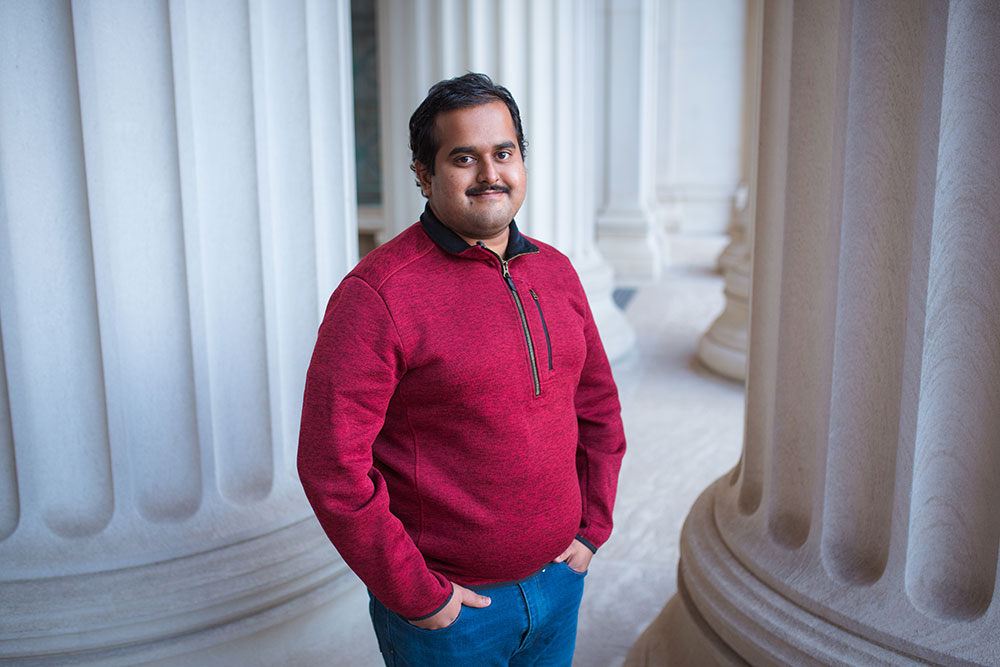
A practical path toward discoveryDoctoral student, Arunkumar Seshadri leverages radiation and other tools as he seeks enhanced materials for nuclear reactors |
|
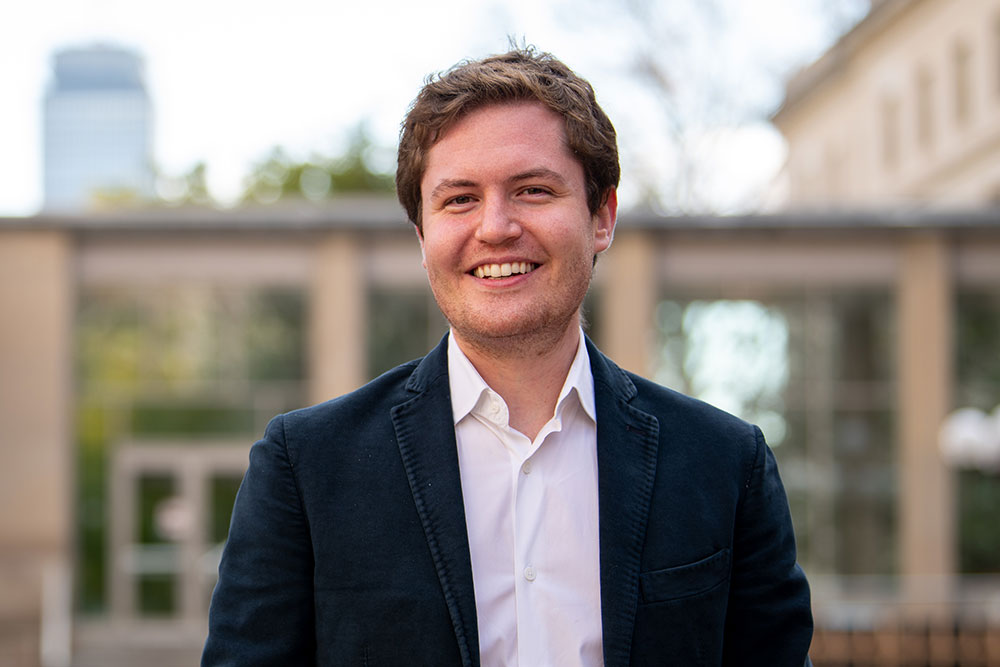
Discovering a new paradigm for understanding plasma turbulencePhD candidate Lucio Milanese uncovers new fundamental mechanism in turbulence |
|
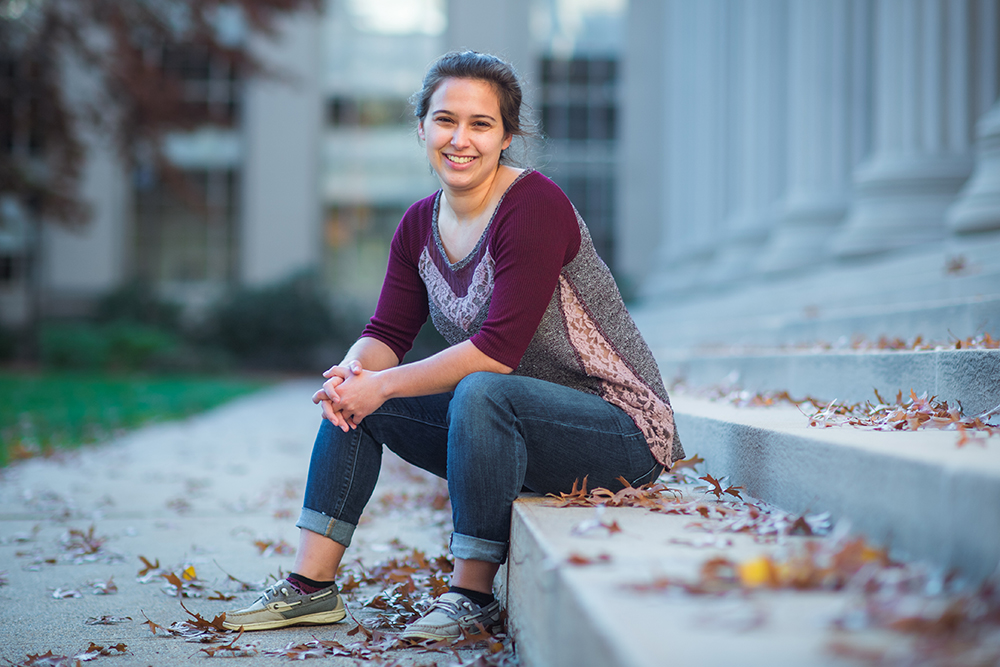
Toward a more secure worldSenior Nina Levine researches technologies for detecting radioactive material, pursuing a dual path in nuclear science and policy |
|
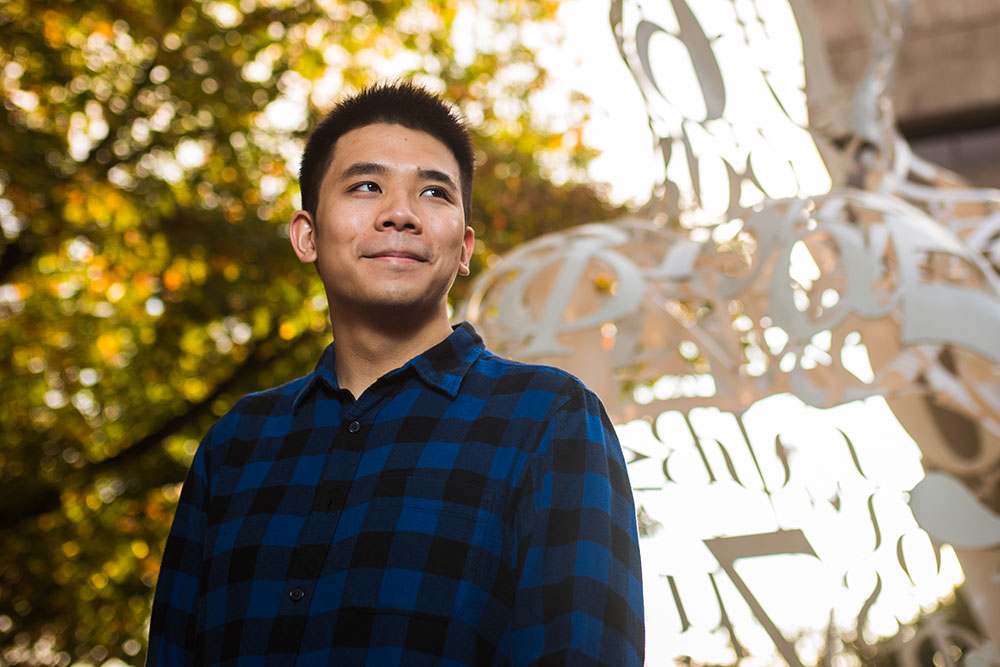
Thanh Nguyen: Tantalized by the neutronsIn a new realm of materials, NSE doctoral student hunts for exotic properties probed by neutrons that could power real-world applications |
|
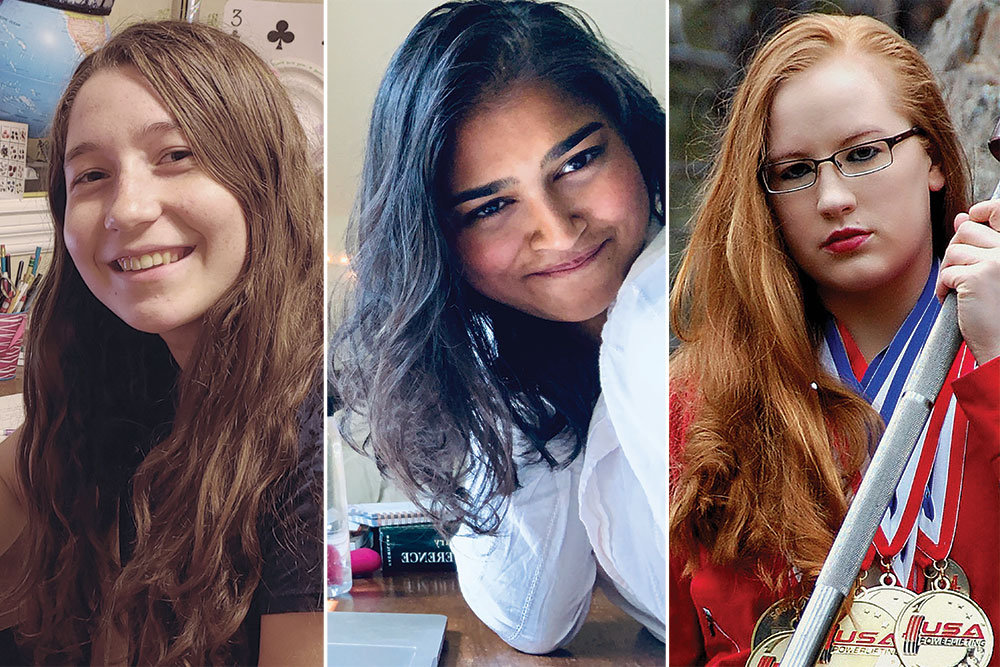
Undergraduates ramp up research during pandemic diasporaFar from MIT, NSE students Charlotte Wickert, Mriganka Mandal, and Natalie Montoya, take ownership of projects and explore new terrain |
|
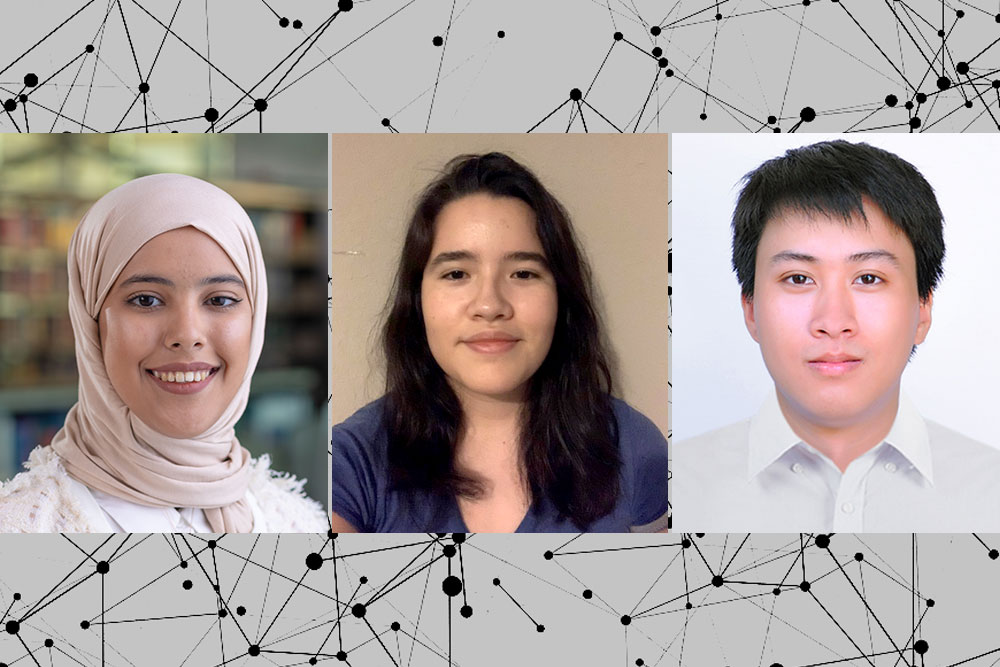
No pause for pandemicNSE UROPs Aljazzy Alahmadi, Quynh T. Nguyen, and Andrea Garcia are sustaining the NSE research mission from around the world |
|
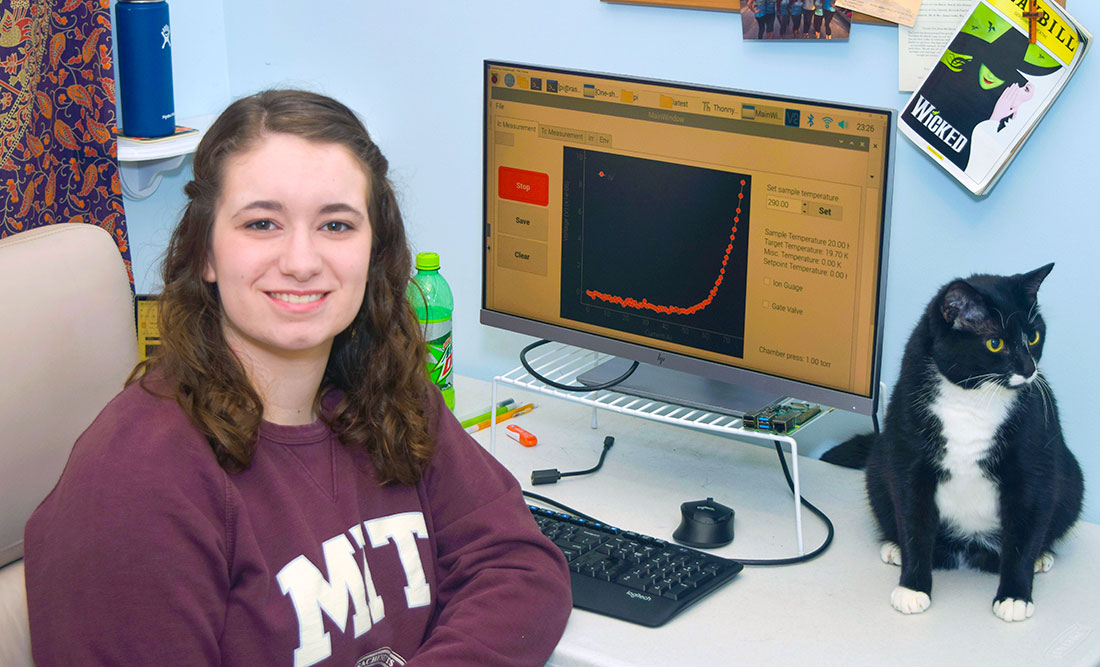
Juggling fusion magnets and LED batonsRising MIT sophomore, Lauryn Kortman, finds satisfaction designing for the laboratory and the playing field. |
|
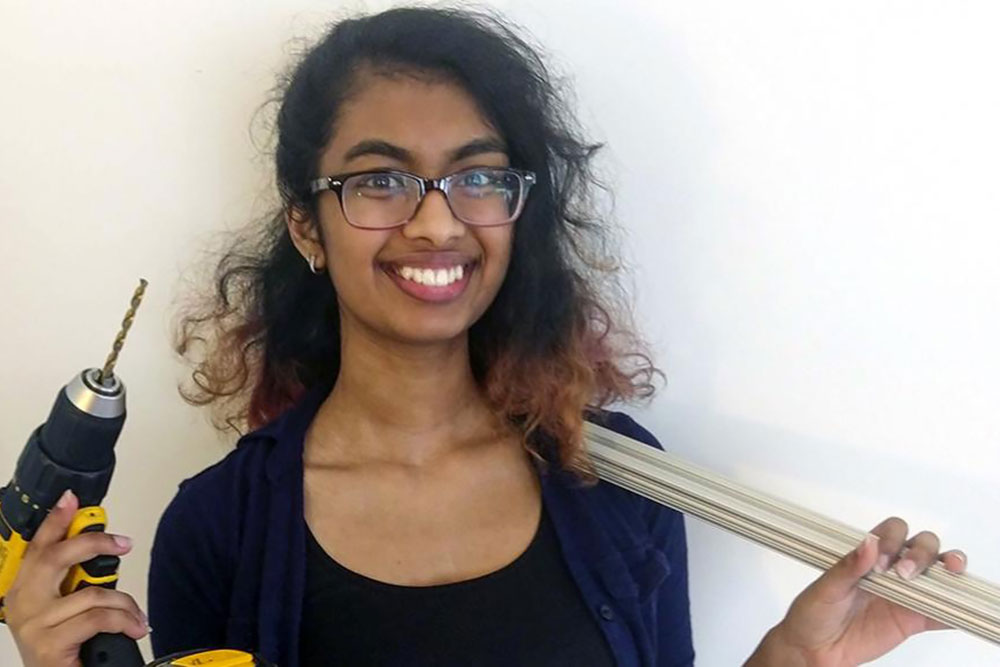
At home with fusion researchHundreds of miles from campus, Sreya Vangara recalibrates her approach to laboratory research and other MIT commitments. |
|
Addressing challenges in controlling plasma and plasma turbulenceIn his PhD thesis, Norman Cao questions assumptions about plasma turbulence; he questions what’s next. |
|
The quest for practical fusion energy sourcesGraduate student Erica Salazar tackles a magnetic engineering challenge |
|
Pablo Ducru: Scientist/entrepreneurAfter delivering novel computational methods for nuclear problems, doctoral candidate plunges into startup life |
|
Uncloaking big mysteriesJunior double major seeks to piece together puzzles of the universe, particle by particle |
|
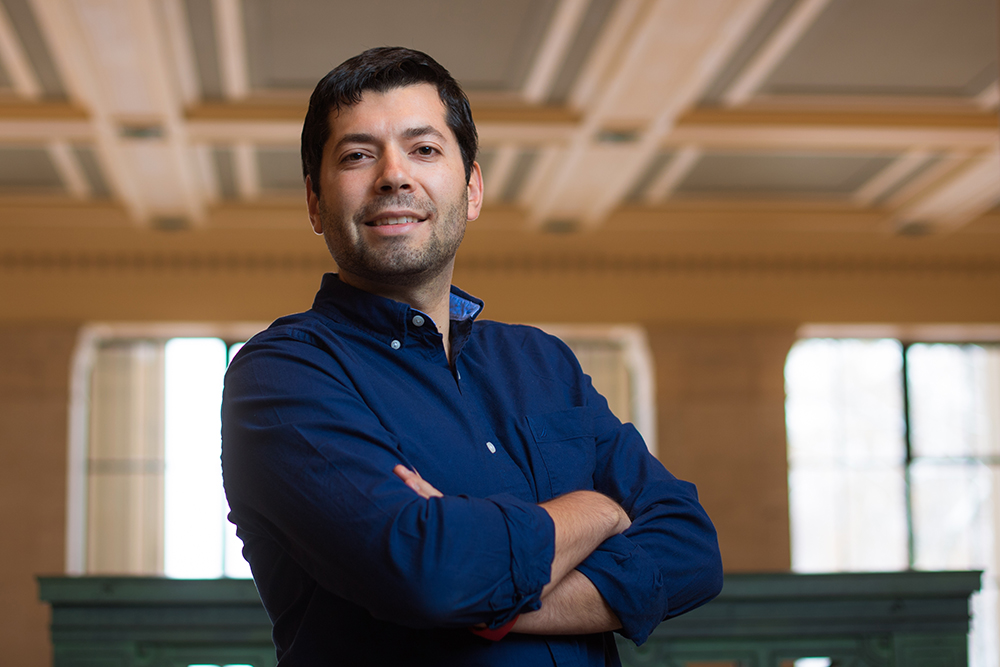
Zeroing in on decarbonizationWielding complex algorithms, NSE doctoral candidate Nestor Sepulveda spins out scenarios for combating climate change |
|
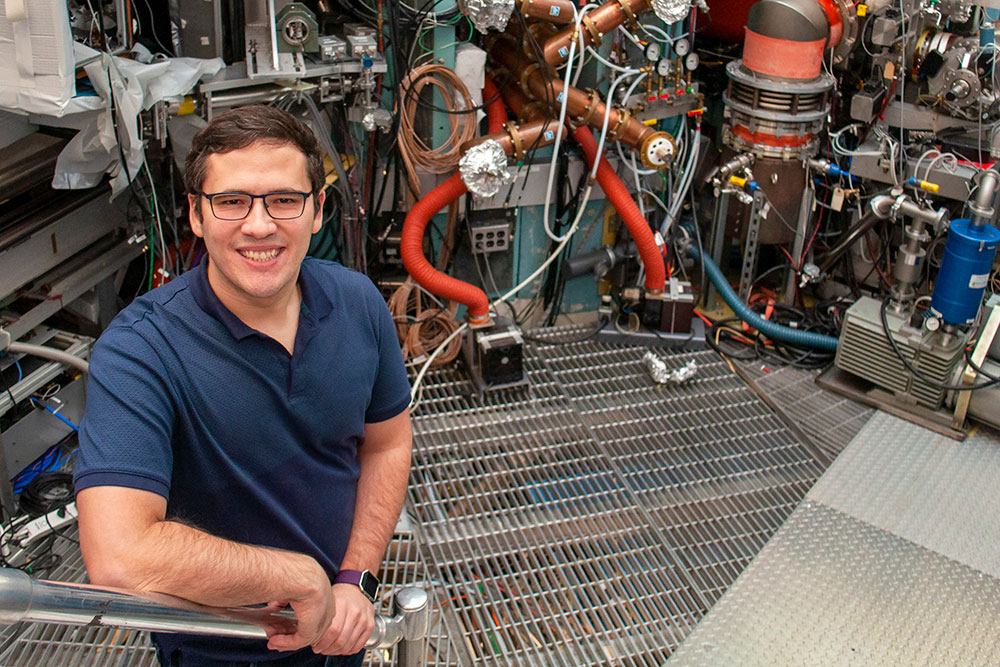
Heating by CoolingPablo Rodriguez-Fernandez PhD’19resolves a fusion paradox to receive the 2019 Del Favero Thesis Prize |
|
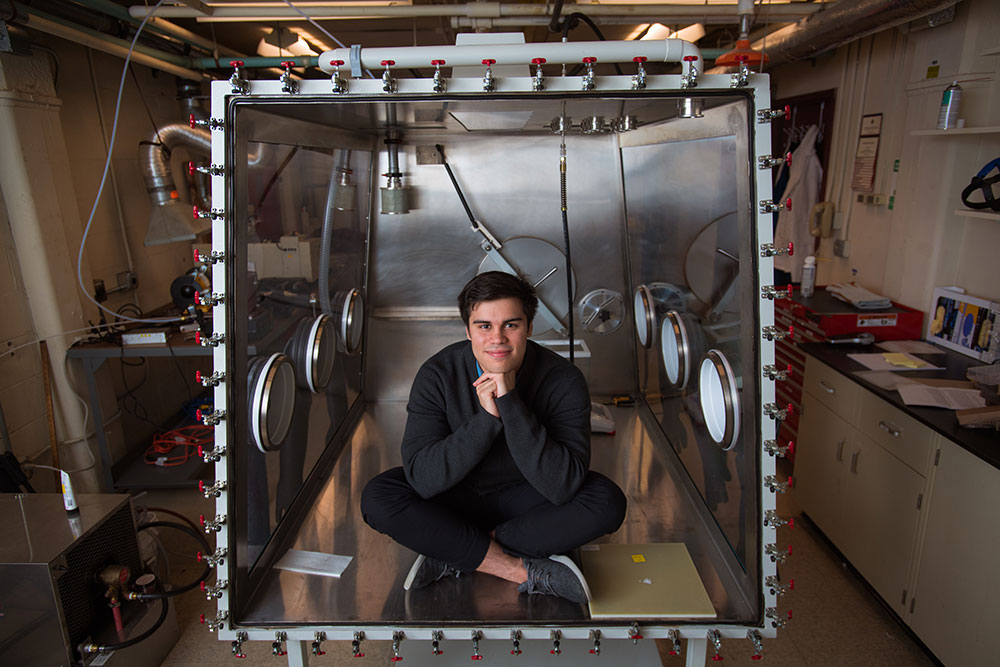
From videogames to startupsMyles Stapelberg ’21, a junior double majoring in nuclear science and engineering and materials science and engineering, wants to help make sure that the best materials for building fusion tokamaks for the purpose of power generation. |
|
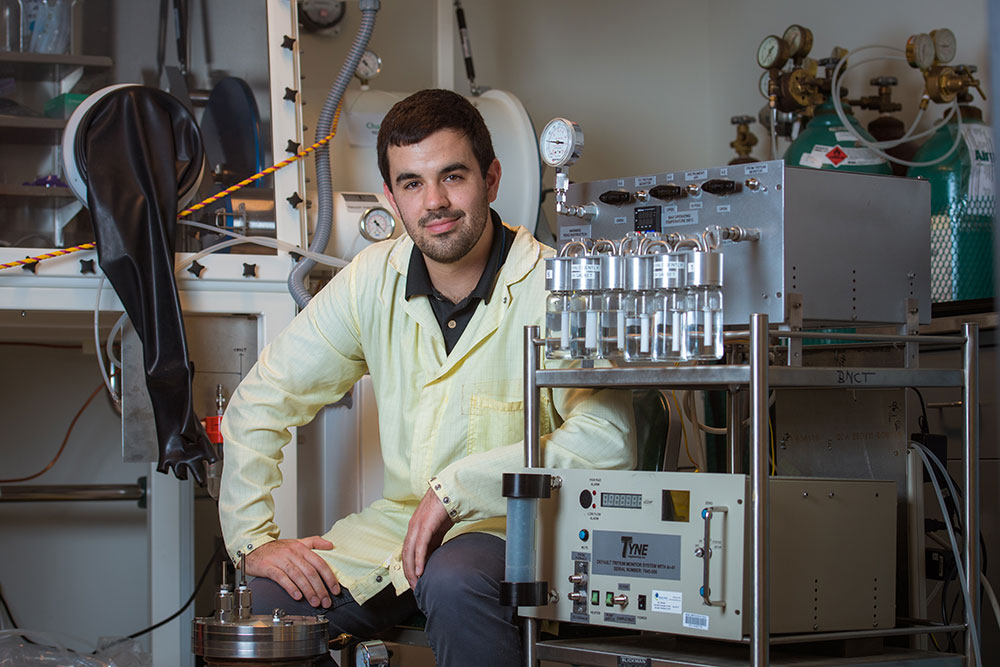
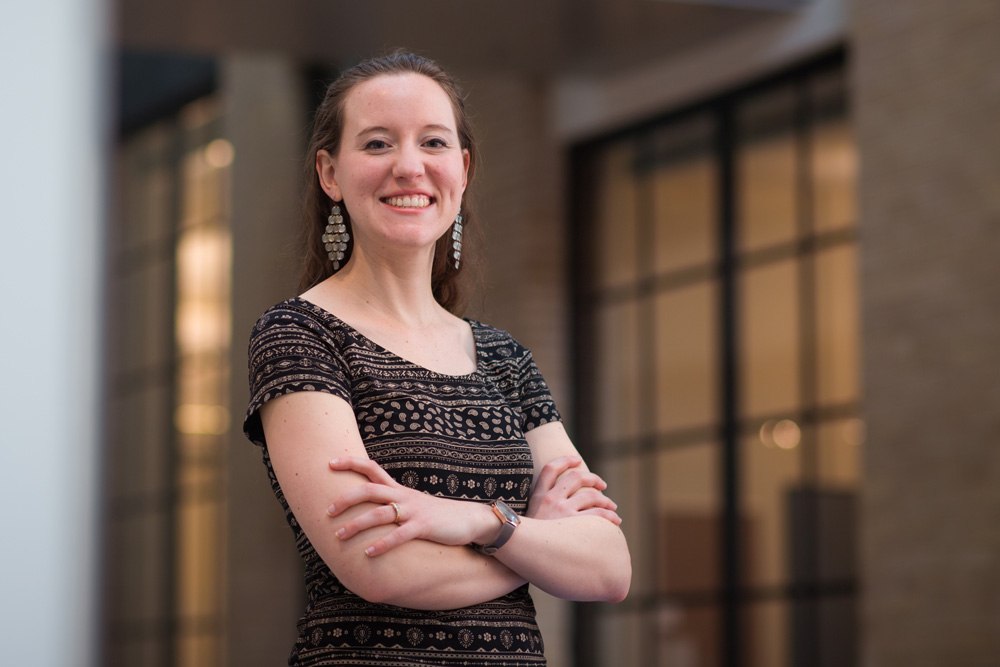
A vision of nuclear energy buoyed by molten saltNSE graduate student Kieran Dolan tackles a critical technical challenge to fluoride-salt-cooled high-temperature nuclear reactors. |
|
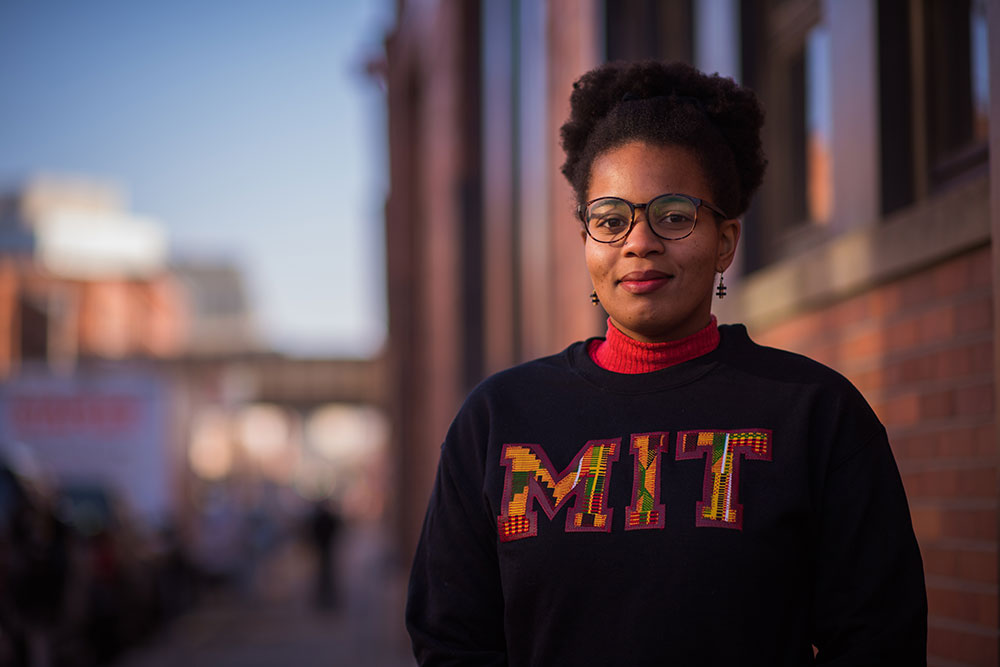
Fine-tuning multiphysics problemsNSE graduate student Miriam Kreher codes to create better models for complex interactions within nuclear reactors |
|
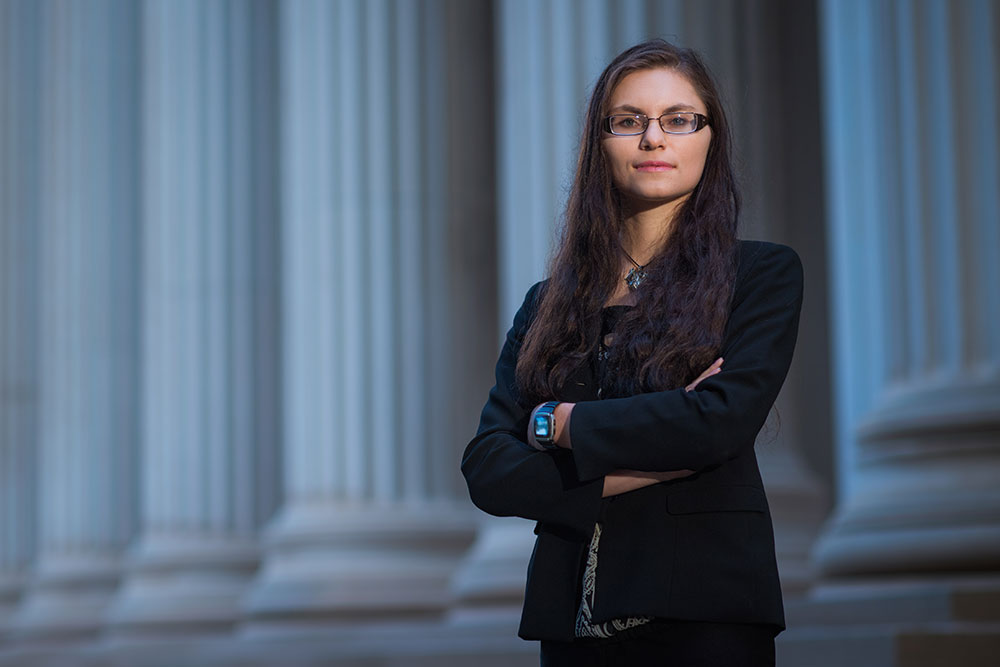
From summer research program to PhD dissertationNSE graduate student Raspberry Simpson’s scientific fourney approaches fruition |
|
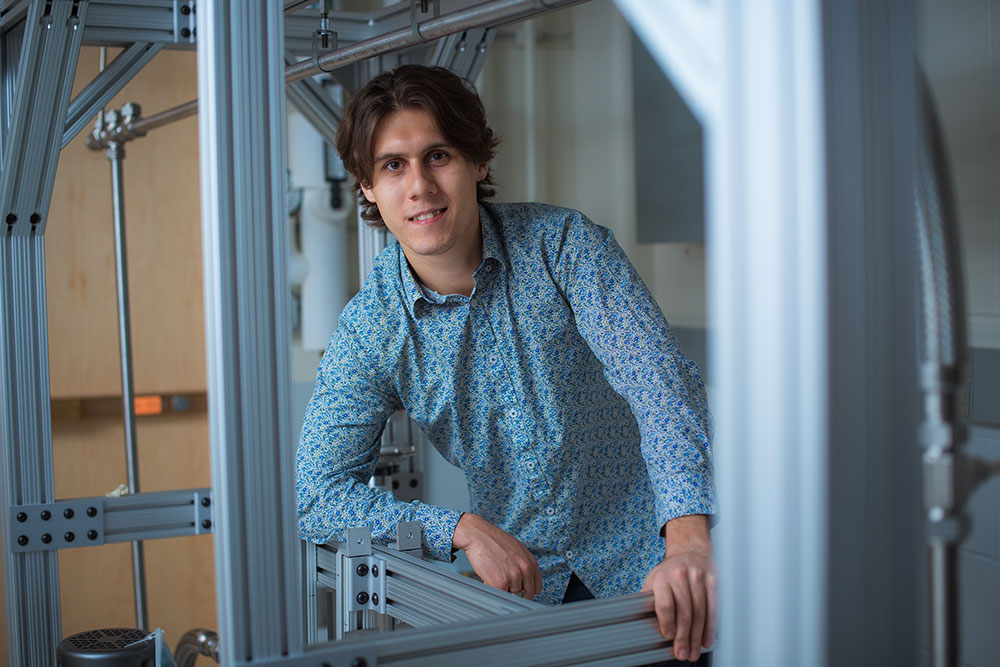
Pushing the limitsNSE junior Eva Lisowski studies and trains hard for a future of national service |
|
Heat-seeking studiesUsing cutting-edge diagnostic devices, NSE graduate student, Artyom Kossolapov, takes precision measurements of a physical phenomenon critical to nuclear reactor energy generation |
|
Honing quantum sensingNew QEG approach to spatial noise filtering boosts development of ultra-sensitive quantum sensor devices. |
|
The heat of the matterPhD candidate Juan Ruiz Ruiz seeks to discover how heat leaks from fusion plasmas. |
|
Making nuclear energy safer and more affordableGalvanized by the Fukushima Daiichi nuclear disasters, PhD student Xingang Zhao envisions a future with safe, efficient nuclear power. |
|
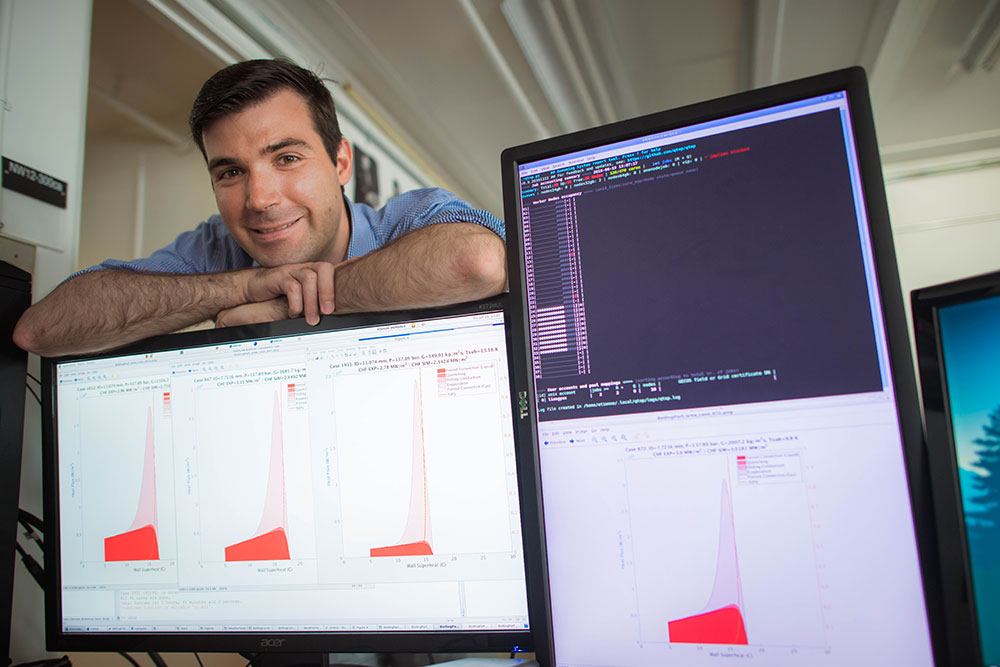
Mastering fluid flow and bubble boilThrough meticulous computations, nuclear science and engineering student Etienne Demarly simulates conditions inside a nuclear reactor. |
|
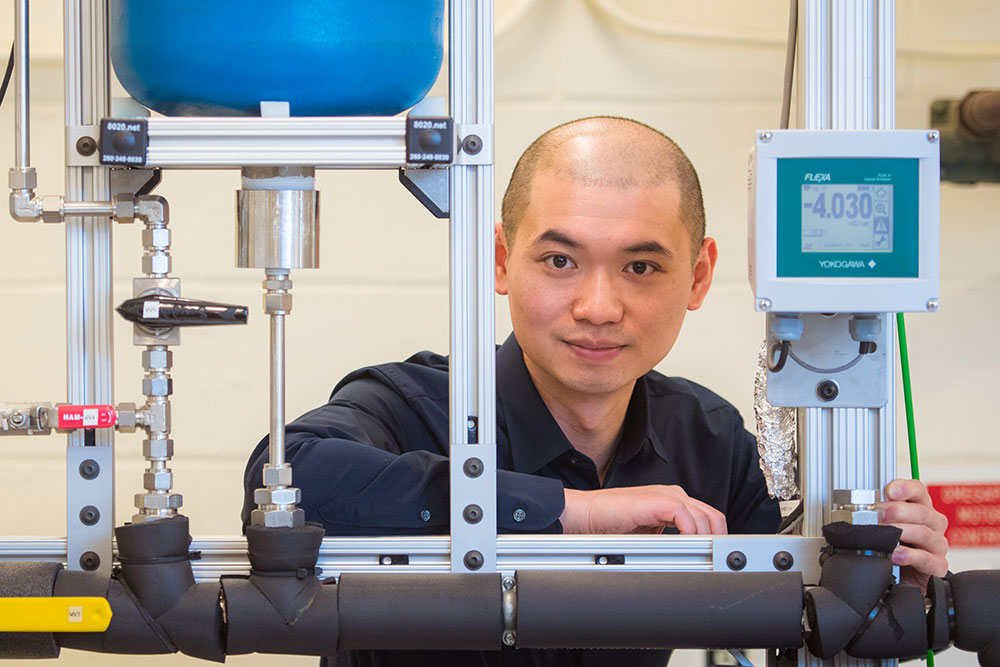
Turning up the heatFine-tuning thermal hydraulics in reactors, doctoral student Guanyu Su hopes to advance more powerful nuclear energy technology |

|
Ka-Yen Yau: From coolants to a carbon-constrained worldAn early calling for clean energy propels undergraduate Ka-Yen Yau’s research on the next generation of nuclear technology ... more |
|
A paired passion for pushing boundariesNuclear science and engineering doctoral students, Rachel Connick and Charles Hirst, search for radiation damage in metals ... more |

|
The making of a maker mentor:Undergraduate Olorunsola (Jerry) Akinsulire spearheads new NSE builder space. ... more |

|
Alex Creely: Bridging the gap between simulation and realityGraduate student Alex Creely receives Department of Energy Innovation Award. ... more |
|
Leigh Ann Kesler: Scaling heights and measuring depthsNuclear science and engineering PhD candidate tracks erosion happening inside fusion devices. ... more |

|
Becky Romatoski: Reducing risk in next-generation reactorsNuclear science and engineering graduate student Becky Romatoski analyzes range of uncertainties in MIT’s salt-cooled nuclear reactor project. ... more |
|
Sean Lowder: A path to naval nuclear engineeringNSE senior Sean Lowder is taking his nuclear engineering expertise to Washington, DC ... more |
|
Monica Pham: Advancing nuclear power and empowering girlsNSE sophomore Monica Pham researches fusion energy and promotes STEM opportunities for young women. ... more |

|
Sara Hauptman: Learning on the jobBefore sophomore Sara Hauptman set foot in a nuclear science and engineering (NSE) class, she was learning to operate MIT’s nuclear reactor. ... more |

|
Brandon Sorbom: Designing a fusion futureNSE graduate student, Brandon Sorbom, now in his sixth year at MIT’s Plasma Science and Fusion Center (PSFC), is researching how much radiation magnetic materials in fusion tokamaks can endure before they are compromised. He is specifically interested in high-temperature superconductors (HTS), a recently commercialized class of superconductor that could reduce the size and expense of future fusion projects. ... more |

|
Rasheed Auguste: Advocating for change on campus and Capitol HillNSE senior Rasheed Auguste is fueled by passions for science, policy, and creating a more inclusive MIT. ... more |

|
Caroline Colbert: Paving a Path to MedicineNSE senior Caroline Colbert had expected to pursue a career in nuclear power. But after working in a medical environment, she changed her plans. ... more |

|
Silvia Espinosa: On the edge of discoveryA fourth-year nuclear science and engineering graduate student at MIT’s Plasma Science and Fusion Center (PSFC), Espinosa is seeking to understand phenomena observed in plasmas that fuel magnetic fusion devices like the Center’s Alcator C-Mod tokamak. ... more |

|
Jayson Vavrek: Turning particle detectors into weapons detectorsDepartment of Nuclear Science and Engineering (NSE) graduate student Jayson Vavrek got his start in high-energy particle physics, looking for the smallest forms of matter in the universe. Now at MIT, he uses the same tools and principles to verify nuclear weapons. ... more |

|
Cody Dennett: Scrutinizing radiation’s impactNuclear Science and Engineering doctoral student Cody Dennett cannot measure firsthand the powerful pummeling taken by structural parts in the heart of working nuclear reactors. Instead, he has developed novel experimental methods to reveal in real-time, high resolution detail the destructive impact of radiation on reactor components. ... more |
|
Carolyn Coyle: Engineering CRUD for better reactorsNuclear Science and Engineering doctoral student Carolyn Coyle ’13 SM ’16 specializes in the corrosive particle build-up found on primary components of nuclear reactors, known by its apt acronym, CRUD (for Chalk River Unidentified Deposits). The substance is a common byproduct of reactor operation, yet its impacts on reactor function have not yet been carefully elucidated. Coyle’s research, part of a larger effort to improve reactor safety and efficiency, aims to bring CRUD out of the shadows. ... more |

|
Amelia Trainer: Structuring improved simulations for reactor physicsTrainer, a sophomore majoring in physics and nuclear science and engineering, calls “Scaffolding” “probably the most true and meaningful love poem I’ve read.” But its metaphorical take on a relationship might also resonate for Trainer around her work with the Computational Reactor Physics Group (CRPG), where Trainer is deeply committed to learning about strengthening structures in a nuclear realm. ... more |
|
Carolena Ruprecht: On board with nuclear engineering for the NavyFew undergraduates have pinned down their post-graduation plans as precisely as Carolena Ruprecht. Just after commencement on June 3, 2016, Ruprecht will attend a Reserve Officer Training Corps (ROTC) commissioning ceremony, and then be whisked off to her commission as a surface warfare officer, destined to serve on an aircraft carrier. ... more |

|
Aditi Verma: A multidisciplinary take on nuclear policyA doctoral student in nuclear science and engineering, Verma has spent her academic career acquiring the expertise in science, engineering and the social sciences required to make sense of complex policy questions that arise around nuclear energy. ... more |
|
Ruaridh Macdonald: Engineering nuclear securityNSE graduate student Ruaridh Macdonald is involved in a project called Zero Knowledge Warhead Verification, developing a tool to identify nuclear weapons without divulging too much. ... more |
|
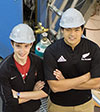
Kuang, Creely already contributing to fusion’s advancementThis summer, nuclear fusion researchers at MIT and Germany’s Max Planck Institute will learn more about what’s going on inside their reactors, thanks in part to the accomplishments of two first-year Nuclear Science and Engineering doctoral students. ... more |
|
Coding for cooling: Benjamin Magolan helps model improved coolant flowAfter tinkering for months with thousands of lines of computer code, Benjamin L. Magolan believes he is finally getting somewhere: “I’ve had a breakthrough with my implementation and now everything is coming together,” he says. “I’m capturing the appropriate turbulence trends in my model.” ... more |
|
NSE senior Sterling Harper tackles nuclear energy risk with virtual simulation toolsSeveral years ago, as an incoming freshman, current MIT senior Sterling Harper had no inkling that he’d find his passion in writing nuclear engineering software. But after signing up on a whim for a pre-orientation program with the Department of Nuclear Science and Engineering (NSE), Harper was hooked, and is now set to graduate from a five-year program with bachelor’s and master’s degrees in the field next year. ... more |
|
Lulu Li: Modeling the maelstrom inside a reactorThe frenetic dance of neutrons inside a nuclear reactor generates heat and produces electricity. Reactor physicist Lulu Li wants to make sense of this kinetic choreography, with the ultimate goal, she says, of “making nuclear reactors safer, more reliable and economical to operate.” A fourth year doctoral student and member of the Department of Nuclear Science and Engineering’s Computational Reactor Physics Group (CRPG), Li is developing precise and detailed simulations of neutron behavior that could have a major impact on current and future generations of nuclear reactors. ... more |

|
Doctoral students seek quantum control in Prof. Cappellaro’s Quantum Engineering GroupMIT’s Quantum Engineering Group (QEG) has a challenging but potentially world-changing mission: to harness the quantum properties of matter for use in information technology, metrology, defense, healthcare, and many other fields. ... more |

|
Mareena Robinson: An unexpected path to nuclear engineeringWhen she was accepted into the undergraduate business program at Florida A&M University (FAMU), Mareena Robinson thought she had her future all figured out: She would go to law school and become an attorney, like her father, or else a businesswoman. ... more |
|
Altering the energy landscape: Yan Chen’s work on fuel cell catalysts could help integrate new power solutionsDoctoral candidate Yan Chen wants to improve the world. She doesn’t say this directly, but her five years of research on catalytic surfaces for use in high-temperature fuel cells say it for her. Her work has the potential to create efficient new energy solutions to help curb the world’s appetite for carbon-based fuels. ... more |
|
Open-Ended Problems With No Answer Keys: Freshmen Karafillis and Auguste Thrive on NSE Lab TeamWhat do MIT freshmen Pavlina Karafillis and Rasheed Auguste like about their work in the Short Lab, NSE Assistant Professor Mike Short’s materials research group? “There’s no answer key — you have to figure things out on your own,” says Karafillis. Adds Auguste, “it’s like one big open-ended problem; nobody tells you exactly how to attack it.” ... more |

|
NSE undergrad Minh Dinh’s love of learning, materials, and programming leads him to research group roleMinh Dinh has always had a love of learning; it got a big boost when he was attending high school in Hue City, Viet Nam, and a university enrichment program introduced him to nuclear physics. “It made me think, wow, this stuff is so cool, I want to learn more about it — that’s when I decided to study nuclear engineering in college,” he recalls. ... more |

|
Margo Batie: A physicist, an athlete, and an engineerStudying both physics and nuclear science and engineering at MIT is no small challenge, but it’s just one of the activities that senior Margo Batie juggles. During her time at MIT, Batie has played on the varsity basketball team, led the women’s club rugby team, conducted research at two national laboratories, and helped strengthen minority support systems and outreach programs. ...more |
|
NSE UROPs give Ledoux a perfect intersection for materials studiesGabrielle Ledoux came to MIT as a freshman in 2012 with a longtime interest in materials science, and a passion for research and discovery — a combination that’s finding fulfillment at MIT Nuclear Science and Engineering, where her participation in a series of investigations has led to a dual major and a Summer 2013 project that Ledoux calls “a perfect intersection of all my interests.” ... more |

|
Rosemary Sugrue: Tracking bubbles for improved nuclear safetyWhether soloing on tenor saxophone in a jazz band, souping up a racing coupe, or serving as the lone woman operator at a nuclear power plant, Rosemary Sugrue seizes opportunities to stretch herself and learn. This second-year graduate student, who says she has always “enjoyed problem-solving, critical thinking and mechanical things,” arrived at MIT as a freshman in 2007 restless to explore new domains. ... more |
|
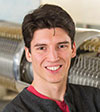
Zach Hartwig applies physics, teamwork to create new tools for fusion energy scienceAs an undergraduate engineering student, Zach Hartwig was introduced to the methods, procedures and practices that form an engineer’s toolkit. But, he recalls, his real interest was in “the principles the tools were built on, the fundamental physics that lay behind them.” So he switched majors and became a physicist, spending the next few years working in particle physics before joining the MIT NSE doctoral program. ... more |
|
Jake Jurewicz: An undergraduate contributes to fusion reactor advancementLike many in the MIT community, Jake Jurewicz has felt a lifelong attraction to engineering. “Growing up, all I ever played with were Legos and Lincoln Logs, things that involved building,” he recalls. ... more |

|
Lindsey Anne Gilman: Better boiling for more efficient energy productionFor Lindsey Anne Gilman, SM ’12, playing with bubbles is serious work. Her PhD research project, launched this past summer, concerns ways of improving heat transfer for energy production utilizing boiling water. In nuclear reactors, the formation and movement of bubbles in boiling water turns out to be a critical issue: “If instead of nice little bubbles leaving the surface of the fuel, you get a film of vapor forming, the temperature of the fuel rods can increase,” says Gilman. “When this happens, you have reached critical heat flux. The concern is that if the temperature of the fuel rods gets high enough, the structural integrity of the rods might be compromised, and even fail.” ... more |

|
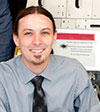
Ekaterina Paramonova: A nuclear networkerEkaterina (Katia) Paramonova ’13 acknowledges starting Course 22 with some distinct advantages: both her father and grandfather work in the nuclear industry, and her Russian parents insisted on fluency in the language, opening up opportunities in another country with a well-established nuclear sector. Now this 19-year-old undergraduate is intent on leveraging her assets in some surprising ways, establishing a unique career track that intriguingly combines nuclear engineering and diplomacy. ... more |
|
Daniel Casey: Exploring a “little star” on EarthIn 2010, after a decade of meticulous preparation, Daniel Casey and an MIT team finally ran their experiment. The world’s largest laser struck a millimeter-sized target, and in less than a second, it was all over. Casey, now a post-doctoral associate in MIT’s Plasma Science and Fusion Center, recalls, “You heard a little pop, but there was no other sight or sound in the control room.” Yet if the moment itself proved an anticlimax, the experiment has paid off in spades, yielding data that opens a window onto extreme conditions found nowhere else on Earth, and starting a new chapter in high energy density physics. ... more |

|
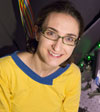
Sara Ferry: A new generation works to fulfill the promise of nuclear energyThe world of nuclear technology is in a generational transition. Many nuclear engineers and scientists were trained between the 1950s and 1970s, but entry to the field slowed in subsequent decades; NSE Ph.D. student Sara Ferry is part of a new cadre of technologists who are working to fulfill the promise of nuclear energy in a world very different from that of their predecessors. ... more |
|
Clarice Aiello: Finding quantum gold in diamond’s defectThe kind of diamond Clarice Aiello values does not come in a dazzling pear or square cut, swaddled in black velvet on a counter at Tiffany’s. Instead, it exists as a millimeter-sized chunk on a sturdy table in a lab she built. What’s more, Aiello is not searching for perfection in her rock, but imperfection of a remarkable kind: a naturally occurring defect in the diamond’s lattice that, if manipulated properly, gives rise to quantum phenomena. ... more |

|
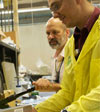
Ashley Finan: Developing better policy for energy innovationWhen Ashley Finan receives her Ph.D. in Nuclear Science and Engineering, it won’t be so much the culmination of an academic career as a milestone in a journey begun a decade ago. Finan credits some unique opportunities at MIT with setting her on a path toward a “place where it’s possible to make the most positive impact” on clean energy solutions and climate change. ... more |
|
David Carpenter: Silicon Carbide Cladding Proves its MettleInnovation is powerful, but in a field like nuclear engineering, new materials, designs and processes must prove their merit under all foreseeable conditions before moving into everyday use. An NSE team is using specialized facilities of the MIT Nuclear Reactor Laboratory to evaluate a new approach to protecting reactor fuel rods, with the prospect of enabling better reactor performance and safety, while also reducing waste production. more |


Department of Nuclear Science & Engineering
Massachusetts Institute of Technology
77 Massachusetts Avenue, 24-107 (map)
Cambridge, MA 02139
nse-info@mit.edu